
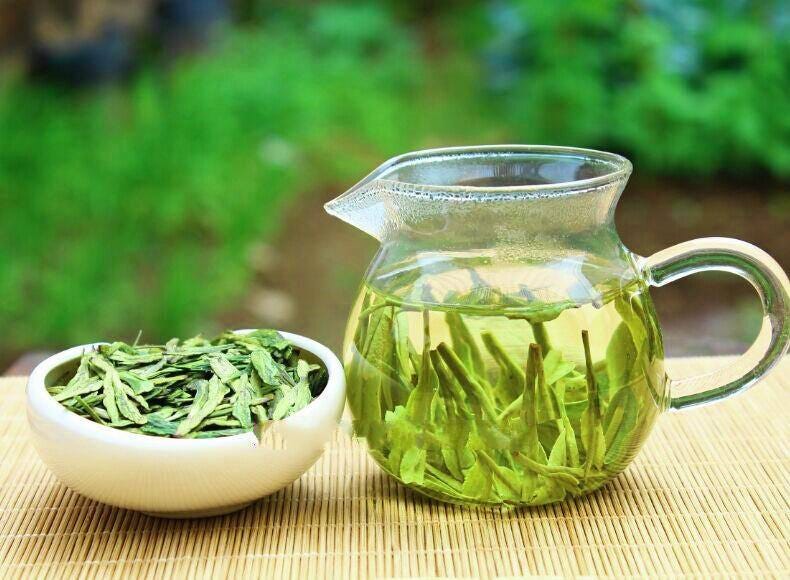
Longjing tea comes from the hills around Hangzhou, and once you are there, it quickly becomes clear that the city grew up around it. The tea fields spill down toward West Lake, temples sit just above the terraces, and narrow paths wind through villages that still smell faintly of roasted leaves in spring.
Longjing is not just something to taste here. It gives structure to the landscape and a rhythm to daily life. For centuries, these hills supplied tea to monks, scholars, and emperors, and the same routes once used to move tea now make some of the most rewarding walks in the city. Along the way, you will find tea houses tucked beside the lake or hidden in the hills, places meant for lingering.
In this article, I put together tea-centered hikes and walks that move through Hangzhou’s history. It focuses on beautiful tea fields, relaxed tea houses, and the stories that connect them. At the end, I include a simplified itinerary with maps, and I list the local Chinese names for each stop, which is especially helpful if you prefer using Chinese map apps for route planning.
I will continue to update this guide as I discover more tea walks around Hangzhou, so feel free to subscribe if you would like to follow along as new routes are added.
Longjing Village (2 – 3 hrs)
Traditionally, West Lake Longjing tea was described as having five production categories: Shi 狮 (Lion), Long 龙 (Dragon), Yun 云 (Cloud), Hu 虎 (Tiger), and Mei 梅 (Plum). The modern day system groups Mei 梅 together with Yun 云, leaving four officially recognized production areas used today for geographic indication and labeling. The first route I share below focuses on three of these tea production areas, Shi 狮 (Lion), Long 龙 (Dragon), and Mei 梅 (Plum)/Yun 云 (Cloud), and it would take around 2 – 3 hours depending on your pace.
Meijiawu Village 梅家坞村 sits on the western side of West Lake and is one of the largest and most active Longjing tea producing villages in Hangzhou. Tea has been grown here for centuries, and today the hills surrounding the village are almost entirely covered in neatly terraced tea fields. Historically, Meijiawu was classified separately as Mei 梅, before later being grouped under Yun 云 in modern usage. Beyond the tea fields, the village is lined with casual tea houses and local restaurants, making it an easy and comfortable place to start the day before heading into the hills.
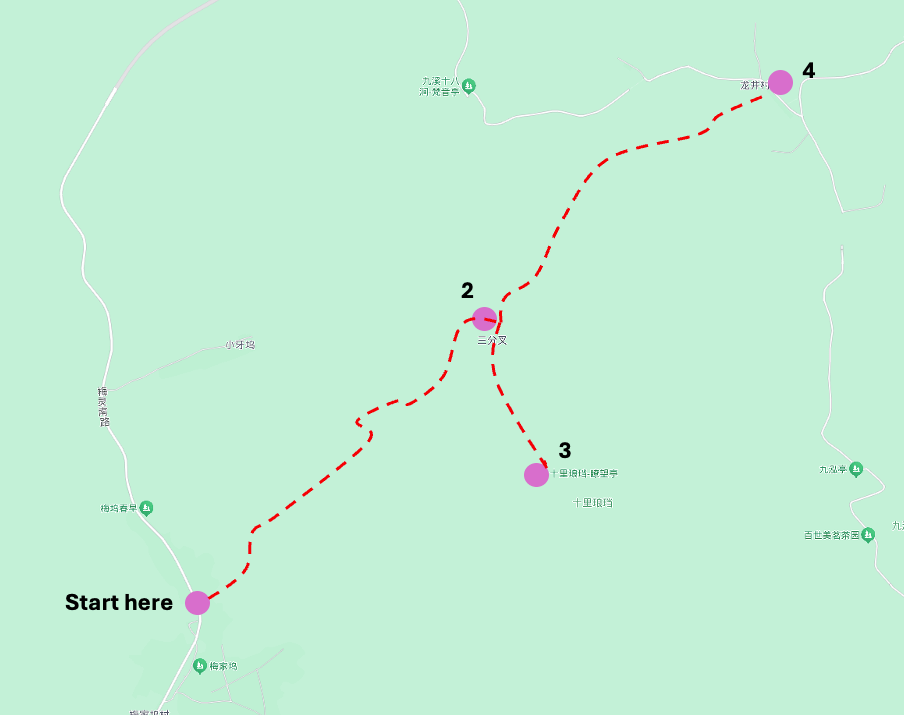
We will begin the hike by navigating to the [1] Meijiawu Village 梅家坞村 bus stop. There is a memorial arch that says Ten Li Langdang Ridge 十里琅珰.
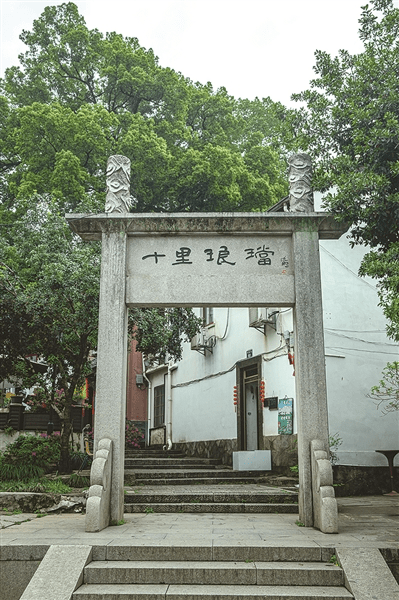
Ten Li Langdang Ridge 十里琅珰 takes its name from the old mountain path, which was traditionally measured at about ten li, roughly five kilometers. Langdang 琅珰 is a classical term associated with the clear, resonant sound of jade ornaments, and here it is used poetically to describe a long, elevated ridgeline where wind, footsteps, and voices carry clearly as the trail winds through tea fields and forest.
This is the path we will be taking all the way up to [2] Sanfencha 三分叉, a quiet three-way junction in the hills that once connected tea farmers’ paths between villages and tea fields. At the junction (red arrow down below), you may take a small detour towards a viewing point at [3] Ten Li Langdang Lookout or head directly down towards [4] the Longjing Village 龙井村.
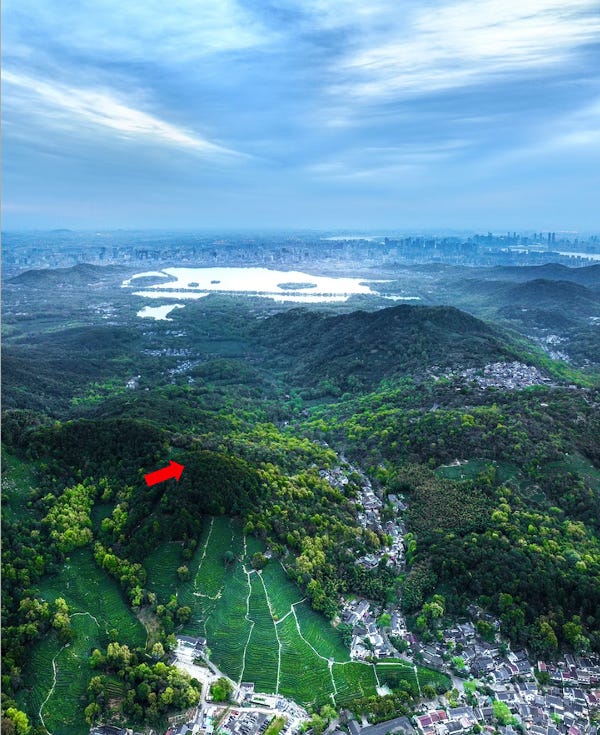
Longjing Village 龙井村 sits at the heart of the West Lake Longjing landscape and is closely associated with both Long 龙 and Shi 狮 production areas. Tea grown around the village itself falls under the Long 龙 designation, while the nearby slopes of Shifeng 狮峰 (Lion Peak) produce Shi 狮 tea, traditionally regarded as the highest and most prized style of West Lake Longjing.
Today, Longjing Village is an easy place to slow down, with tea houses and small restaurants serving local dishes prepared with tea and seasonal ingredients, such as the famous Longjing prawns 龙井虾仁.
If the day is still young and you have more energy, you can take a short walk from Longjing Village 龙井村 to visit the China National Tea Museum Longjing campus for free. The museum is China’s only national level museum dedicated entirely to tea and tea culture with clear English signage and a well curated exhibition on tea in China and around the world. Check out their website before you go. The museum also has a second campus, Shuangfeng, that is 30 minutes away by foot.
You may choose to do this route in reverse order, but know that the terrain around Longjing Village is steeper and more compact than in Meijiawu Village, with smaller plots, rockier soils, and older tea bushes, factors often credited with producing teas of greater depth and balance. If you end your trip in Meijiawu village 梅家坞 instead, it makes a nice stopping point to rest with a cup of tea or a full meal at Yunjing Tianzhu 云径天竹, a tea house and restaurant overlooking a full sweep of terraced tea fields.
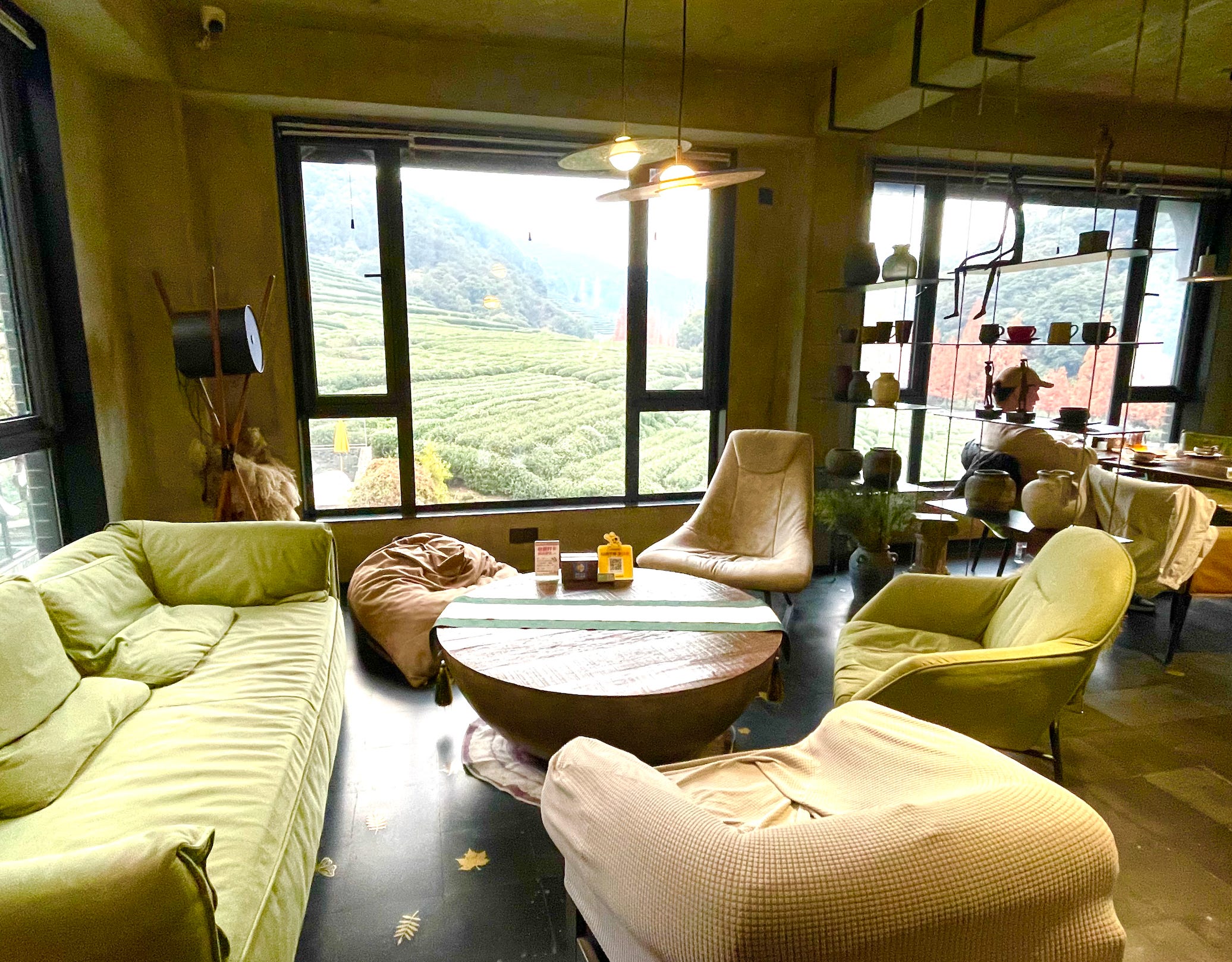
Tiger Spring to Misty Village (4 – 5 hours)
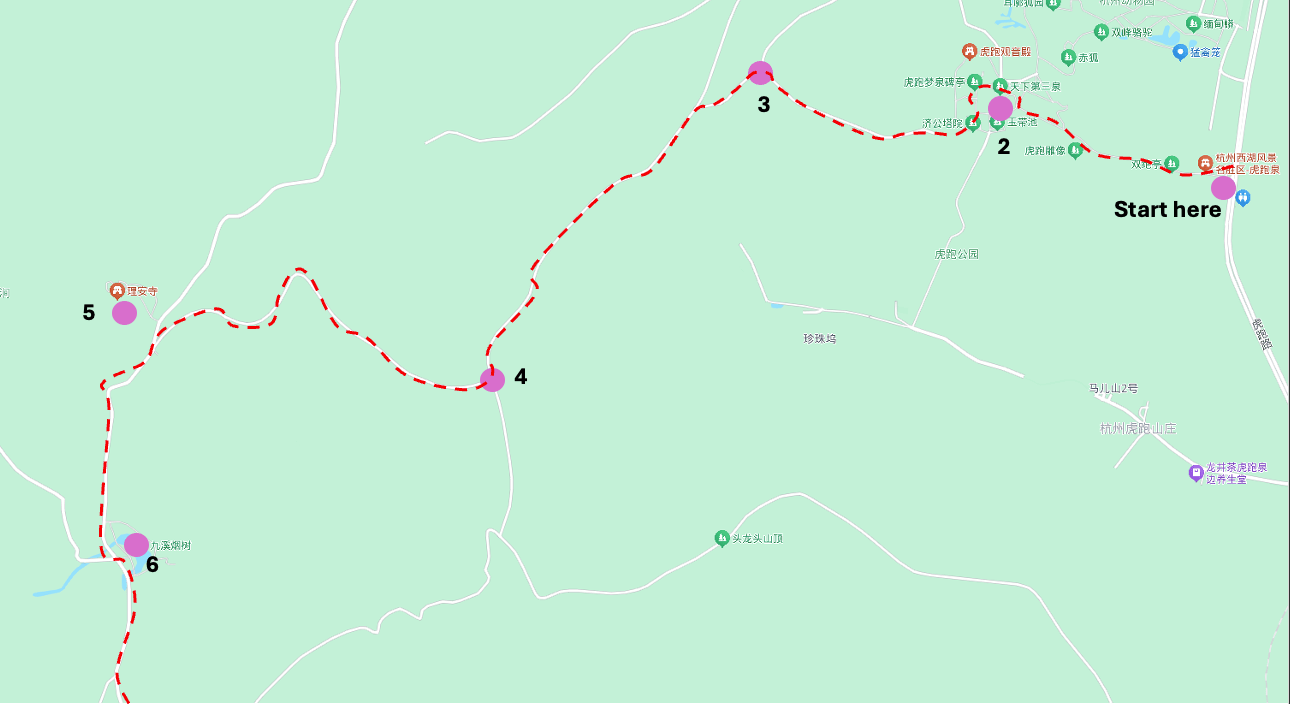
Hupao 虎跑, originally called 虎刨, is best known for its water. Since the Tang dynasty (618 – 907 AD), it has been regarded as one of Hangzhou’s finest sources for brewing tea, especially Longjing. According to local legend, a Tang dynasty monk named Xingkong 性空, troubled by the lack of water for his temple, dreamed of two tigers digging into the earth. When he awoke, a spring had appeared at the spot. The site was first called Tiger Dug Spring (虎刨), using the character for digging, and later evolved into Tiger Run Spring 虎跑, for the two words sound similar. Today, this area is a fitting place to begin a longer hike (4 – 5 hours) and marks the final stop among the four West Lake Longjing production areas, Hu 虎 (Tiger).
Navigate to [1] the east entrance of Hupao Scenic Area on Hupao Rd 虎跑路. After passing a stone tiger, you will arrive at [2] Hupao Temple 虎跑寺, first founded in 819 AD during the Tang dynasty. This temple has been destroyed and then rebuilt many times and is remembered today for its links to famous monks such as Ji Gong and Hong Yi. The site itself now functions as a public park preserving both Buddhist heritage and natural scenery. If you see people carrying empty bottles, follow them to the actual Hupao Spring and taste it for yourself!
Continue along the paved path and follow the signs toward [3] Guiren Pavilion 贵人阁. From here, you get a rare panoramic view that takes in both West Lake and the Qiantang River, with Hangzhou’s modern skyline rising in the distance.
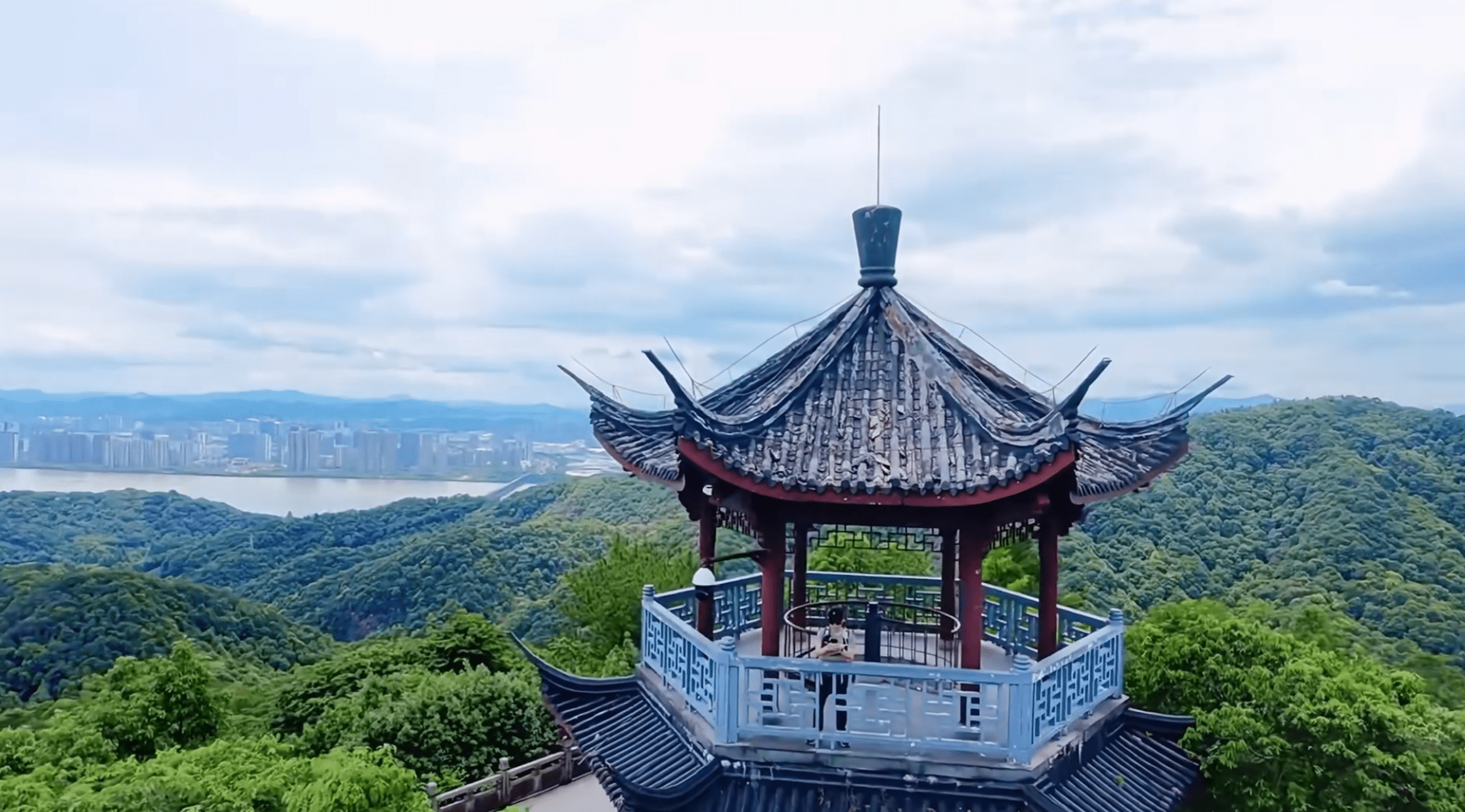
Stepping down the pavilion, continue towards [4] Ma’er Shan Ridge 马儿山岗. Along the way, on the river facing slopes below, you can also spot tea terraces belonging to the Hu 虎 (Tiger) production area of West Lake Longjing. Ma’er Shan Ridge is a three-way intersection, where you will then take the direction of [5] Li’an Temple 理安寺.
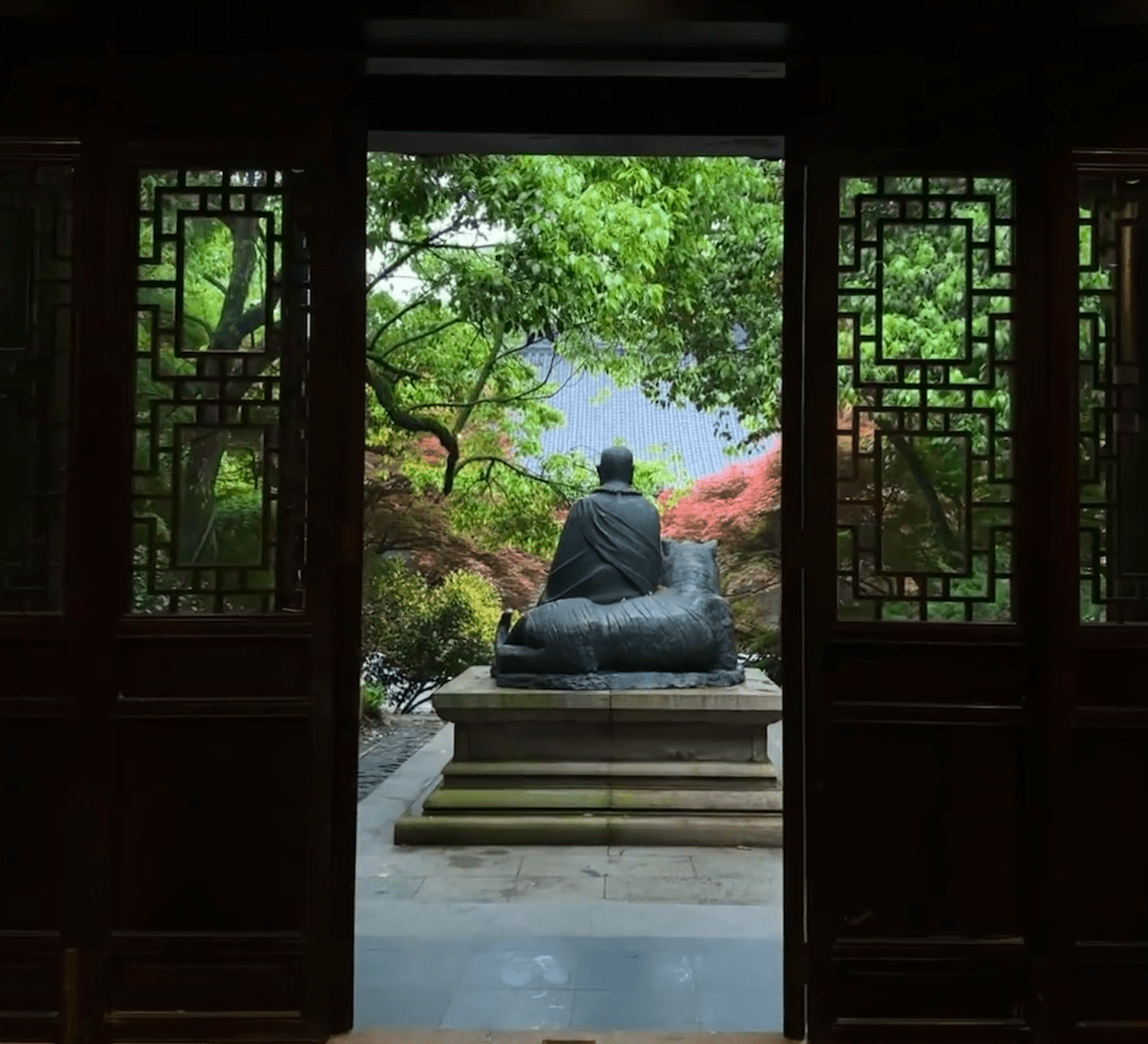
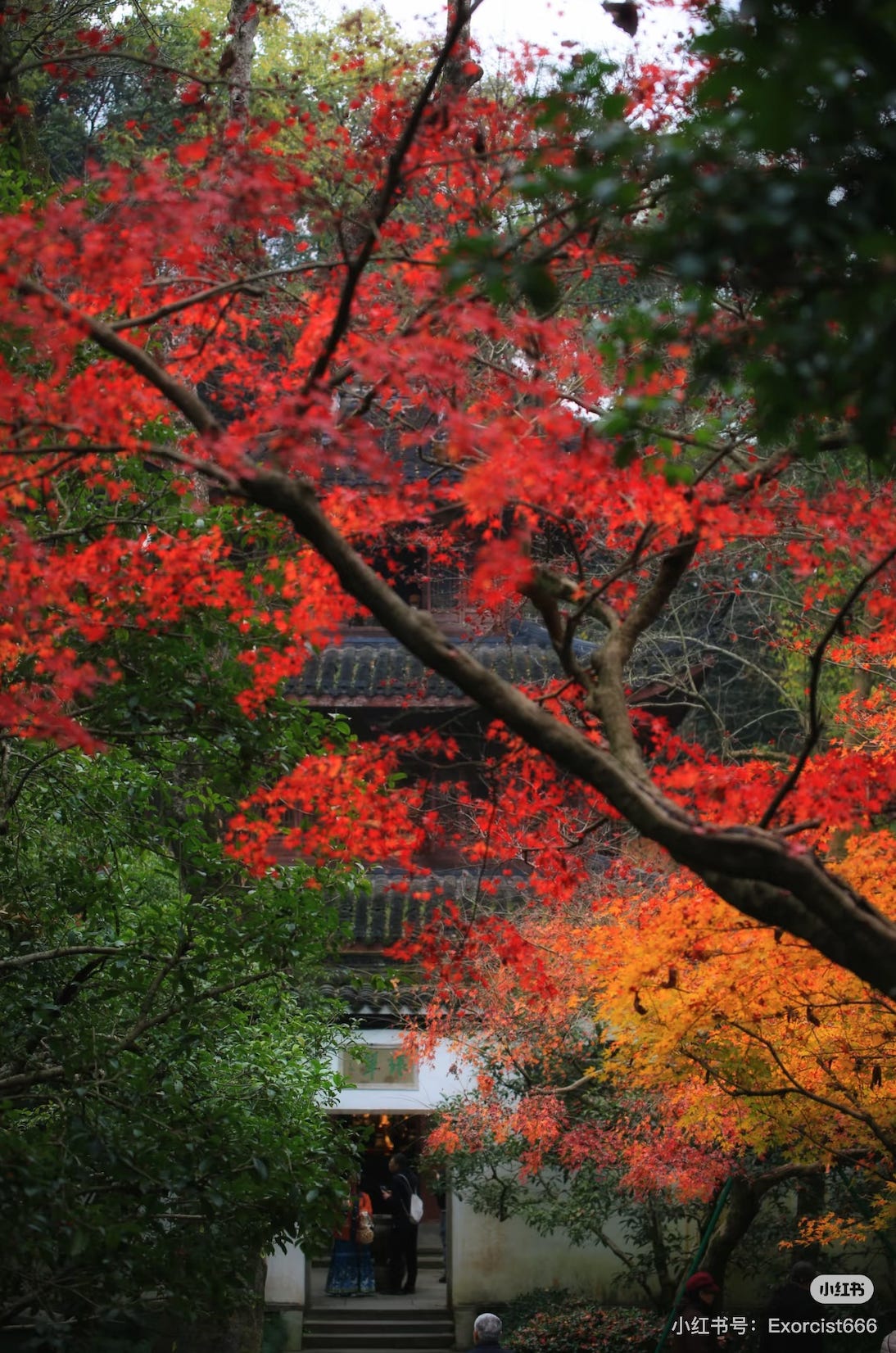
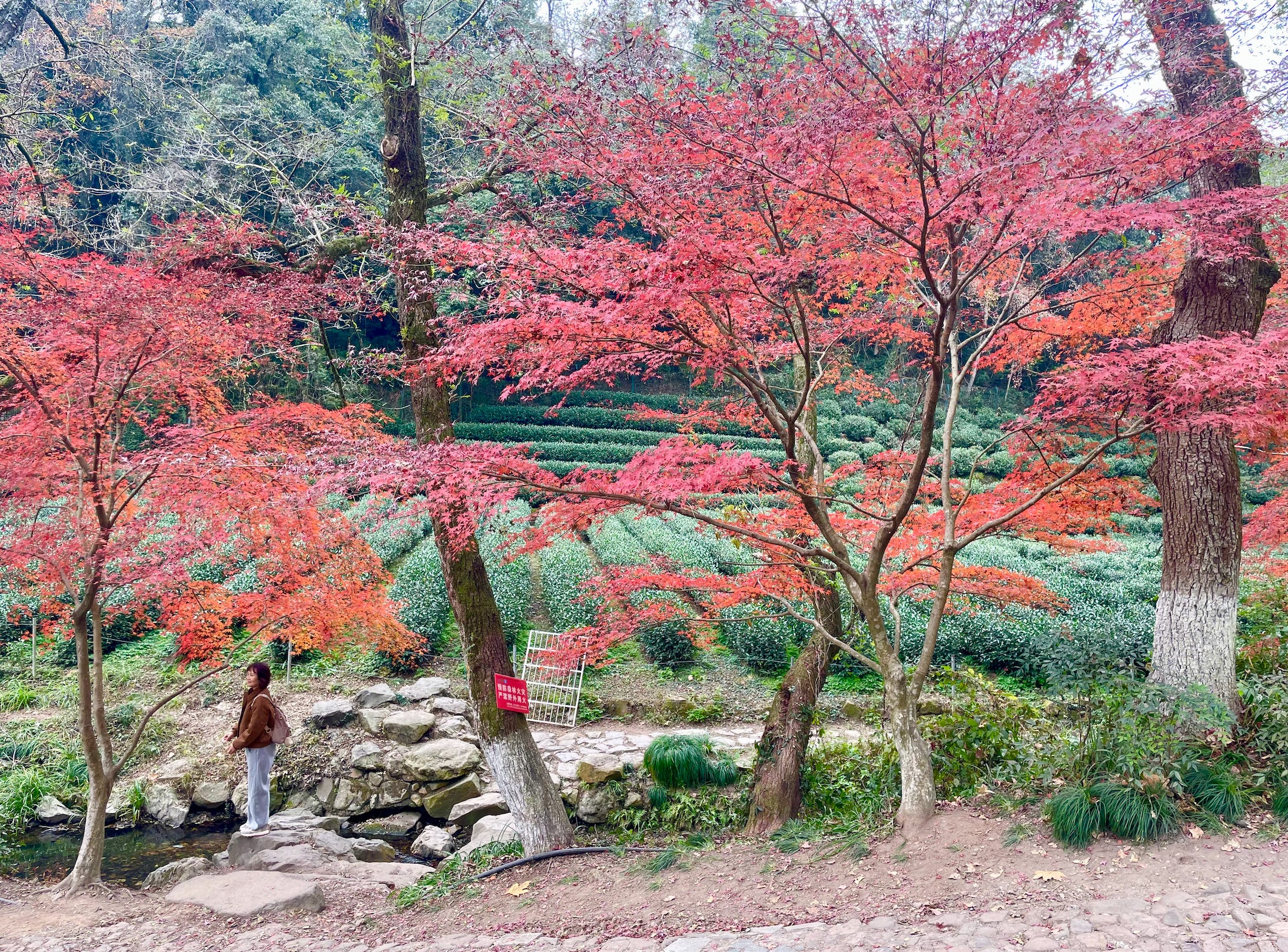
Li’an Temple is a Buddhist monastery tucked along an old mountain path. It was first founded during the Five Dynasties period (907 – 960 AD), renamed during the Southern Song (1127 – 1279) after an imperial visit, rebuilt in the Ming dynasty (1368 – 1644), expanded to its height during the Qing dynasty. Today, the complex is a wonderful place to enjoy osmanthus blossoms in early autumn and autumn foliage later in the season.
From Li’an Temple 理安寺, take the direction towards [6] Jiuxi Yancun 九溪烟村. Jiuxi Yancun 九溪烟村, often translated as Nine Creeks in Misty Village, takes its name from the way fog and cooking smoke once drifted through the valleys where nine small streams converge. Historically, this area was a quiet agricultural settlement connected by winding waterways, tea fields, and footpaths, with villages tucked low among the hills. From here onward, the route simplifies into a single main path that leads all the way out toward the Qiantang River. You can choose to walk the entire way or hop on a park shuttle from the village (and two stops on the way), with tea fields lining much of the route.
Baoshi Mountain (~1 hour)
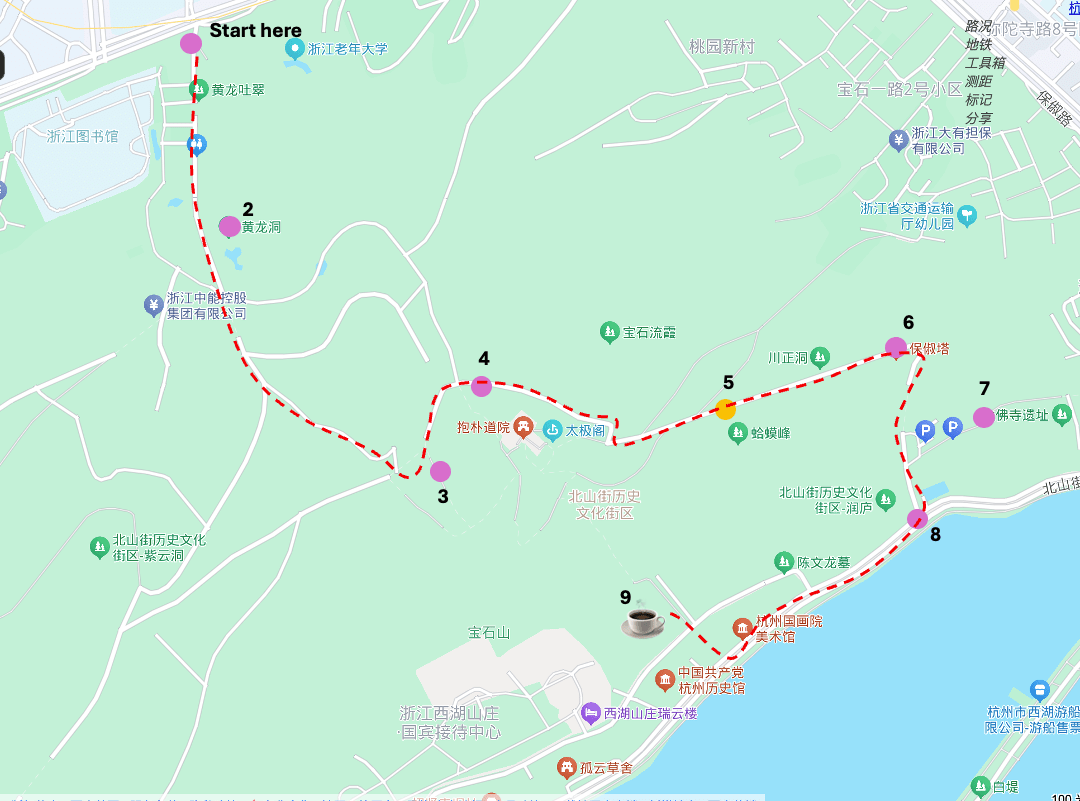
If you enjoy an early morning hike, Baoshi Mountain 宝石山 is a great place to begin the day. In the summer, the trails start filling with local elders soon after sunrise, but at that hour the air is still cool and the city feels far away. There are several paths that lead up the mountain, and I will share a route that I have taken many times. This route is about 2 km, short and sweet and can get you to the peak within 20 – 30 minutes. Shoes with good grip are recommended and I wouldn’t go up there during or after rain.
Start on the north side of Baoshi Mountain from Shuguang Rd. 曙光路 near the Zhejiang Library [1]. You will enter through the Yellow Dragon Cave 黄龙洞 scenic area. Shortly after, you will pass by [2] the Folk Culture Park 黄龙洞圆缘民俗园, and you will continue along a small path to the right of the park.
Yellow Dragon Cave has been documented as a religious site since the Song dynasty (960 – 1279 AD). The name itself, however, comes from local tradition. According to legend, a Buddhist monk named Huikai built a temple here. One day, a thunderclap split the mountain, releasing a clear spring from the rock. A yellow dragon emerged and followed Huikai, giving the cave its name. Another well known folk story tells of two yellow dragons living nearby. When the elder dragon brought destruction to the city of Hangzhou, the younger dragon sacrificed itself to stop him by flooding the cave with water from West Lake. A small waterfall marked the place where the young dragon was buried and a carved dragon head was later placed there in its memory.
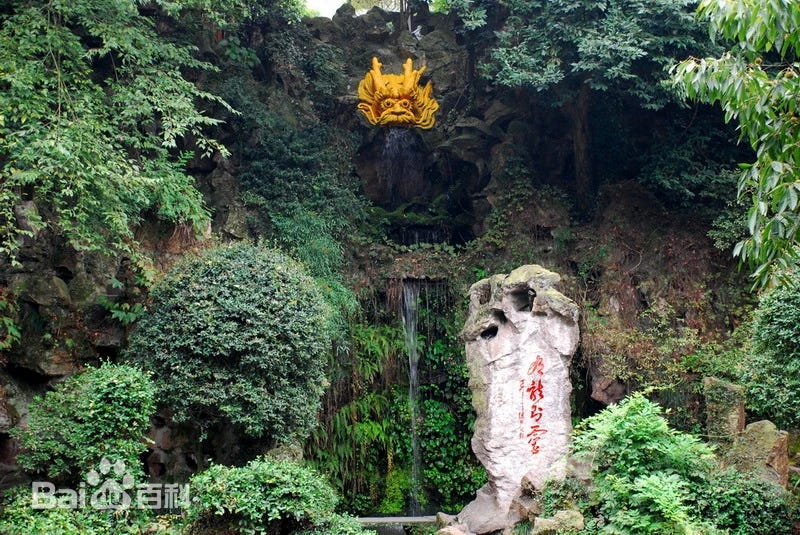
By the late Qing dynasty, Yellow Dragon Cave had become one of Hangzhou’s prominent Daoist temple complexes, a role that continues until today.
A few steps ahead, the trail enters a bamboo forest. Towards the end, the walkway becomes unpaved. At an intersection, you will see signage. Follow the sign for [3] Chuyang Platform 初阳台. You may then follow the signs toward [6] Baochu Pagoda 保俶塔.
The name of the Chuyang Platform simply means the platform of the first sun. It can be traced back to the Eastern Jin dynasty (317 – 420 AD). The legend has it that the platform was built by the Daoist master Ge Hong for alchemy. By the Yuan dynasty in the 13th century, written records already described it as Hangzhou’s finest viewpoint for watching the sunrise.
On the way, you will first pass [4] the Baopu Daoist Temple 抱朴道院 and then [5] Hama Peak 蛤蟆峰, where you can drink in the panoramic view of the entire West Lake.
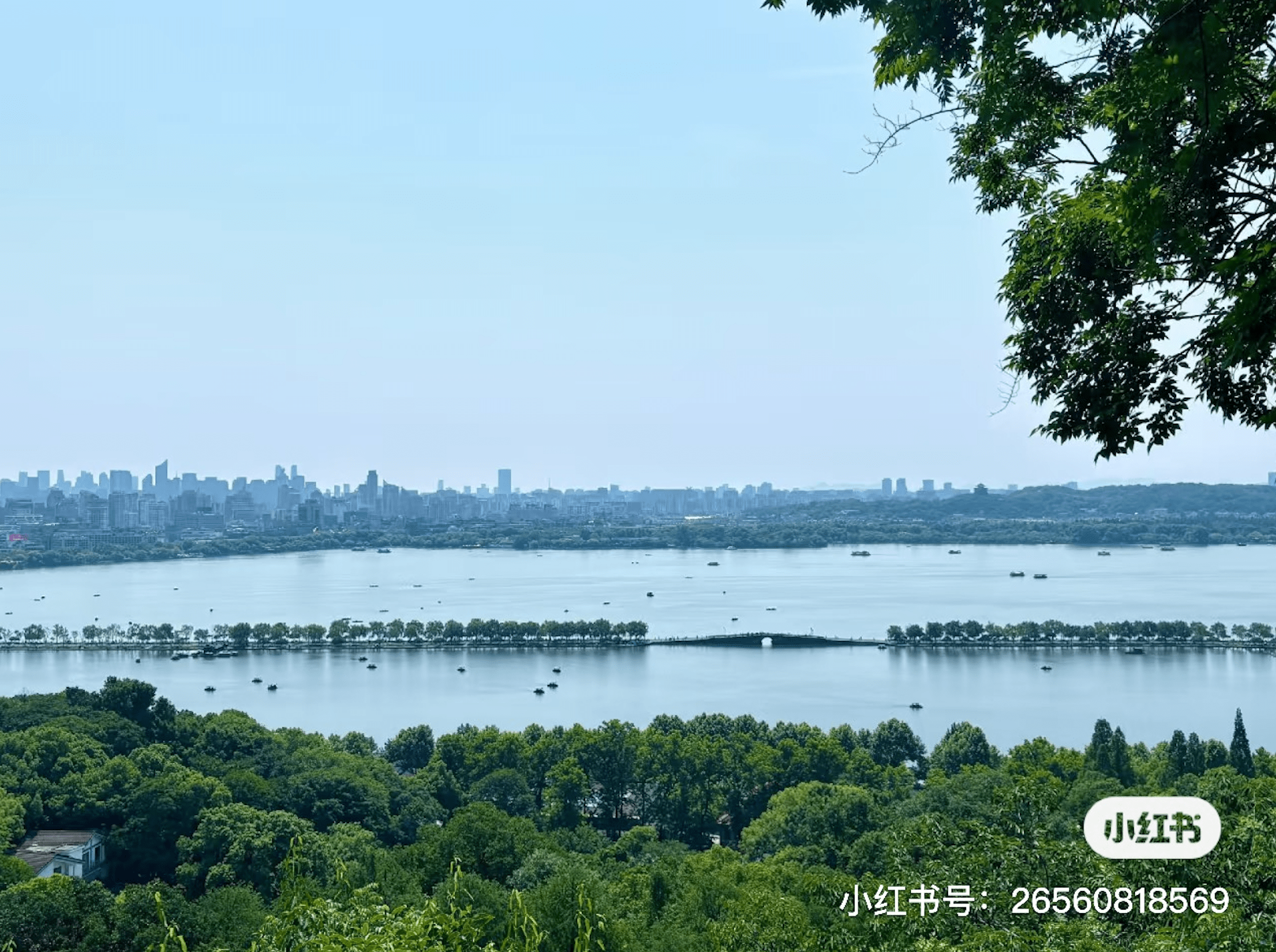
Baopu Daoist Temple 抱朴道院 is also closely associated with the Daoist scholar and alchemist Ge Hong. While no precise founding year is recorded, the site is generally traced to the Eastern Jin dynasty (317 – 420 AD), when Ge Hong is believed to have practiced alchemy and medicine here. What began as a small retreat gradually developed into an important Daoist complex, reaching its height during the Tang dynasty (618 – 907), the Five Dynasties period (907 – 960), and the Song dynasty (960 – 1279). Its growth was shaped by Daoist traditions that emphasized healing, cultivation, and working in harmony with the surrounding landscape.
While [6] Baochu Pagoda 保俶塔 is a solid brick pagoda and cannot be entered or climbed, it is one of Hangzhou’s most recognizable landmarks. The pagoda was first built in the Five Dynasties period (907 – 960), traditionally dated to 948 AD, during the Wuyue Kingdom. Its name, which can be translated as “Pagoda Protecting Chu,” is commonly linked to local legends about safeguarding the kingdom and its people.
Once you are past the pagoda, walk downhill toward West Lake. Along the way, you can stop to view [7] the Baoshi Mountain stone carvings 宝石山造像. These are Buddhist figures carved directly into the cliff faces, most dating to the late Southern Song and Yuan periods, around the 13th and 14th centuries. These carvings are very weathered and are easy to miss if you are not looking closely. They reflect a period when Buddhist practice extended beyond formal temples into the surrounding landscape, turning mountain paths themselves into spaces for devotion and contemplation.
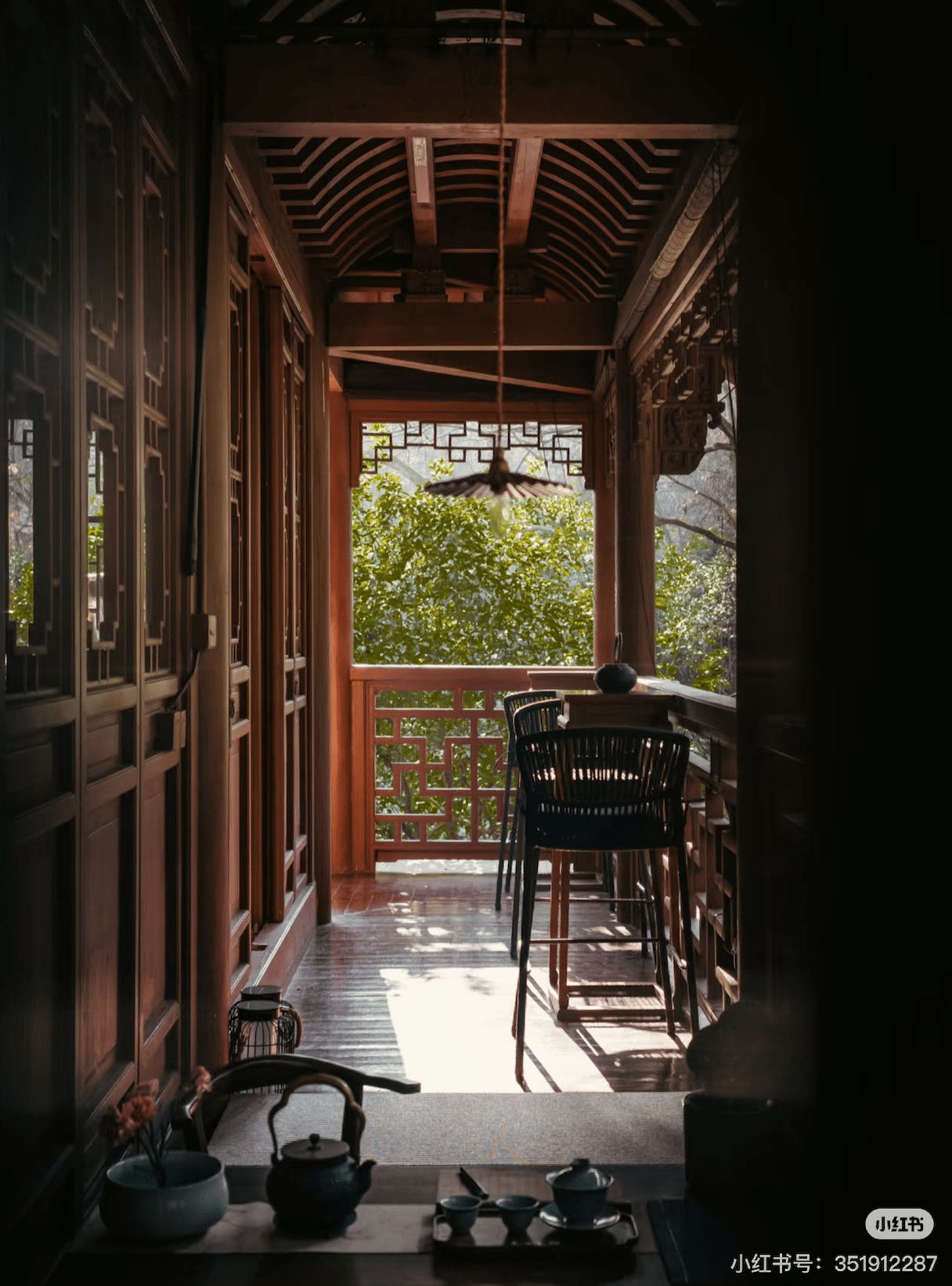
Eventually, you will reach [8] Beishan Rd. 北山路 along the northern shore of West Lake. Turn right and follow the road as it curves gently along the water. Use your map to help find a tea house called [9] Gugong Youxi 顾宫有喜, a small, tucked away tea house that also serves coffee and sweets. It is housed within the grounds of the former Manao Temple 玛瑙寺, a setting that gives the space a calm, slightly removed feeling from the busy lakeside. It is a good place to sit down, rest your legs, and let the morning walk settle before continuing on.
As I explore more of the hills and tea paths around Hangzhou, I will keep updating this guide with new hikes and city walks.
©2025 Studentoftea.com | All Rights Reserved