

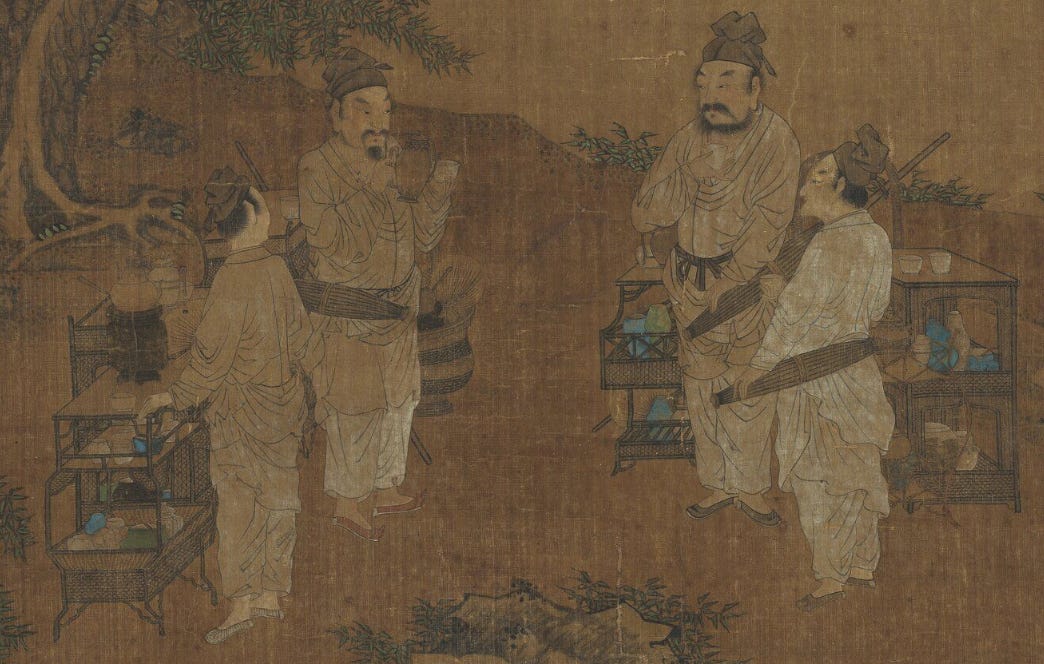
During the Song dynasty (960–1279), Chinese tea culture reached one of its historical pinnacles. Across the empire, tea was widely consumed, deeply appreciated, discussed, and even contested. From ordinary households to gatherings of literati, and at the highest levels of the imperial court, connoisseurs compared color, aroma, and the fine white foam that rose on the surface of a freshly whisked bowl of tea. Standards of preparation grew increasingly exacting, and taste itself became a matter of cultivated judgment.
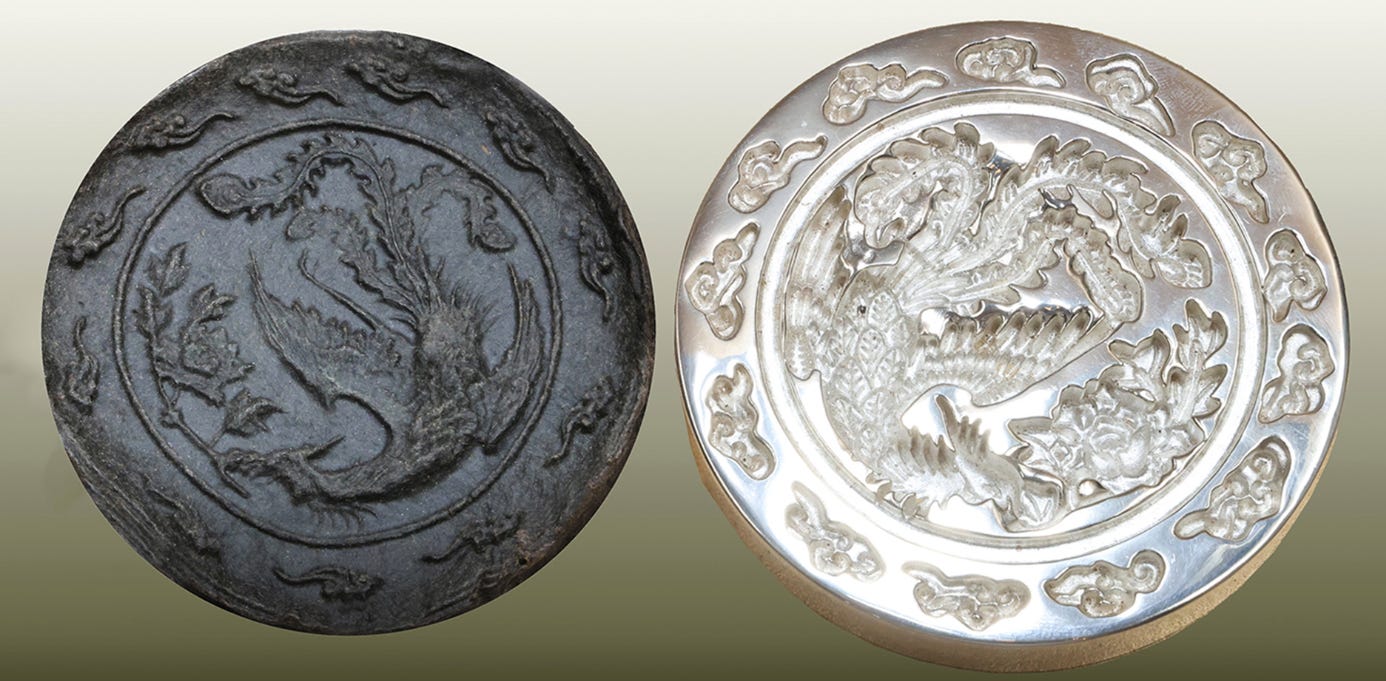
It was within this atmosphere of aesthetic intensity and imperial patronage that The Grand Treatise on Tea 大观茶论 was written by Emperor Huizong of Song in the year of 1107, whose reign coincided with the height of Chinese dian cha tea culture. In this treatise, Emperor Huizong turns his attention to the finest points of powdered tea. He writes on the selection of tribute leaves, the color and density of the foam, the control of water temperature, and the precise movement of the bamboo whisk. He distinguishes flawed preparations from masterful ones and describes, step by step, how the foam should rise, gather, and hold.
While Chinese tea practice later shifted toward loose-leaf infusion, the Song method of dian cha was carried to Japan in 1191 by the monk Eisai together with seeds of Camellia sinensis. In this way, The Grand Treatise on Tea offers more than a record of how tea was prepared in China over a thousand years ago. It preserves the Song powdered tea method that later became the foundation of the matcha tradition.
The original Song manuscript of this book has been lost, and the text survives through copies transmitted across later dynasties. This translation is based on the Complete Library of the Four Treasuries 四库全书, compiled between 1772 and 1782 during the Qing dynasty. The scan cited here is from a copy held in the collection of Zhejiang University Library and made available through Chinese Text Project.
The work that follows is my attempt to translate The Grand Treatise on Tea into English. For each section, I present the original classical text, followed by my English translation. My notes and comments appear at the end of each section in italics. Where appropriate, I include images of Song dynasty tea wares and related objects drawn from museum collections to situate the text within its material world. Many of my comments also draw on modern chemistry and food science, offering a contemporary lens on processes that Song artisans understood through trial, error and refinement.
P.S.:If you have time for only one chapter right now, begin with Chapter Fourteen, “On Dian Cha” (点茶), where the seven-stage preparation reveals in exquisite detail how the celebrated white foam is properly developed and maintained.
Preface
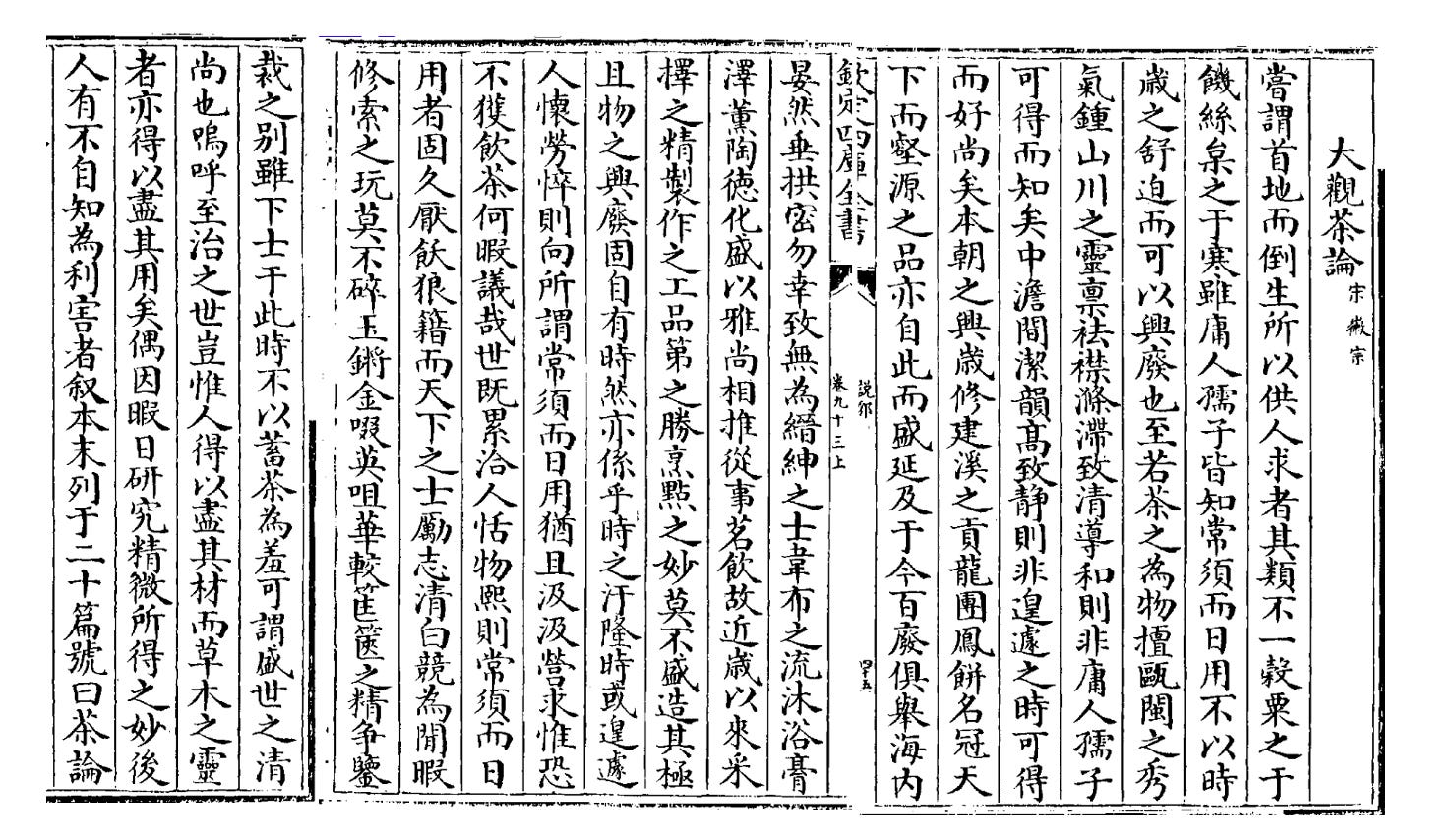
尝谓首地而倒生,所以供人求者,其类不一。谷粟之于饥,丝枲之于寒。虽庸人孺子皆知常须而日用,不以时岁之舒迫而可以兴废也。至若茶之为物,擅瓯闽之秀气,钟山川之灵禀,祛襟涤滞,致清导和,则非庸人孺子可得而知矣。中澹间洁,韵高致静。则非遑遽之时可得而好尚矣。
People have long held that the earth brings forth its bounty to meet various human need. Rice and millet relieve hunger; silk and hemp resist cold. Even the most ordinary person, even a child, knows these are the basic provisions of life, whether in years of abundance or of hardship.
Tea is different.
It gathers the essence and vitality from the mountains and streams of Ou and Min*. It lifts the weight from the chest and lightens the heart. It brings clarity and harmony. Such effects are not easily grasped by an ordinary person or a child.
When one drinks tea, one becomes composed and gentle, refined in bearing and serene in demeanor. Such refinement cannot be appreciated in a state of fluster or agitation.
Note: Ou and Min refer to regions along the southeastern coast of what are now Zhejiang and Fujian provinces.
本朝之兴,岁修建溪之贡。龙团凤饼,名冠天下,而壑源之品,亦自此而盛。延及于今,百废俱兴,海内晏然,垂拱密勿,幸致无为。
Since the founding of our dynasty, tribute tea from Jianxi* is prepared each year. The ‘dragon rounds’ and ‘phoenix cakes’ are the most renowned teas throughout the realm. From that time onward, the teas of Heyuan* also flourished. Today, all that had fallen into neglect thrives once again. Peace prevails throughout the realm. The ruler governs in composed restraint, while ministers labor with quiet diligence. Thus governance achieves the ideal of wu wei, the art of non-action.
Note: Jianxi and Heyuan were core production areas of Northern Song tribute tea, located in modern day Jian'Ou, Fujian province.
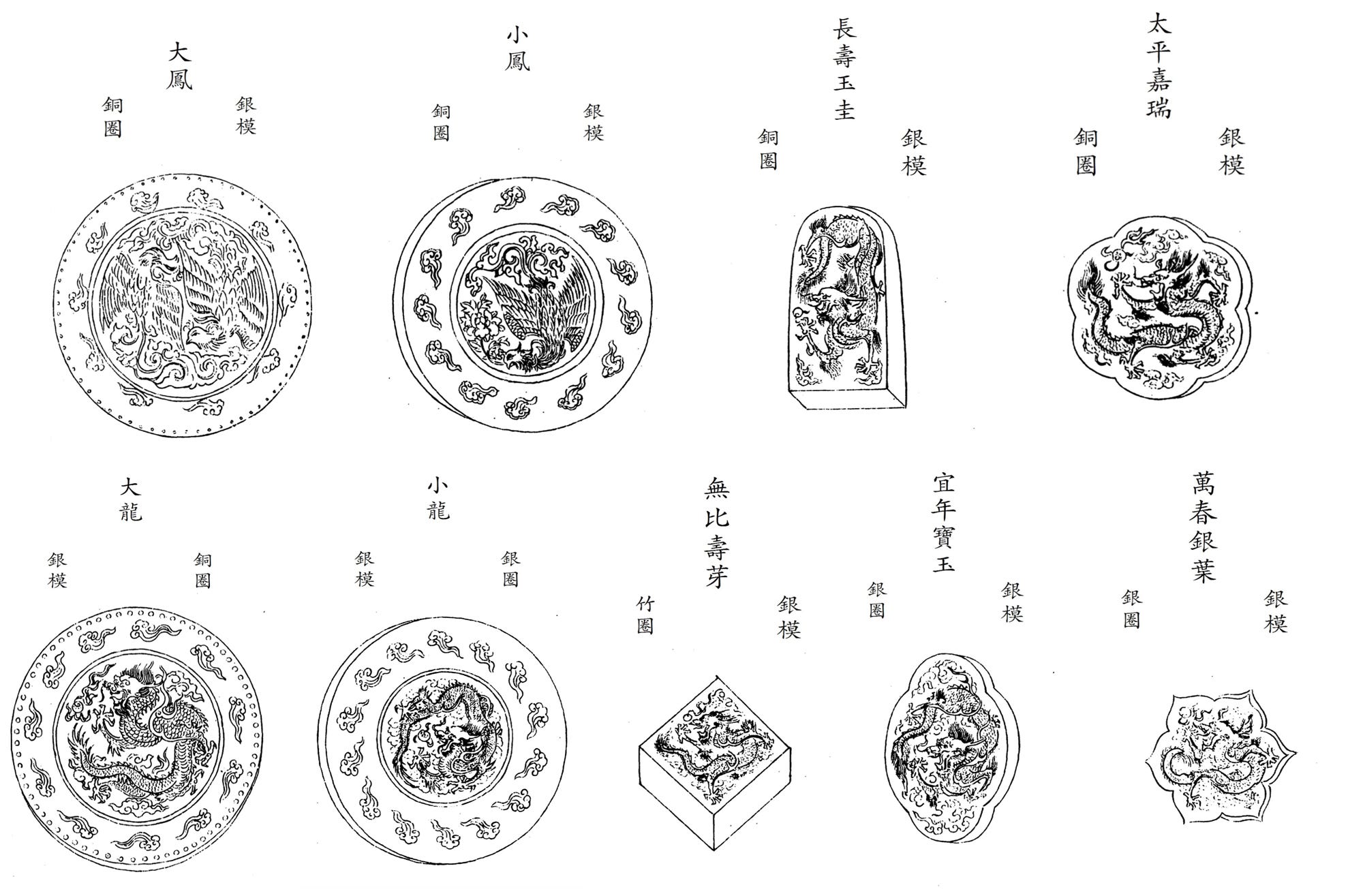
缙绅之士,韦布之流,沐浴膏泽,熏陶德化,盛以雅尚相推,从事茗饮。故近岁以来,采择之精,制作之工,品第之胜,烹点之妙,莫不盛造其极。且物之兴废,固自有时,然亦系乎时之汙隆。时或遑遽,人怀劳悴。 则向所谓常须而日用,犹且汲汲营求,惟恐不获,饮茶何暇议哉!
The scholar-officials and ordinary people alike partake of imperial benevolence and are shaped by moral cultivations. Refined taste prevails, and the pursuit of tea drinking flourishes. Therefore, in recent years, the precision of leaf selection, the craftsmanship of tea, the mastery in assessment, and the subtlety of brewing and whisking have all reached their pinnacle. While the rise and fall of things have their own timing, they are also shaped by the waxing and waning of the era. During times of turmoil, people are exhausted and weary. Even the daily necessities must be anxiously pursued, for fear they cannot be secured. In such times, who would have the leisure to speak of drinking tea?
世既累洽,人恬物熙。则常须而日用者,固久厌饫狼籍。而天下之士,励志清白,兢为闲暇修索之玩,莫不碎玉锵金,啜英咀华。较筐箧之精,争鉴裁之别 。虽下士于此时,不以蓄茶为羞,可谓盛世之情尚也。
Now that the realm has enjoyed a long period of harmony and stability, people live in tranquility and abundance. The basic provisions of life reached a level of excess. The scholars of refined taste earnestly apply themselves to cultivated pursuits. They delight in the resonant sound of the gold tea grinder, savoring the finest qualities of the brew. People compare the craftsmanship of bamboo tea containers and compete in judging their merits. Even non-scholars no longer regard keeping tea as presumptuous. Tea may truly be called the spirit and fashion of this flourishing era.
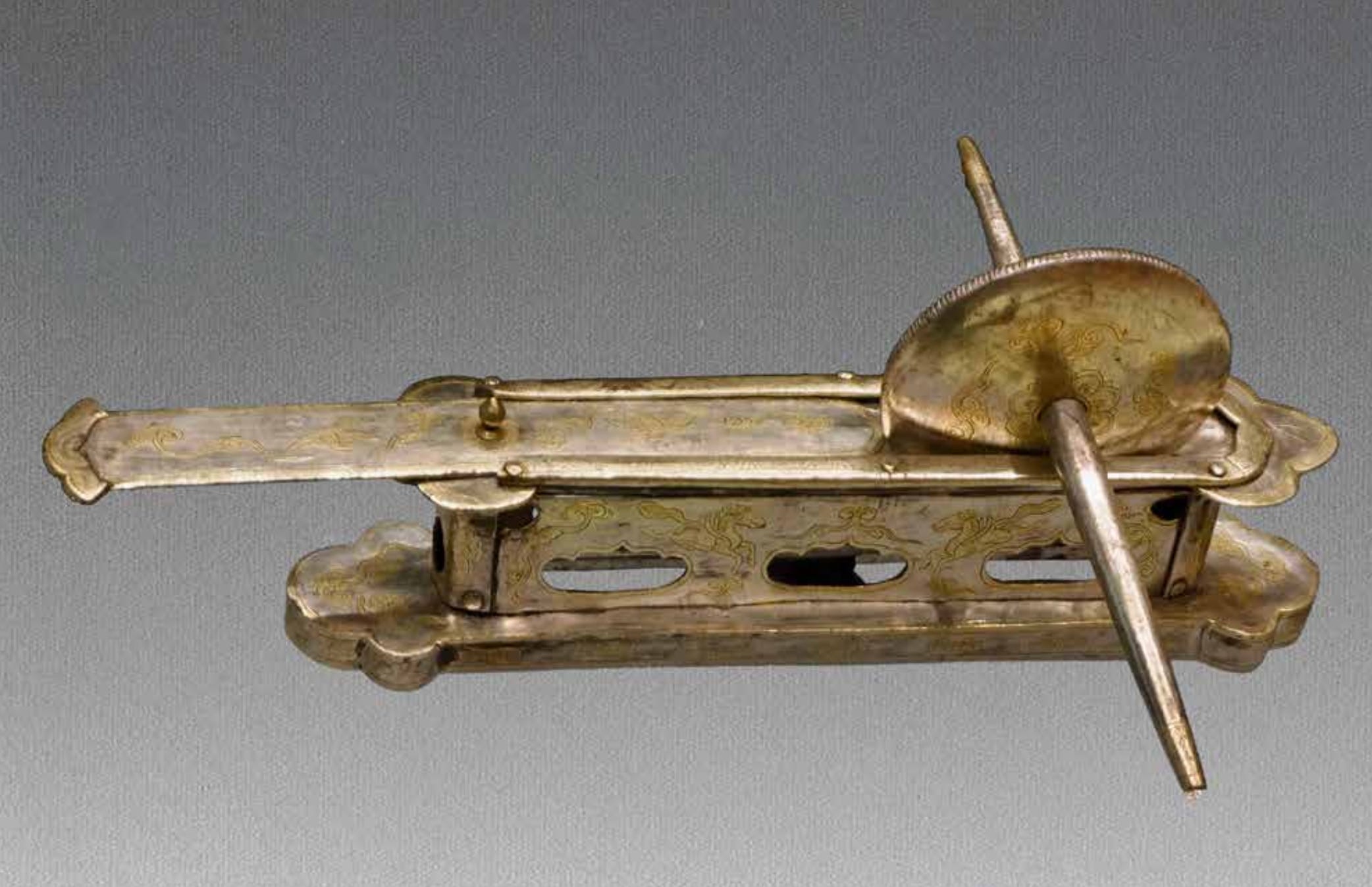
呜呼!至治之世,岂惟人得以尽其材,而草木之灵者,亦得以尽其用矣。偶因暇日,研究精微,所得之妙,后人有不自知为利害者,叙本末列于二十篇,号曰茶论。
Alas! In an age of ultimate good governance, people and plants alike are able to realize their full potential. On a relaxing day, I turned my attention to researching the subtle principles of tea and came to grasp its finer excellence. Fearing that later generations might not fully appreciate the proper ways of tea, I have set forth its origins and developments in twenty chapters and named it the Treatise of Tea.
Chapter One: On Growing Regions
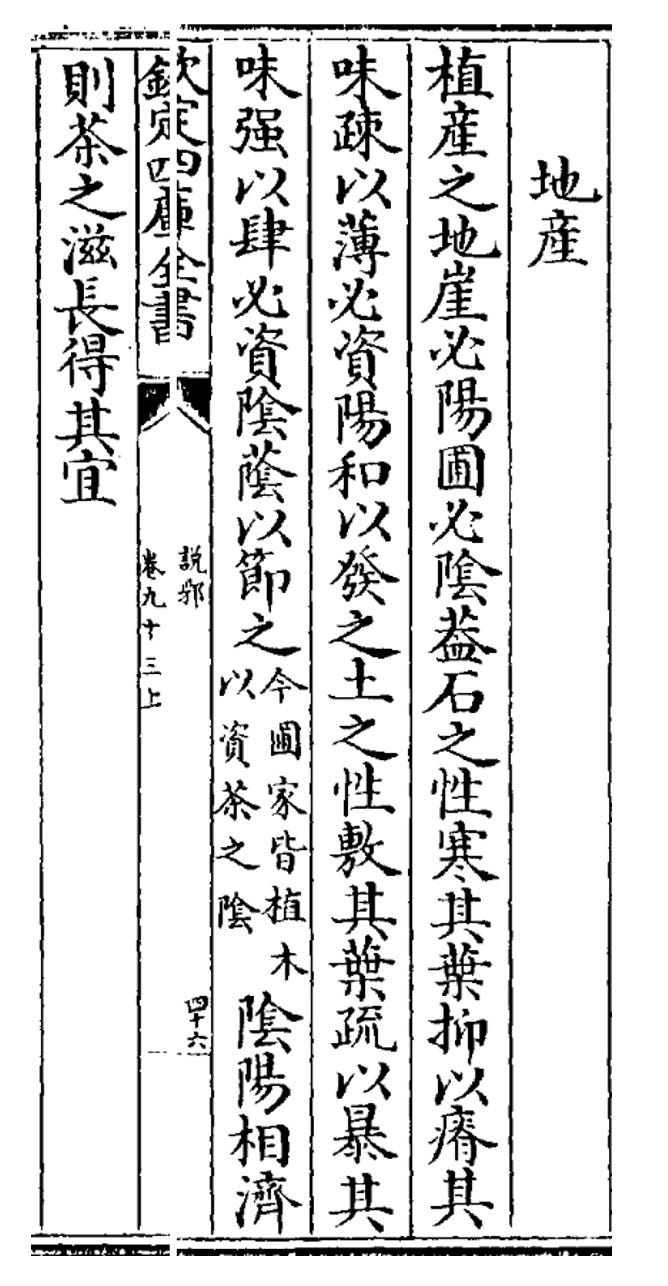
植产之地,崖必阳,圃必阴。盖石之性寒,其叶抑以瘠,其味疏以薄,必资阳和以发之;土之性敷,其叶疏以暴,其味强以肆,必资阴荫以节之。阴阳相济,则茶之滋长得其宜。
Tea should be cultivated either on south-facing cliffs or in shaded gardens. The cold nature of rock restricts leaf growth and renders the flavor sparse and light. Thus, more sunlight is needed to encourage development. Garden soil is rich in nutrients. The tea leaves unfurl rapidly and the flavors become overwhelming. Thus, shade is used to temper the growth. The right balance of yin and yang helps the tea plant flourish.
Chapter Two: On Timing
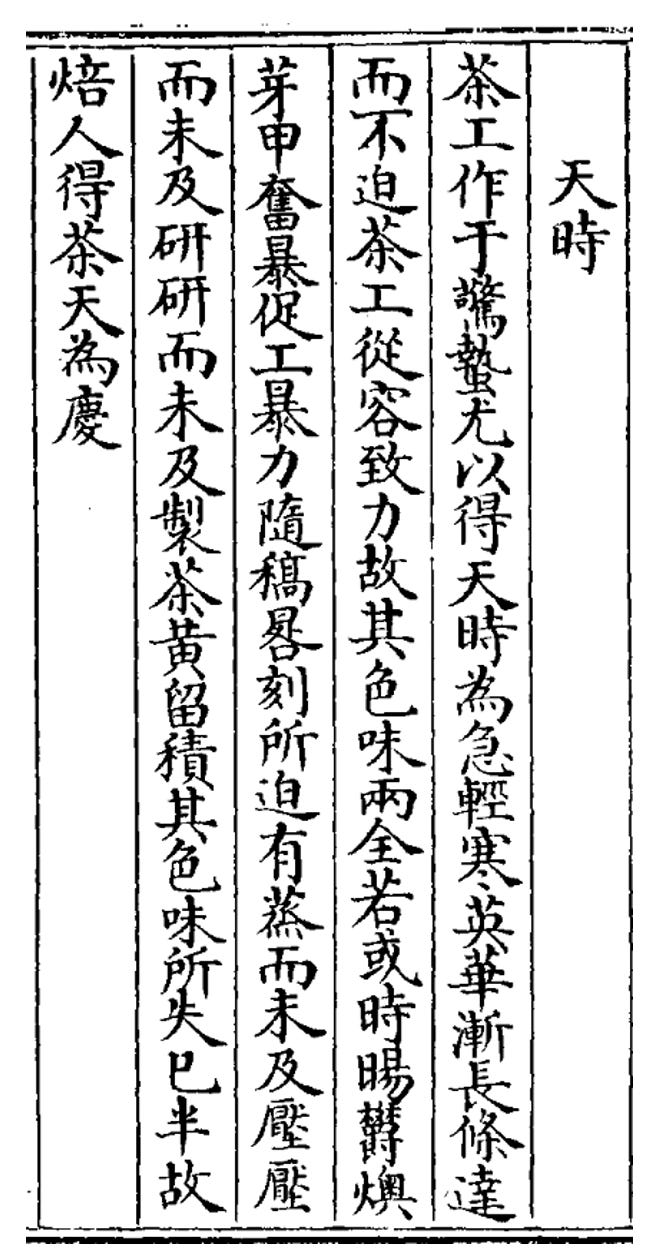
茶工作于惊蛰,尤以得天时为急。轻寒,英华渐长,条达而不迫。茶工从容致力,故其色味两全。若或时阳郁燠,芽甲奋暴,促工暴力随稿。晷刻所迫,有蒸而未及压,压而未及研,研而未及。茶黄留积,其色味所失已半。故焙人得茶天为庆。
Timing is everything. Tea production begins around Jingzhe*. The air still carries a slight chill, as spring growth begins to emerge. The tea tree branches extend without haste. Thus, the tea workers can pick and prepare tea with composure and care, fully preserving the color and flavor.
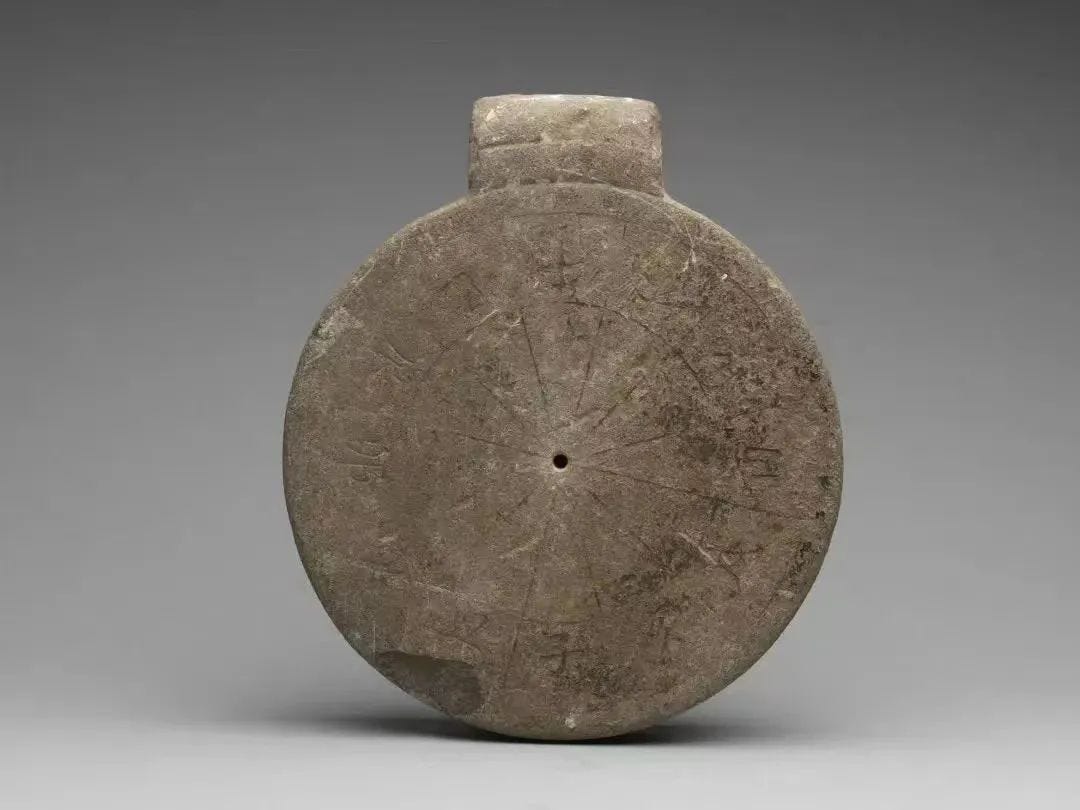
If the weather turns hot and humid, tea buds grow rapidly. As the shadow on the sundial advances without mercy, the workers hasten and rush the process.Some leaves may be steamed but not pressed, pressed but not ground, and ground but not packed into molds. The leaves begin to yellow, losing more than half of their color and flavor. Therefore, tea grower regard favorable weather as a blessing.
Note: Jingzhe (惊蛰) is the third of the twenty-four solar terms (节气) in the traditional Chinese calendar, marking the arrival of early spring. The name, meaning “the awakening of insects,” refers to the first spring thunder believed to stir dormant life from winter rest. Agriculturally, it signals warming temperatures and seasonal rains, a key moment for plowing, sowing, and renewed growth.
Chapter Three: On Plucking and Selection
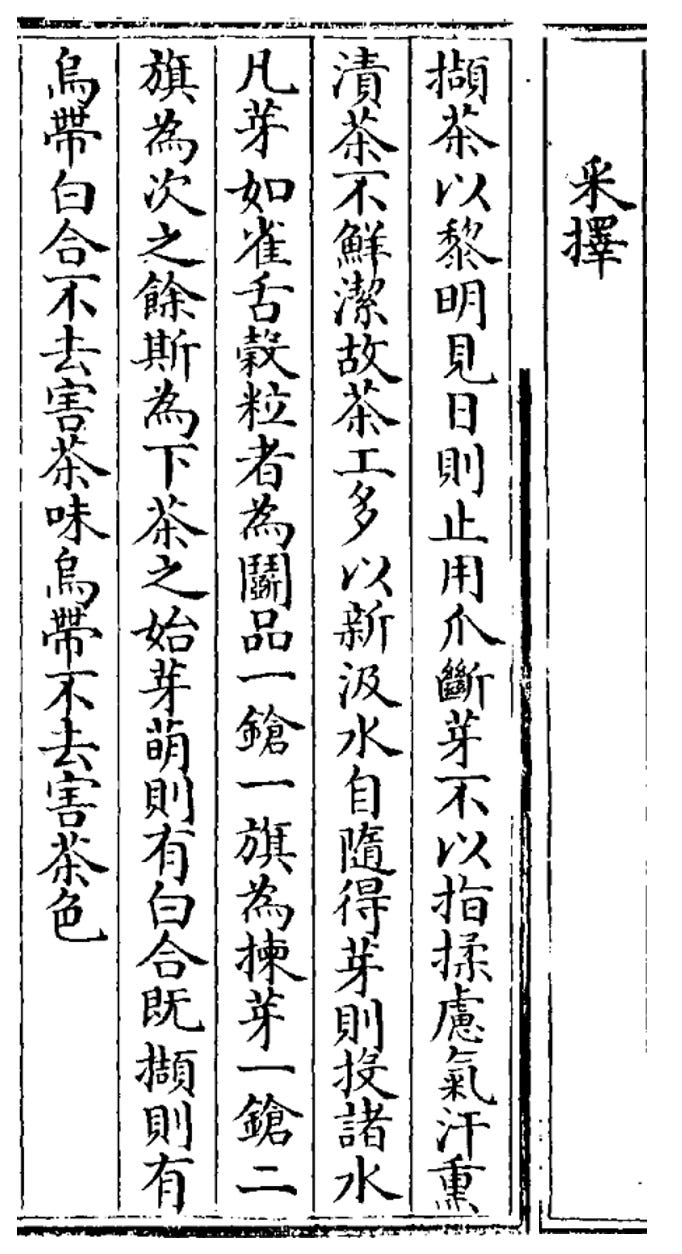
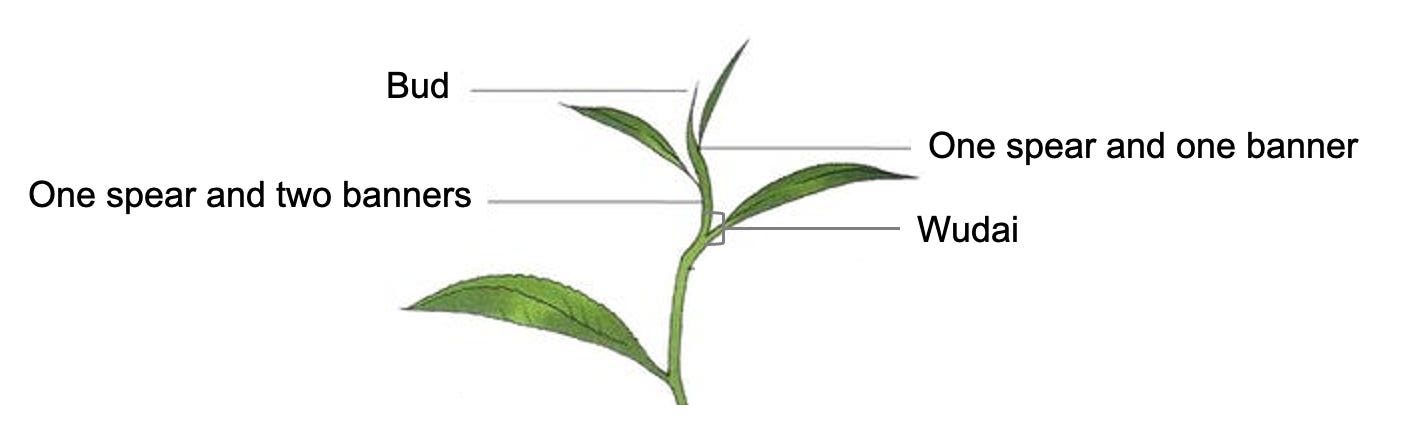
撷茶以黎明,见日则止。用爪断芽,不以指揉,虑气汗熏渍;茶不鲜洁。故茶工多以新汲水自随,得芽则投诸水。凡牙如雀舌谷粒者为斗品,一枪一旗为拣芽,一枪二旗为次之,余斯为下。茶之始芽萌则有白合,既撷则有乌带,白合不去害茶味,乌带不去害茶色。
Tea is plucked at dawn before sunrise. The tea buds should be severed with fingernails, and not rubbed with finder tips. Body heat and sweat could contaminate the leaves. Tea workers often carry freshly drawn well water with them. As soon as tea buds are plucked, they are placed in water.
Tea leaves shaped like sparrow tongues or grains of millet are classified as Dou-grade, the finest kind. “One spear and one banner” refers to one bud and one leaf, and it is classified as Jianya, the next best. “One spear and two banners” denotes one bud and two leaves, ranking one step below. All other kinds are inferior.
When buds first emerges, it may bear twin clasping leaves known as Baihe. Once plucked, a small stem collar remains at its base, known as Wudai. If the Baihe are not removed, they impair the flavor of the tea; if the Wudai is not removed, it impairs the color.
Chapter Four: On Steaming and Pressing
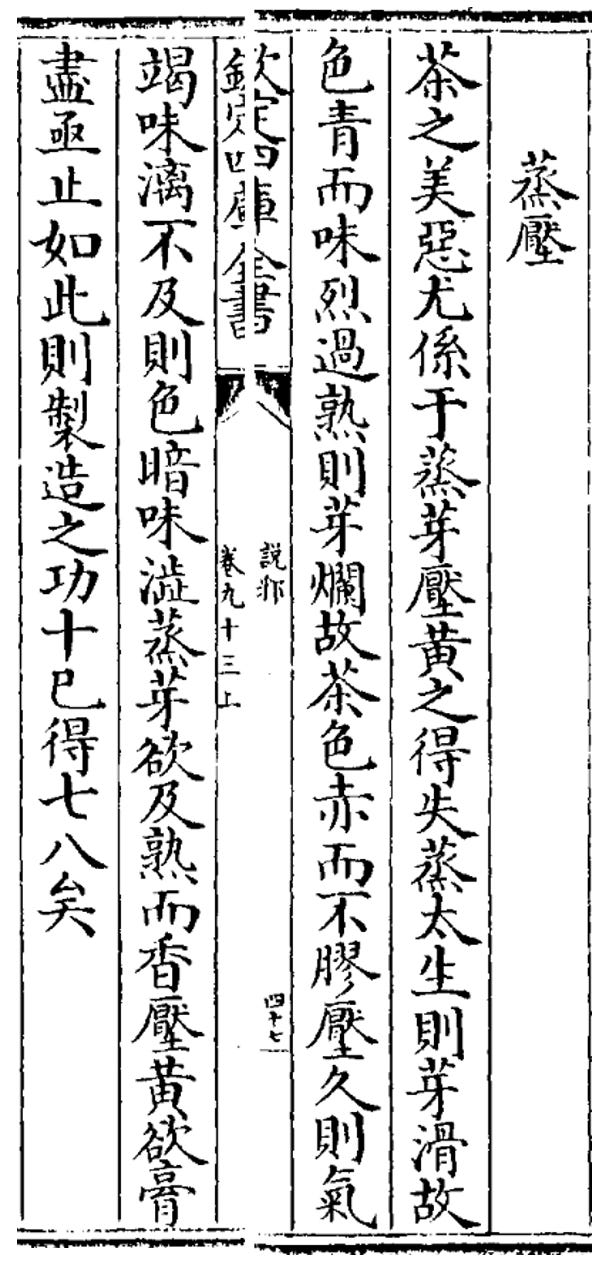
茶之美恶、尤系于蒸芽压黄之得失。蒸太生则芽滑,故色清而味烈。过熟则芽烂,故茶色赤而不胶。压久则气竭味漓,不及则色暗昧涩。蒸芽欲及熟而香,压黄欲膏尽亟止。如此,则制造之功,十已得七、八矣。
Above all, the quality of tea depends on how the leaves are steamed and pressed until they turn yellow. Understeamed leaves remain slick and unset. The resulting liquor would appear clear with a harsh flavor. Oversteamed leaves can break down in to pieces. The tea turns reddish and does not bind properly in the mold. If pressed for too long, the tea’s essence is depleted, and its aroma and flavor grow flat. Insufficiently pressed tea, on the other hand, tends to have a dull color and an astringent taste. The leaves should be steamed just to the point of doneness, preserving their aroma. Pressing should continue until the moisture is fully expelled, and stop immediately thereafter. If done properly, seventy or eighty percent of the craft is accomplished.
Comment: Remarkably, a great deal of chemical drama unfolds during steaming, a process Song artisans mastered centuries before the language of chemistry existed. Heat rapidly denatures enzymes such as polyphenol oxidase, halting the oxidation of catechins that would otherwise darken the leaf and sharpen its taste. If the steaming is insufficient, those enzymes remain active, and the yellowing Huizong noted begins at the molecular level. For a deeper discussion of catechin oxidation and pigment stability, see the chapters on Polyphenols and Pigments in my The Hidden Chemistry of Tea.
Steaming softens the architecture of the leaf, loosening cell walls and making its internal compounds more accessible. A measured degree of pressing becomes essential, as expelling excess water concentrates the remaining soluble constituents within the leaf. Yet pressure carried too far can force out liquid rich in dissolved compounds and increase exposure to air, allowing delicate aromatic molecules to dissipate, much as they would under excessive heat. Subtle flavors dull, and what was once full becomes thinned. The difference between richness and depletion lies in restraint.
Chapter Five: On the Making of Tea
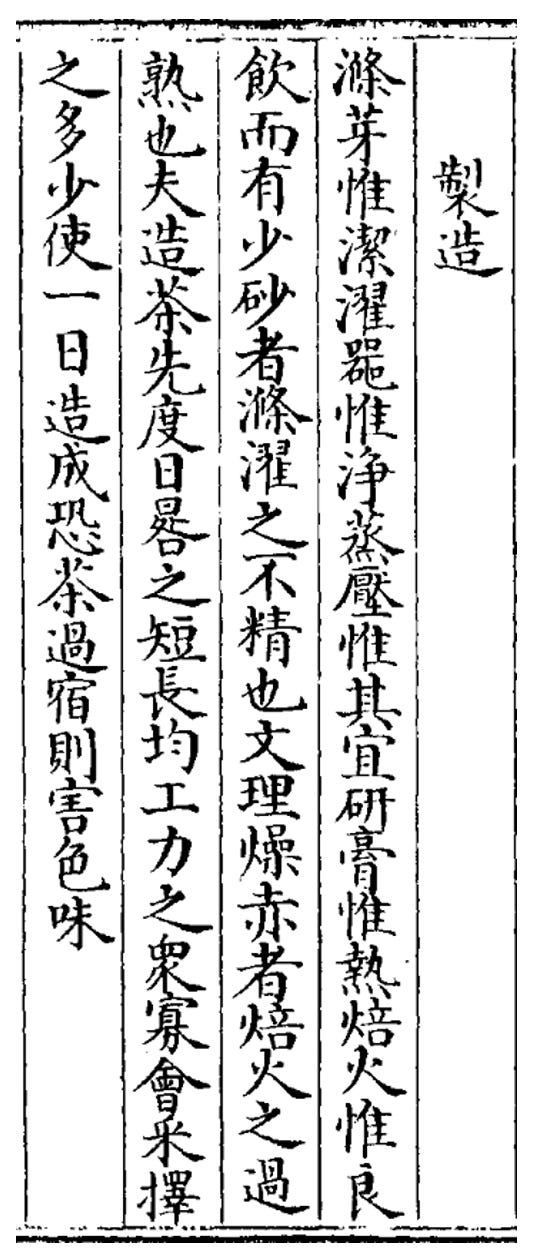
涤芽惟洁,濯器惟净。蒸压惟其宜,研膏惟熟,焙火惟良。饮而有少砂者,涤濯之不精也;文理燥赤者,焙火之过熟也。夫造茶,先度日晷之短长,均工力之众寡,会采择之多少,使一日造成。恐茶过宿,则害色味。
The tea leaves must be thoroughly cleaned, and the utensils kept spotless. Steaming and pressing must be done with precision. The tea must then be ground into a properly refined paste. And the roasting fire should be carefully controlled.
If fine particles are found in the cup, the washing wasn’t sufficiently thorough. If the surface of the tea cake appears dry and reddish, the roasting fire was excessive.
In making tea, one must first gauge the length of daylight, balance the available labor, and determine the quantity of leaves to be plucked, so that the entire process is completed within a single day. For if the leaves pass the night, both their color and flavor will suffer.
Comment: Whether before or after steaming, time itself becomes an active force. Freshly plucked leaves remain metabolically and enzymatically active, and even brief delay allows oxidation, respiration, and pigment degradation to begin. In warm, moist conditions, microbial activity can also take hold, subtly reshaping aroma and flavor. Steaming arrests much of the leaf’s internal chemistry, yet residual moisture still permits slower oxidative change and the gradual loss of volatile compounds. After all, given enough time, chemistry moves forward.
Chapter Six: On Appraisal and Discernment
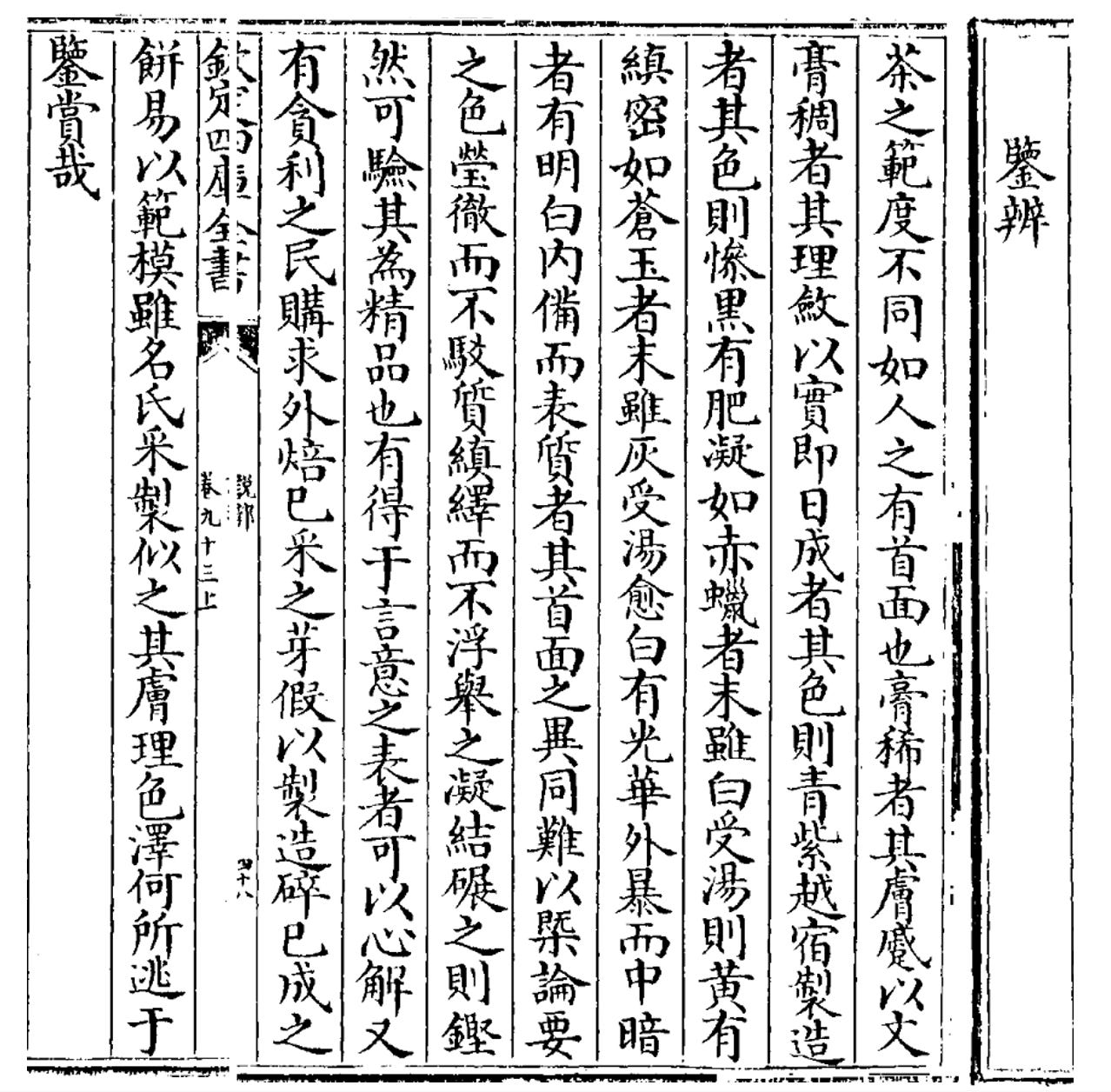
茶之范度不同,如人之有首面也。膏稀者,其肤蹙以文;膏稠者,其理敛以实;即日成者,其色则青紫;越宿制造者,其色则惨黑。有肥凝如赤蜡者, 末虽白,受汤则黄。有缜密如苍玉者,末虽灰,受汤愈白。有光华外暴而中暗者,有明白内备而表质者。其首面之异同,难以概论。
Just as people differ in their features, tea comes in different forms. If the ground tea paste is too thin, the surface of the cake contracts into wrinkled patterns as it sets;
if the paste is thick and cohesive, the grain draws together, becoming dense and finely compact. Tea finished within the same day shows a cool bluish-purple hue, but turns somber black if processed after passing the night. Some tea cakes are richly congealed, smooth like red wax. Though the powder appears pale, it yields a yellowish liquor when whisked. Others are dense and finely compact like dark jade. Though the powder looks gray, they produce an even whiter, brighter appearance when whisked. Some shine with luster on the surface yet are dark within; others possess inward brightness despite a plain exterior. The differences in their outward appearance cannot be judged by sweeping generalizations.
要之,色莹彻而不驳,质缜绎而不浮。举之凝结,碾之则铿然,可验其为精品也。有得于言意之表者,可以心解。 又有贪利之民,购求外焙已采之芽,假以制造,碎已成之饼,易以范模。虽名氏采制似之,其肤理色泽,何所逃于鉴赏哉。
In essence, the surface of the tea cake should be lustrous and even, free of mottling; its texture tightly knit and solid, not loose or hollow. It should feel firm and compact in the hand and produce a crisp, clean sound when broken. By these signs one may judge it to be of superior quality. Some qualities lie beyond what words can fully express and must be grasped intuitively. Driven by profit, some procure leaves from private roasts outside Beiyuan* and falsely claim them as tribute tea; others break apart finished cakes and press them into Beiyuan’s molds.
Note: Imperial tea garden.
Chapter Seven: On White Tea
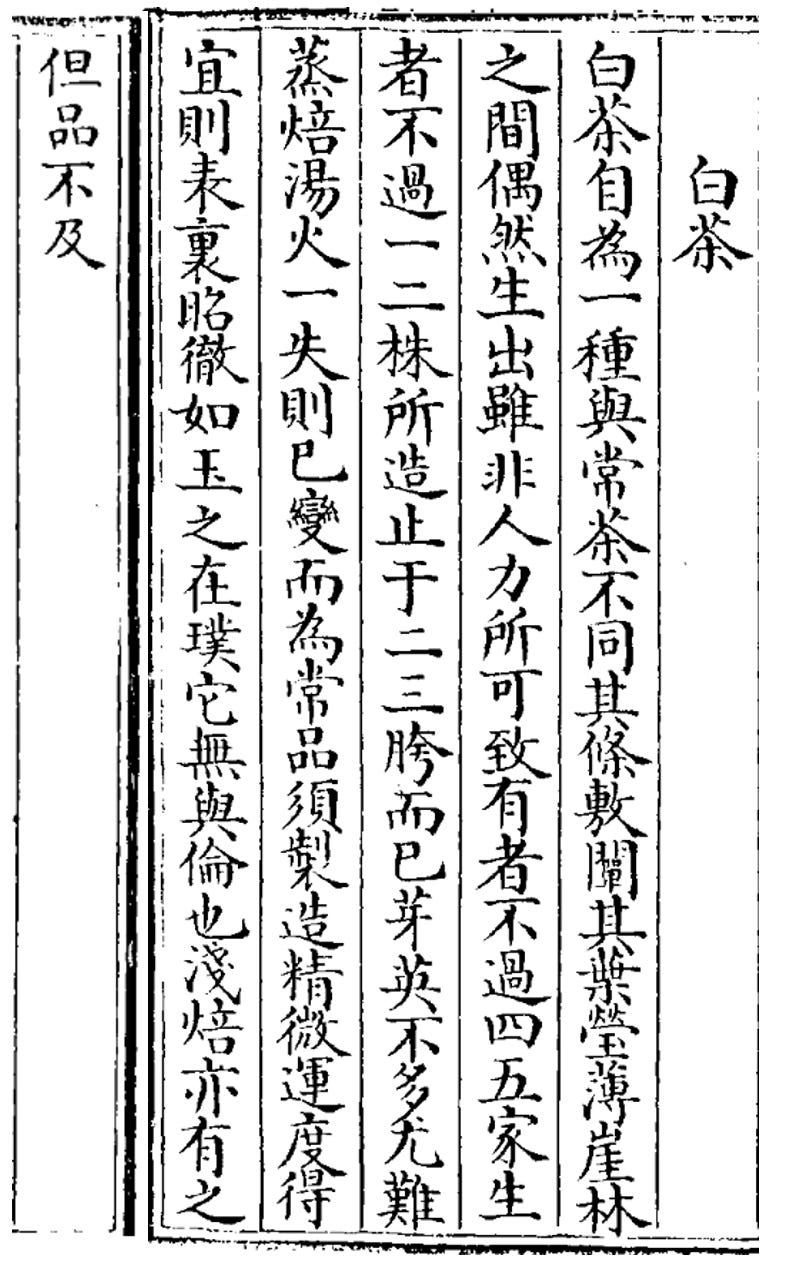
白茶自力一种,与常茶不同。其条敷阐,其叶莹薄。崖林之间,偶然生出,虽非人力所可致。有者不过四、五家,生者不过一、二株,所造止于二、三胯而已。芽英不多,尤难蒸培,汤火一失,则已变而为常品。须制造精微,运度得宜,则表里昭彻,如玉之在璞,它无与伦也;浅焙亦有之,但品不及。
White tea stands in a category of its own, distinct from ordinary tea. Its branches spread freely and its leaves are delicately thin with a luminous sheen. The tree grows naturally among the cliffside forests and is not the result of human cultivation. At most four or five families have these trees, each with only one or two plants. Each family would harvest enough leaves to produce only two or three tea cakes.
The tea buds are few and far between and especially difficult to steam and process. If the balance of water and heat is even slightly mismanaged, the tea quickly declines into an ordinary grade. It must be crafted with the utmost precision and with exact control of heat and processing. Only then will the tea be clear and luminous throughout, like a piece of uncut jade, unparalleled by any other. A lightly roasted version also exists, but it does not attain the same excellence.
Comment: The “white tea” described here should not be confused with the minimally processed white teas of later Fujian tradition. Song white tea was steamed, pressed into cakes, and prepared for whisked tea. The term most likely referred to rare pale-leaf or naturally lighter cultivars prized for their luminous color in the bowl, not to the sun-withered style now associated with white tea. While the name appears in slightly earlier Northern Song sources, this chapter offers one of the earliest detailed accounts of white tea as a distinct and exceptional category. In doing so, Huizong elevated it from a rare botanical curiosity to an imperial standard of refinement.
Chapter Eight: On Sieve and Grinder
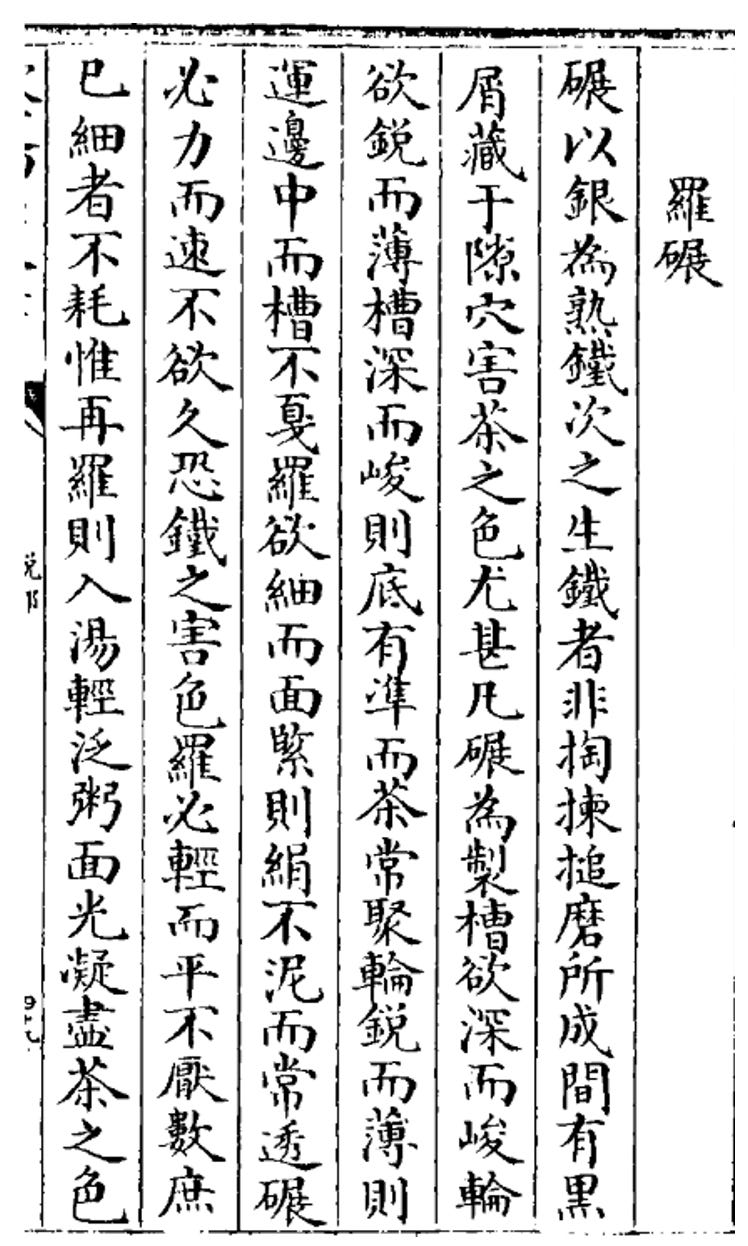
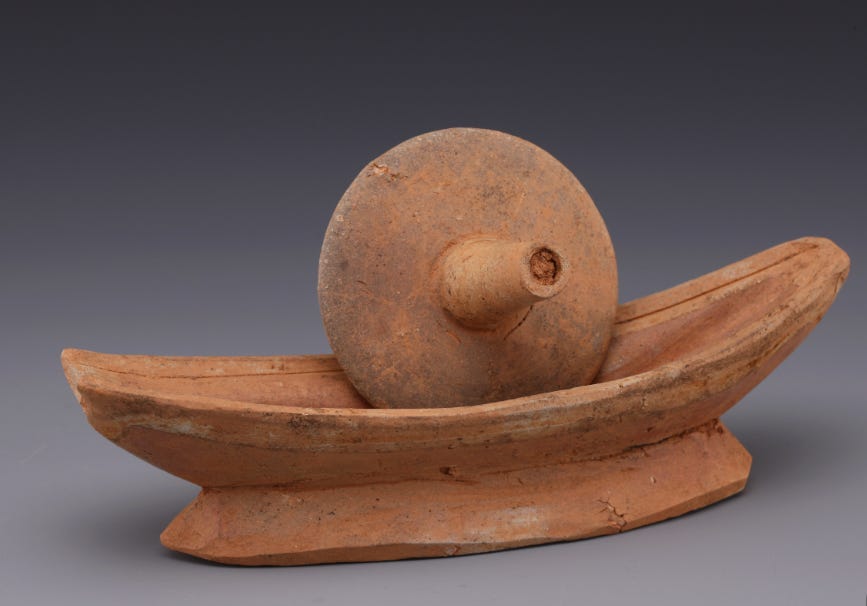
碾以银为上,熟铁次之。生铁者,非掏揀槌磨所成,间有黑屑藏干隙穴,害茶之色尤甚。凡碾为制,槽欲深而峻,轮欲锐而薄。槽深而峻,则底有准而茶常聚。轮锐而薄,则运边中而槽不戛。
Silver is the finest material for tea grinders; wrought iron ranks next. Grinders made from unrefined raw iron may conceal dark particles in their seams and cavities, tainting the tea’s color. A tea grinder should have a deep, steep trough and a sharp, thin wheel. The depth keeps the wheel centered, while the steep sides guide the tea downward so it gathers evenly at the bottom. The thin, sharpened wheel moves smoothly within the trough without scraping the sides.
罗欲细而面紧,则绢不泥而常透。碾必力而速,不欲久,恐铁之害色。罗必轻而平,不厌数,庶已细者不耗;惟再罗,则入汤轻泛,粥面光凝,尽茶之色。
The sieve should be fine, with the silk stretched taut over the frame, so it does not clog and remains permeable. Grinding must be firm and swift, never prolonged, lest the iron taint the tea’s color. Sifting, by contrast, should be gentle and steady, repeated patiently, so the powder becomes a fine, bright green without scattering. Only after being sifted twice will the powder rise lightly in the water, forming a smooth, lustrous surface like porridge, fully revealing the tea’s color.
Chapter Nine: On Tea Bowl
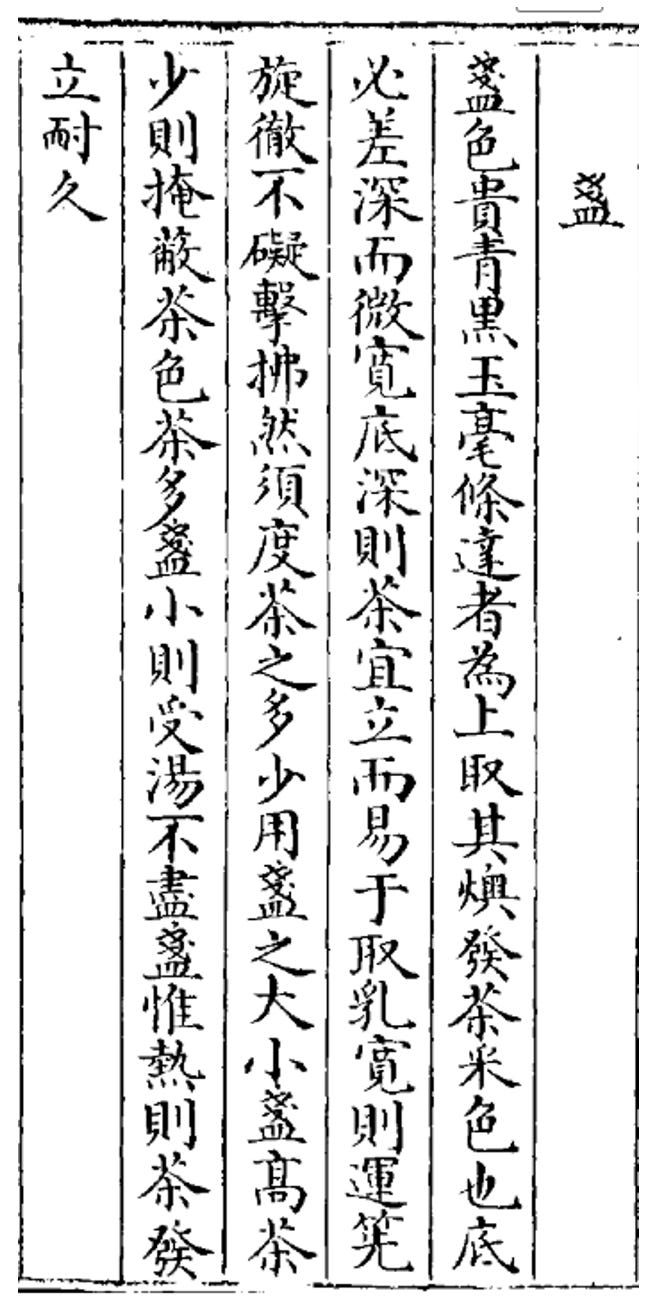
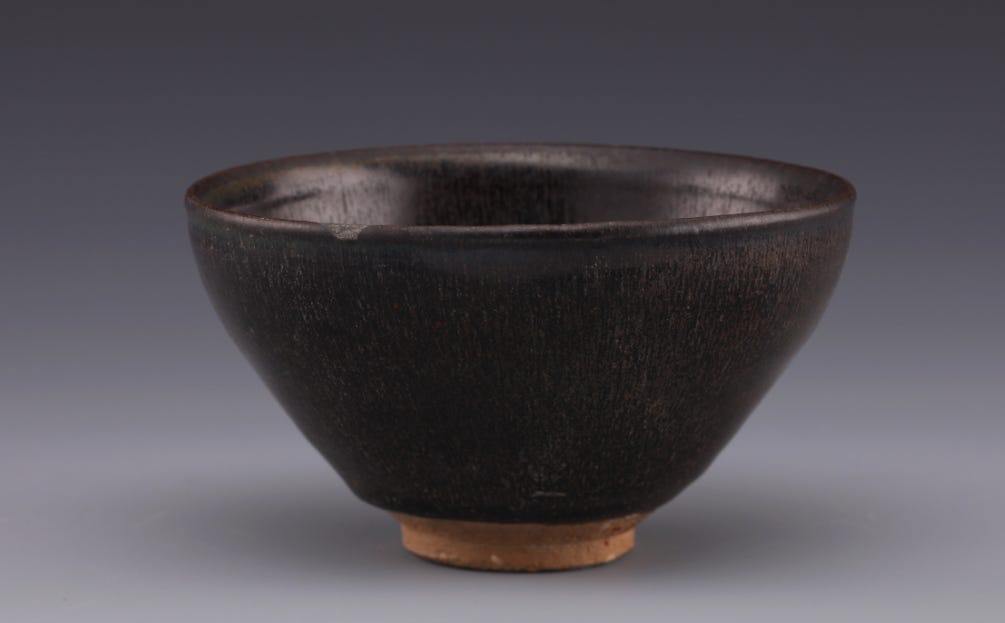
盏色贵青黑,玉毫条达者为上。取其燠发茶采色也。底必差深而微宽,底深则茶宜立而易于取乳,宽则运筅旋彻不碍击拂。然须度茶之多少,用盏之大小。盏高茶少则掩蔽茶色,茶多盏小则受汤不尽。盏惟热则茶发立耐久。
Tea bowls are best in a deep black glaze. Those with fine, clearly defined jade-like streaks are superior. These bowls retain heat and bring out the tea’s color. The base should be moderately deep and slightly wide. Greater depth allows the tea to rise properly and the foam to develop more easily, while a wider base gives the whisk space to turn freely.
Still, the size of the bowl should be chosen according to the amount of tea. When a tall bowl holds only a small amount of tea, the color does not show well. Conversely, if too much tea is placed in a small bowl, there isn’t enough water to work the mixture properly. The tea bowl should be kept warm, so the foam will rise and hold.
Chapter Ten: On Tea Whisk
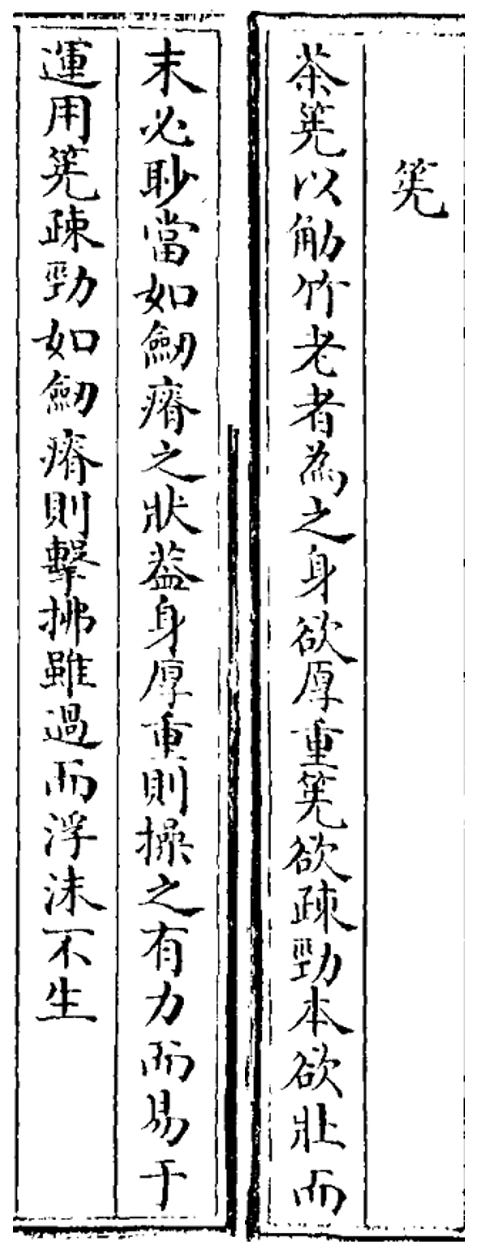
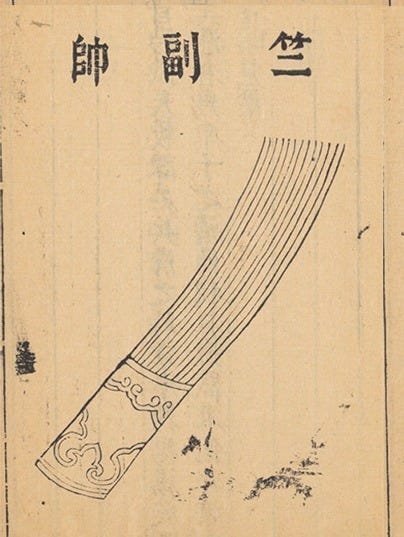
筅,茶筅以觔竹老者为之:身欲厚重,筅欲疏劲。本欲壮而未必眇,当如剑瘠之状。盖身厚重,则操之有力而易于运用。筅疏劲如剑瘠,则击拂虽过而浮沫不生。
The whisk is made from mature, sturdy bamboo. The handle should be thick and solid, while the prongs are set apart yet springy. The base should be sturdy but not cluttered, the whole shaped like the spine of a sword. A thick handle is easier to hold and maneuver. Firm, well-spaced prongs shaped like the spine of a sword prevent coarse foam, even with heavy whisking.
Chapter Eleven: On Ewer
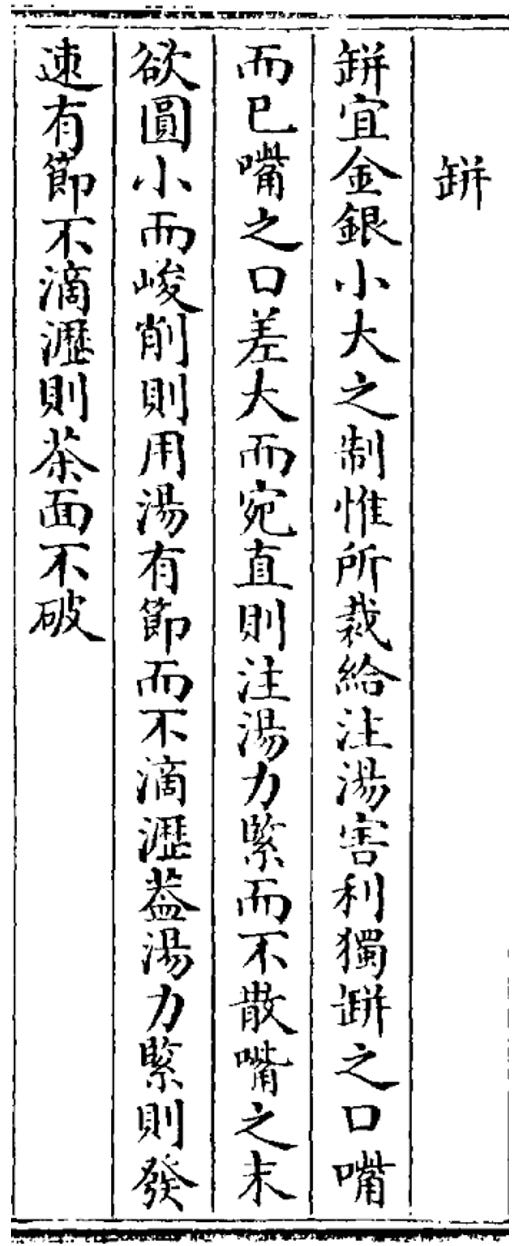
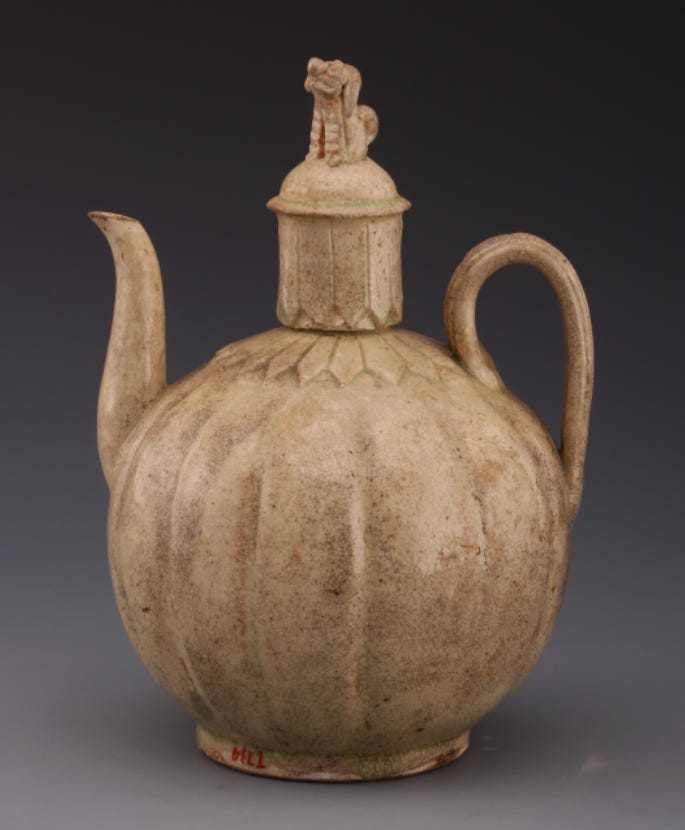
瓶宜金银,小大之制,惟所裁给。注汤害利,独瓶之口嘴而已。嘴之口差大而宛直,则注汤力紧而不散;嘴之未欲园小而峻削,则用汤有节而不滴沥。盖汤力紧则发速有节,不滴沥,则茶面不破。
The ewer is best made of gold or silver, and its size should be appropriate to its use. How the water falls depends entirely on the form of the spout. The spout should open slightly wide at its base and curve cleanly, producing a strong, focused stream that does not scatter. The spout should also narrow to a small, finely tapered tip, so the flow remains measured and free of drips. A steady, concentrated stream brings the tea together quickly and in proper rhythm, while a clean pour keeps the surface smooth and undisturbed.
Comment: What Huizong describes in aesthetic terms is a matter of fluid dynamics. A properly shaped spout encourages laminar flow, in which water moves in smooth, coherent layers rather than breaking into turbulence. A focused stream delivers momentum efficiently into the bowl, helping the whisked tea come together without splashing or scattering. When the tip is finely tapered, surface tension allows the stream to detach cleanly, preventing drips that would otherwise disturb the fragile foam. The elegance lies in physics.
Chapter Twelve: On Ladle
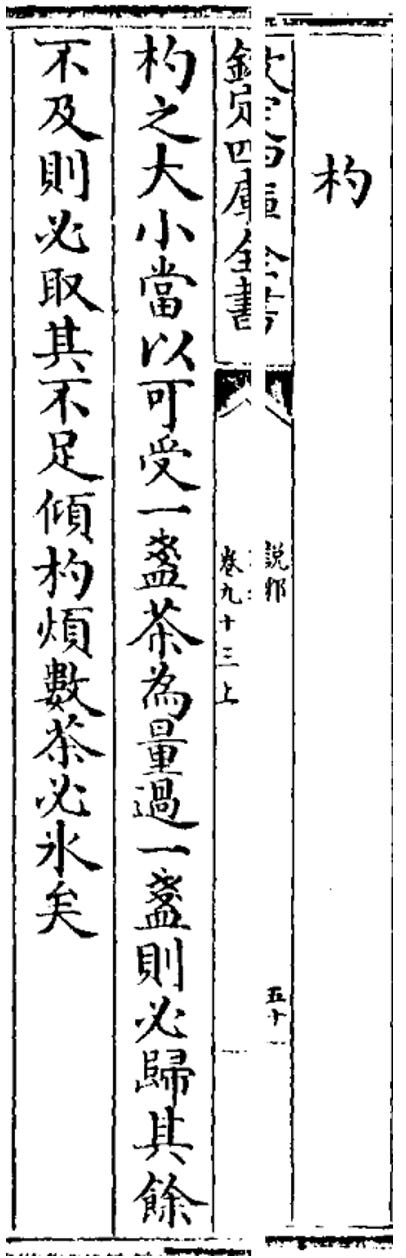
杓之大小,当以可受一盏茶为量,过一盏则必归其余,不及则必取其不足。倾杓烦数,茶必冰矣。
The ladle should measure one bowl of water precisely. If there is too much, it must be poured back; if too little, more must be added. Extra pours lower the temperature of the tea.
Chapter Thirteen: On Water
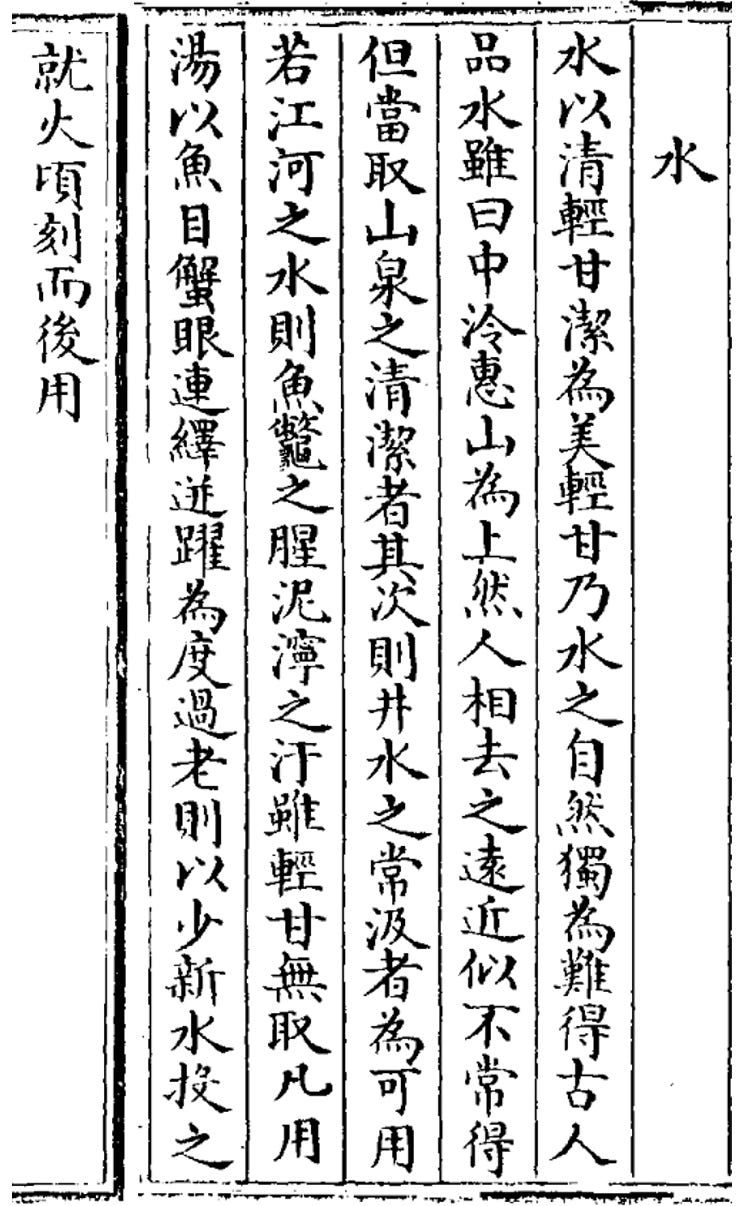
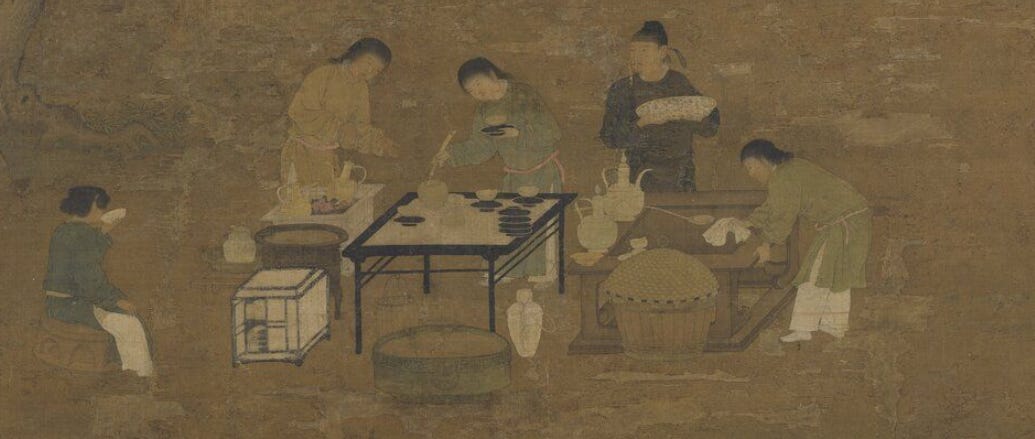
水以清轻甘洁为美。轻甘乃水之自然,独为难得。古人品水,虽曰中泠惠山为上,然人相去之远近,似不常得。但当取山泉之清洁者。其次,则井水之常汲者为可用。若江河之水,则鱼鳖之腥,泥泞之污,虽轻甘无取。凡用汤以鱼目蟹眼连绎迸跃为度。过老则以少新水投之,就火顷刻而后用。
The finest water is clear, light, sweet and pure. Though lightness and sweetness are natural to water, such water is difficult to come by. Though Zhongling Spring* (in Zhenjiang) and Huishan Spring* (in Wuxi) are considered the finest by the ancients, their waters were not readily accessible to all. In practice, any clean mountain spring will suffice, with well water that is regularly drawn as the next best choice. River water bears the smell of aquatic life and the murk of silt. Even if it is light and sweet, it is unsuitable for tea.
When boiling water for tea, wait until small bubbles rise in steady succession, like fish and crab eyes. If the water has boiled too long, add a small amount of fresh water and return it briefly to the fire before using it.
Note: Zhongling Spring and Huishan Spring are two renowned springs located in present-day Zhenjiang and Wuxi, both in Jiangsu province.
Chapter Fourteen: On Dian Cha
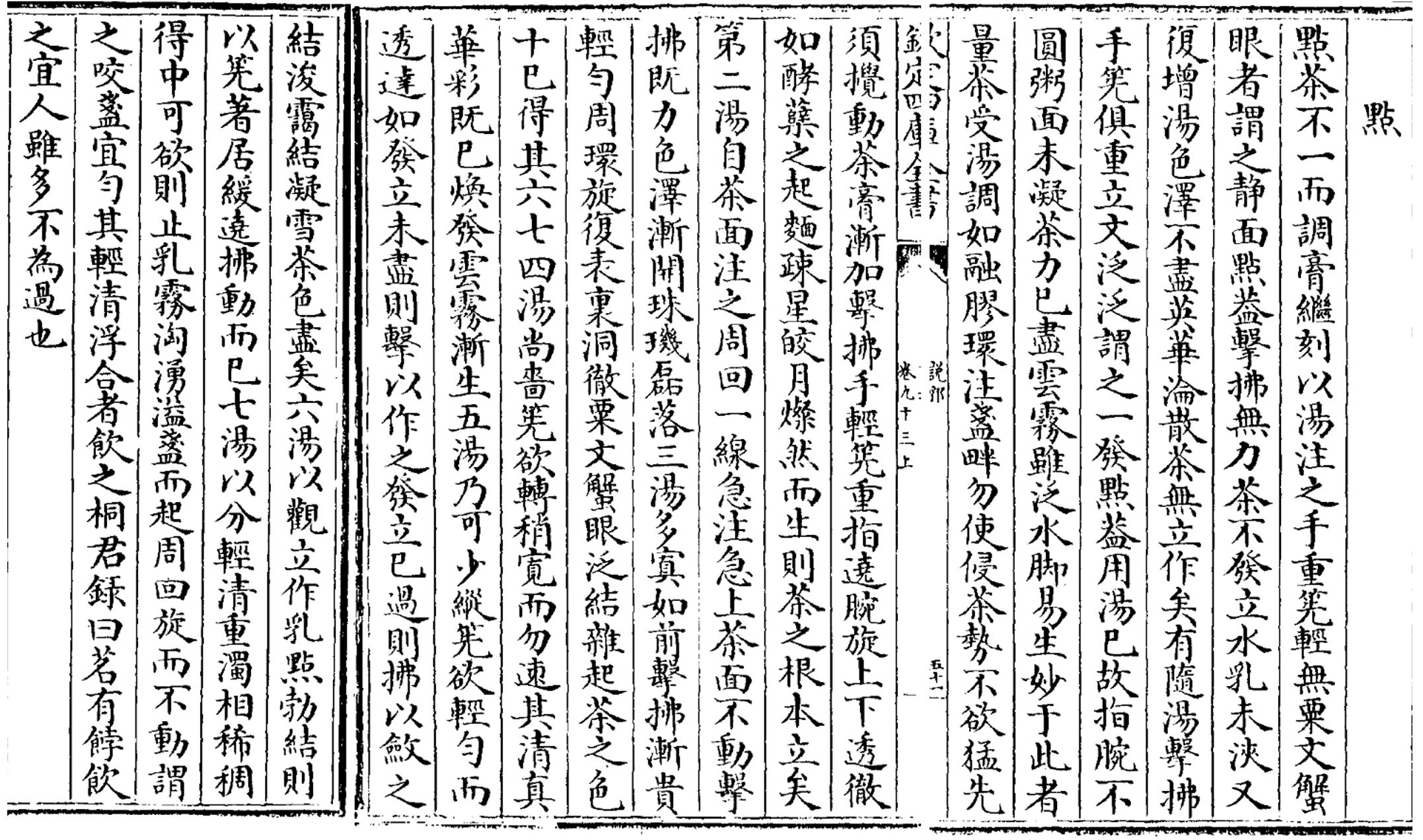
点茶不一。而调膏继刻,以汤注之,手重筅轻,无粟文蟹眼者,调之静面点。盖击拂无力,茶不发立,水乳未浃,又复增汤,色泽不尽,英华沦散,茶无立作矣。有随汤击拂,手筅俱重,立文泛泛。谓之一发点,盖用汤已故,指腕不圆,粥面未凝。茶力已尽,云雾虽泛,水脚易生。
The methods of preparing dian cha (Song-style powdered tea) are far from consistent. After blending the powdered tea into a paste, pour in hot water shortly. A “still-surface” preparation occurs when the hand bears down too heavily while the whisk fails to drive the liquid, leaving the surface without the fine millet-grain textures or bright crab-eye bubbles. This is because the whisking lacks intensity, the tea fails to rise and stand. Thus the water and foam can not fully integrate. After the subsequent pour, the tea’s color and brightness have not yet fully emerged. Its finest essence disperses, and the foam never gathers into a firm, lasting stand.
Another flawed method appears when the tea is whisked continuously as water is poured, with both the hand and the whisk bearing down heavily. The foam rises, but it fails to bind and instead floats loosely across the surface, pale and scattered. This is known as a “single-burst” preparation. With too much water already in the bowl, the wrist cannot maintain smooth, rounded motion, and the surface never thickens like porridge. The tea’s vitality has already been spent. Water soon begins to separate at the edges, even if a mist-like foam still spreads across the surface.
妙于此者,量茶受汤,调如融胶。环注盏畔,勿使侵茶。势不欲猛,先须搅动茶膏,渐加击拂,手轻筅重,指绕腕旋,上下透彻,如酵蘖之起面。疏星皎月,璨然而生,则茶之根本立矣。第二汤自茶面注之,周回一线。急注急上,茶面不动,击拂既力,色泽惭开,珠玑磊落。三汤多置。如前击拂,渐贵轻匀,周环旋复,表里洞彻,粟文蟹眼,泛结杂起,茶之色十已得其六七。
The skilled practitioner measures how much water the tea can properly take, blending them together the consistency of melted resin. They pour in a circular stream along the rim of the bowl, and do not let the water plunge directly into the tea. The pour should not be abrupt or forceful. Gently stir the tea paste to loosen it, and then gradually increase the circular whisking. Keep the hand light, and let the whisk move firmly through the tea. The fingers move with the wrist in a smooth, circling motion, working the tea thoroughly from top to bottom. The surface begins to lift and swell like gently rising dough. The foam appears like scattered stars and a bright moon, gleaming across the surface. At this point, the tea’s foundation is firmly established.
The second infusion is poured over the surface of the tea, tracing a thin, continuous circle. Pour and lift the ewer swiftly, keeping the surface undisturbed. Whisk with controlled force as the brilliance gradually unfolds and the foam gathers into layered pearls. The third infusion is added more generously. Whisk as before, but let the motion gradually become lighter and more even, circling along the same path until the tea is thoroughly worked through. Millet-grain and crab-eye bubbles begin for form and gather. By this stage, the tea has reached six or seven parts of its full brilliance.
四汤尚啬。筅欲转稍宽而勿速,其清真华彩,既已焕发,云雾渐生。五汤乃可少纵,筅欲轻匀而透达。如发立未尽,则击以作之;发立已过,则拂以敛之。结浚霭,结凝雪。茶色尽矣。六汤以观立作,乳点勃结则以筅著,居缓绕拂动而已。七汤以分轻清重浊,相稀稠得中,可欲则止。
The fourth infusion should be restrained. The whisk may move in slightly wider circles, but it must not be hurried. By now, Its bright, snow-like foam has already come fully into bloom, and a soft cloud begins to gather. The fifth infusion allows slightly more freedom. The whisk should stay light and even, working thoroughly through the tea. If the foam has not yet fully risen and stood, strike to build it up. If the foam has risen too far, brush the surface gently to settle it back into form. Now, the foam gathers like mist and settled snow as it reaches its full brilliance. With the sixth infusion, observe how the foam stands and holds. If small, white droplets begin to swell and cluster, touch them lightly with the whisk, moving slowly in gentle circles. With the seventh infusion, judge whether the tea is light and clear or heavy and turbid. Stop when the consistency is properly balanced.
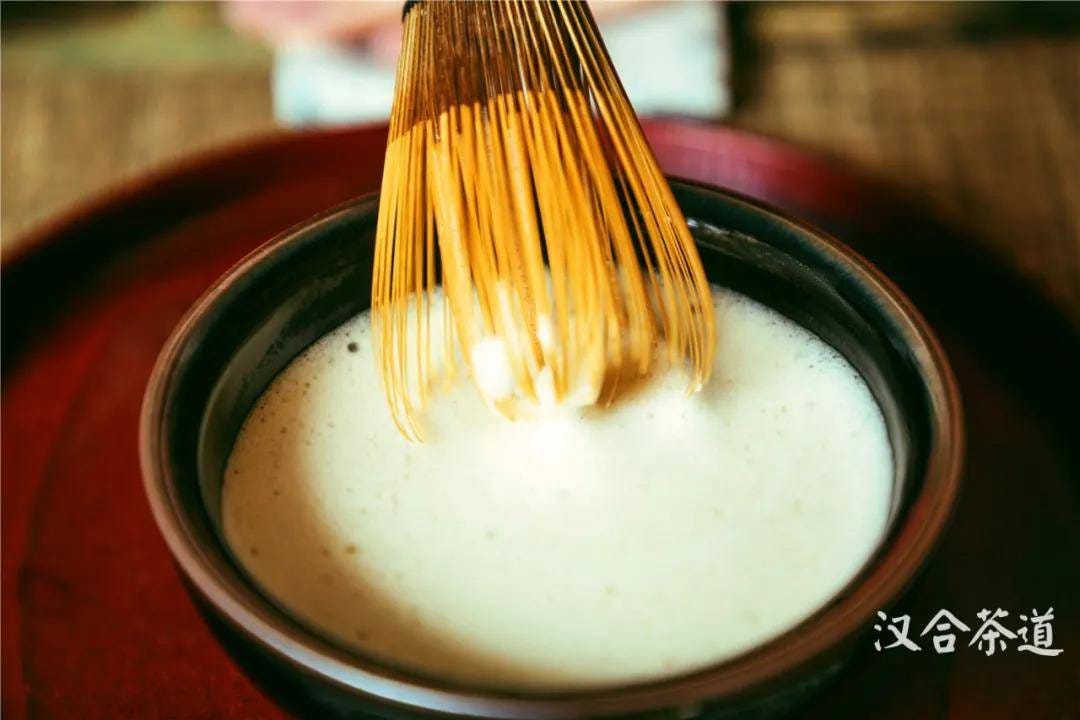
乳雾汹涌,溢盏而起,周回旋而不动,谓之咬盏。宜匀其轻清浮合者饮之。《桐君录》曰,“茗有饽,饮之宜人,虽多不为过也。
The foam swells and rises like clouds to the edge of the bowl as if about to spill. Yet it circles the bowl and holds fast. This is called “biting the bowl.” Now drink the light, clear, floating essence, harmoniously brought into balance. The Record of Tongjun* says:” Tea has layer of froth on top. It benefits and pleases the body. One can never have too much of it.”
Note 1: Tongjun is regarded as one of China’s earliest pharmacological figures. The earliest written record of him dates to the Spring and Autumn period, 770–481 BC. Although, the original text of The Record of Tongjun has been lost, it is frequently cited in later medical and encyclopedic sources. Fragments of its content survived through these quotations. The text is associated with early Chinese pharmacological classification and emphasizes the medicinal properties of plants, including tea.
Comment: I have often wondered why the Chinese people chose the word Dian 点 for the preparation of whisked powder tea. A glance at the dictionary reveals meanings such as applying in small amounts, selecting, and even illuminating and guiding. In tea preparation, one senses something of all these gestures: the careful use of a precious, finely powdered leaf, the deliberate calibration of each movement, and quiet spiritual clarity this ritual brings to us.
Naming aside, tea leaves contain natural surfactant compounds such as saponins, along with proteins and amino acids that contribute to foam stability. During whisking, these components lower surface tension and help form elastic films around air bubbles. The bright “crab-eye” bubbles and fine millet-grain textures Huizong describes are visible signs of proper aeration, indicating that air has been incorporated into a stable colloidal foam. When whisking lacks force or timing, water and foam fail to integrate into a cohesive network of liquid and air, leaving the surface flat and without the luminous patterns.
Chapter Fifteen: On Flavors
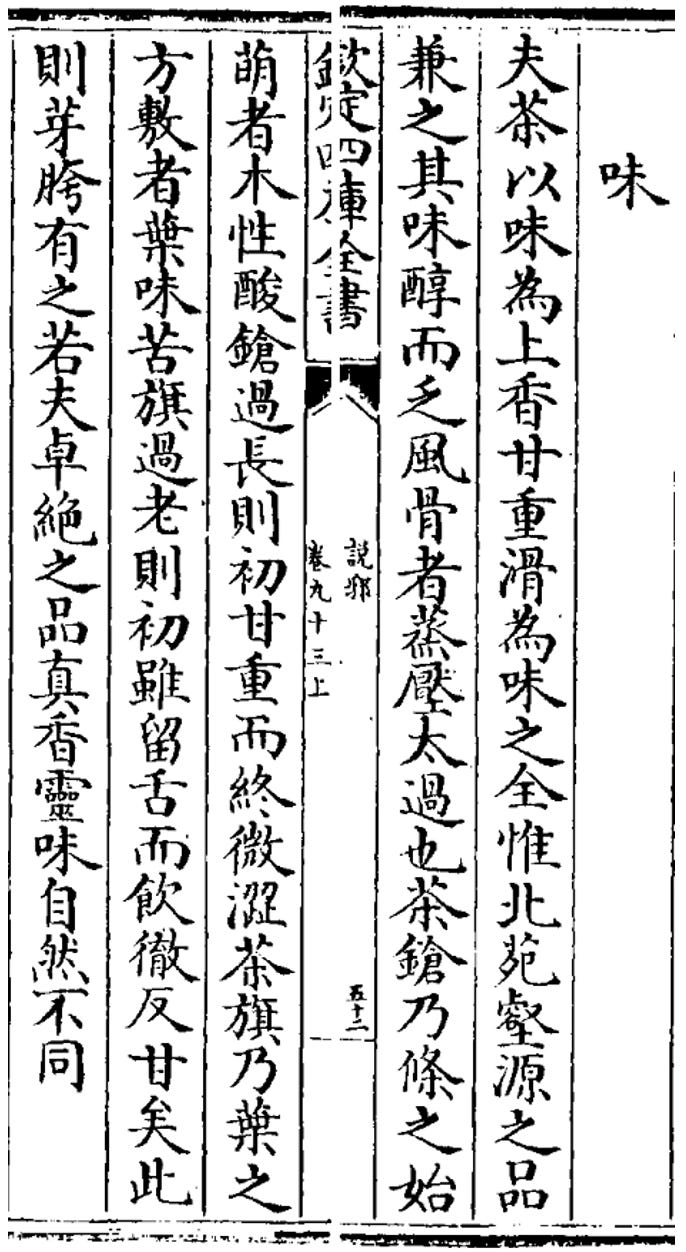
夫茶以味为上。香甘重滑,为味之全。惟北苑壑源之品兼之。其味醇而乏风骨者,蒸压太过也。茶枪乃条之始萌者,木性酸,枪过长则初甘重而终微涩。茶旗乃叶之方敷者,叶味苦。旗过老则初虽留舌而饮彻反甘矣。此则芽胯有之。若夫卓绝之品,真香灵味,自然不同。
In tea, flavor is paramount. Aroma, sweetness, body, and smoothness together constitute the complete flavor of tea. Only select teas from Beiyuan and Heyuan* possess all four qualities. Excessively steamed and pressed tea may taste mellow and rich, but it feels flat and lacks the liveliness that gives it character.
The “spear” is the tender bud at the tip of a young shoot. It retains a woody character with a faint tart edge. If the spear grows too long, the tea tastes sweet and substantial at first, but finishes with a faint astringency. The “banner” is the leaf just beginning to unfurl, and its taste is bitter. If the leaves becomes too mature, it first lingers bitterly on the tongue, but gives way to a sweet aftertaste. Such variations are found in the bud and leaf themselves. Truly exceptional teas, with true aroma and lively flavor, are naturally set apart.
Note: Beiyuan refers to the imperial tea gardens of Fujian, while Heyuan was a renowned private estate in the same region. Both were associated with the production of high-quality tribute tea.
Chapter Sixteen: On Aroma
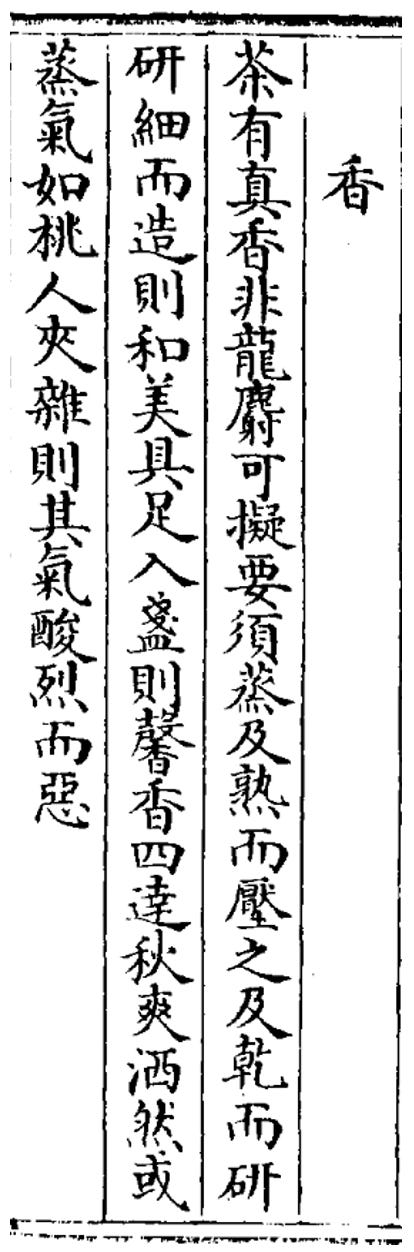
茶有真香,非龙麝可拟。要须蒸及熟而压之,及干而研,研细而造,则和美具足。入盏则馨香四达,秋爽洒然。或蒸气如桃人夹杂,则其气酸烈而恶。
想要得此真香,一定要把茶叶蒸到熟透再压榨,直到汁水压榨干了再细细地研磨,研细之后才可制成茶饼。这样造出的茶就具备了和美的气韵,新茶入盏即清香四溢,犹如秋气一般清楚怡人。如果蒸茶时蒸气中夹杂有桃仁之类的异味,那茶味就酸烈难闻了。
Tea possesses a true aroma that borneol or musk cannot rival. The leaves must be fully steamed and then pressed. Once dried, they are ground to a fine powder before
The leaves must be steamed until fully cooked and then pressed until dry. They are then finely ground before being shaped in a mold. The resulting tea can achieve balance and harmony. When placed in the cup, its aroma spreads like the refreshing autumn air. If the steam carries a peach-kernel note, the tea’s aroma turns sharp and unpleasant, revealing that it has not been fully steamed.
Chapter Seventeen: On Color
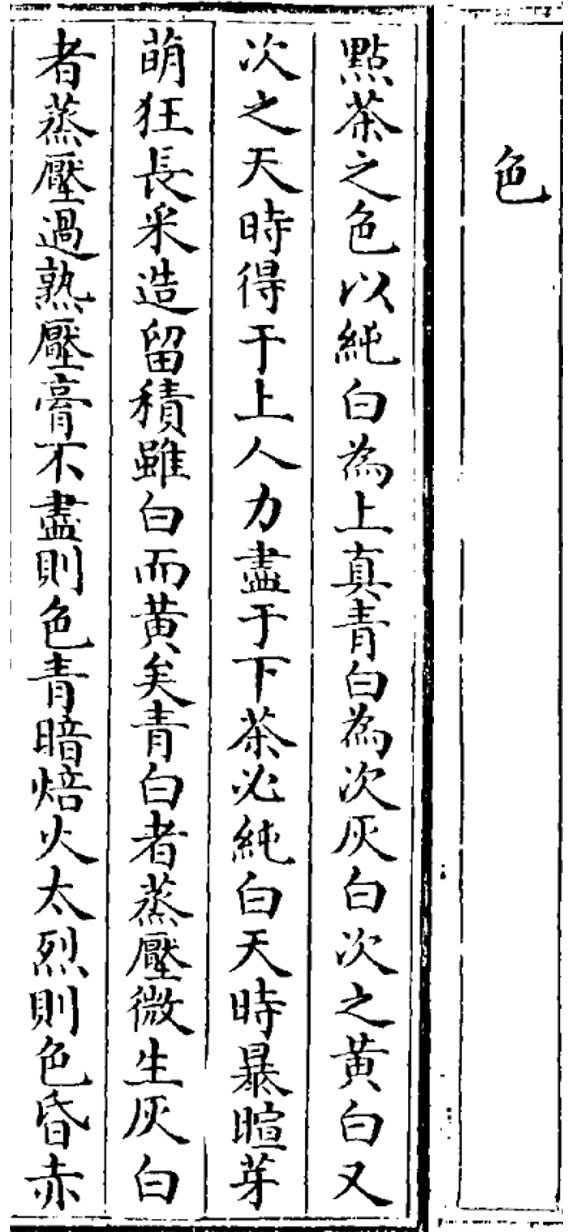
点茶之色,以纯白为上真,青白为次,灰白次之,黄白又次之。天时得于上,人力尽于下,茶必纯白。天时暴暄,芽萌狂长,采造留积,虽白而黄矣。青白者蒸压微生。灰白者蒸压过熟。压膏不尽,则色青暗。焙火太烈,则色昏赤。
When it comes to the color of dian cha, the order of excellence runs from pure white to bluish white, grayish white, and yellowish white. When heavenly timing is right and human effort fully applied, the tea will be pure white. If the weather becomes excessively hot, the buds and leaves grow rampant and harvesting cannot keep pace. Even white tea turns yellow. A bluish white color indicates that steaming and pressing were slightly underdone, while a grayish white color indicates that they were overdone. If the steamed leaves are not pressed thoroughly, the color appears bluish and dark. When roasted with excessive heat, the color turns dull and reddish.
Chapter Eighteen: On Storage and Baking
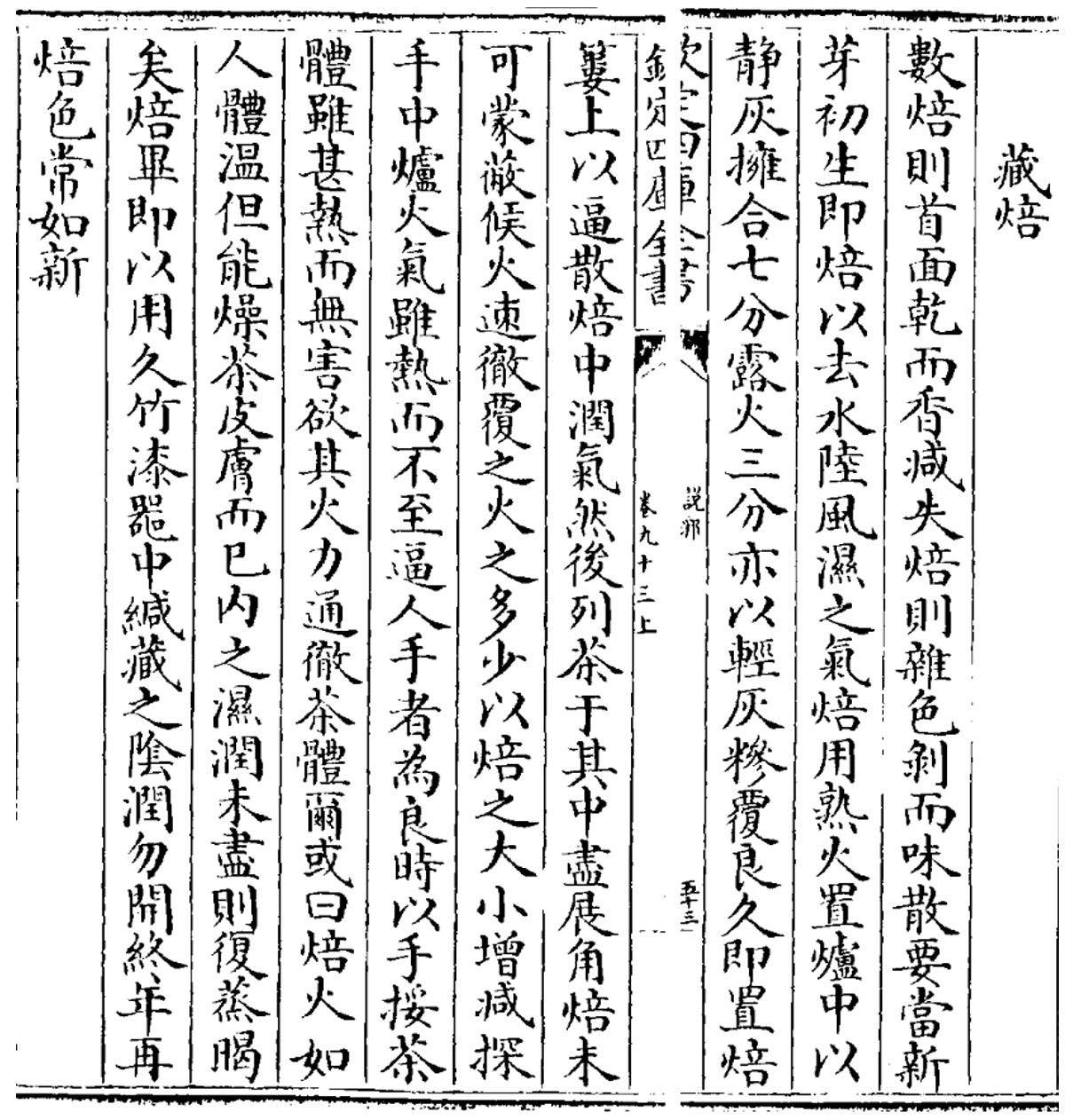
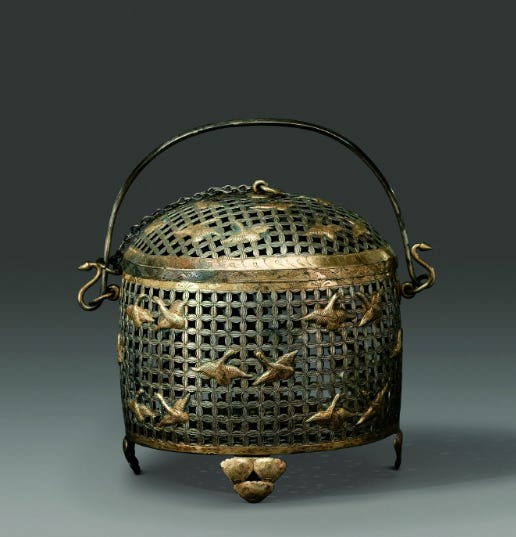
数焙则首面干而香减,失焙则杂色剥而味散。要当新芽初生,即焙以去水陆风湿之气。
Repeated baking dries the surface of the tea cakes and diminishes their aroma, while insufficient firing leaves the color uneven and the aroma underdeveloped. Bake the tender, newly picked leaves and buds to drive off the dampness gathered from the surrounding air and soil.
焙用热火置炉中,以静灰拥合七分,露火三分,亦以轻灰糁覆。良久即置焙篓上,以逼散焙中润气。然后列茶于其中,尽展角焙,未可蒙蔽。候火速彻覆之。火之多少,以焙之大小增减。
Use a bed of fully kindled charcoal in the stove. Bank the charcoal with settled ash, covering about seventy percent and leaving roughly thirty percent exposed, then lightly dust the exposed embers with fine ash. After some time, set the baking basket over the stove to first dispel the moisture within. Then transfer and lay the leaves evenly inside the basket, so that no leaves are shielded and the heat can reach every corner of the basket. Observe the fire closely. When the baking is done, one must quickly cover the exposed charcoal completely with ash. Adjust the heat according to the size of the baking basket.
探手中炉:火气虽热,而不至逼人手者为良。时以手挼茶,体虽甚热而无害,欲其人力通彻茶体尔。或曰,焙火如人体温,但能燥茶皮肤而已,内之湿润未尽,则复蒸暍矣。
One may test the heat by placing a hand into the stove. It should feel warm but not hot enough to burn. From time to time, gently rub the leaves between the fingers. Even if the leaves feel very hot, it will do no harm. The aim is for the manual handling to allow the heat to penetrate evenly throughout the leaves. Some say that if the baking heat is at body temperature, it can only dry the surface of the leaves. If the moisture within has not been fully driven off, the interior of the leaves will continue to steam.
焙毕,即以用久竹漆器中缄藏之。阴润勿开,终年再焙,色常如新。
Once the baking is complete, seal the tea and store it in a well-seasoned lacquered bamboo container. Do not open it in damp or overcast weather. At the end of the year, bake the tea once more, and the color of the tea will remain as fresh as when it was first made.
Chapter Nineteen: On the Naming of Teas
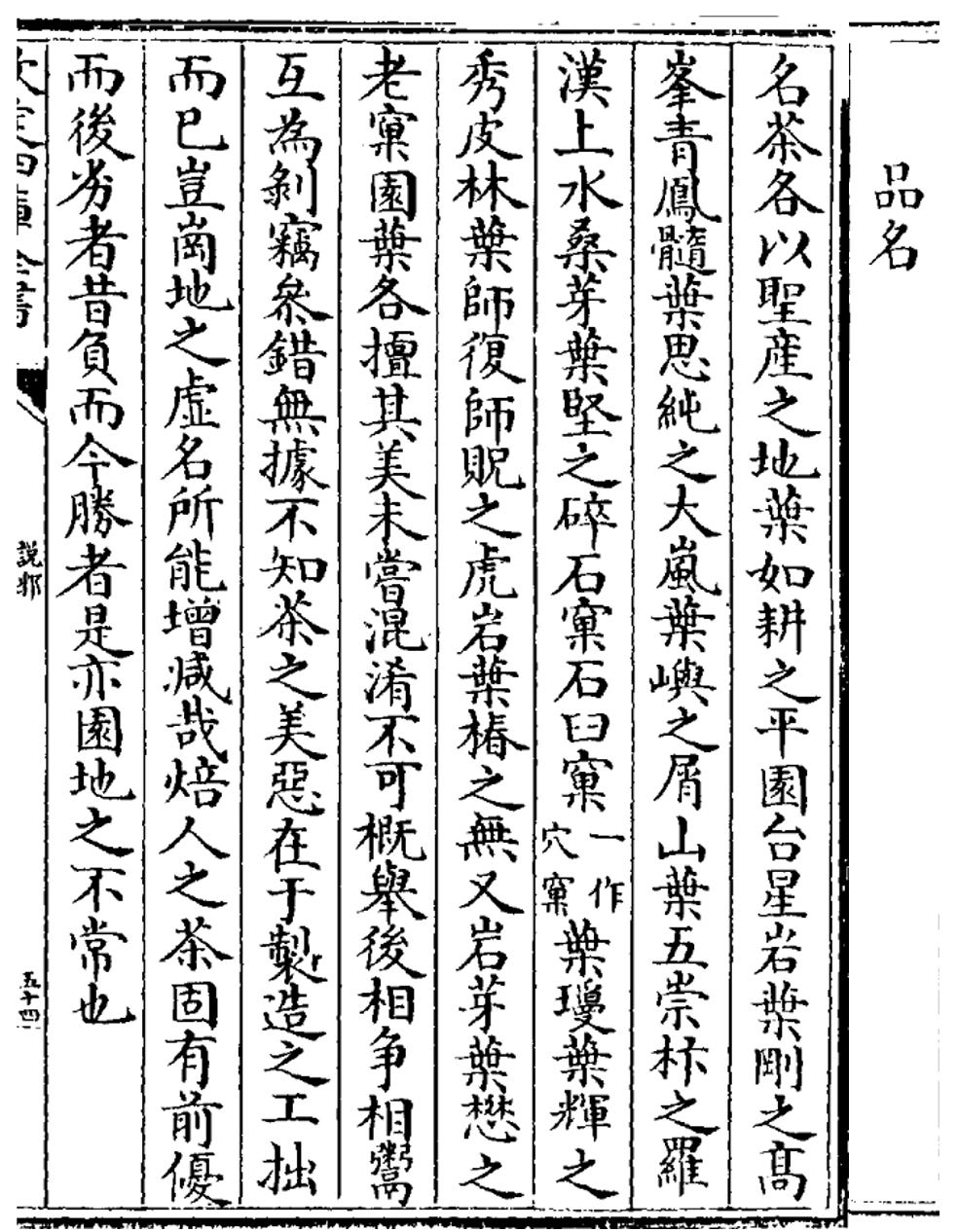
名茶各以圣产之地叶。如耕之平园台星岩叶,刚之高峰青凤髓叶,思纯之大岚叶,屿之屑山叶,五崇柞之罗汉上水桑牙叶,坚之碎石窠石臼窠叶。琼叶。辉之秀皮林叶,师复师贶之虎岩叶,椿之无又岩芽叶,懋之老窠园叶。各擅其美,未尝混淆,不可慨举。
Renowned teas take their names from the celebrated lands that produce those leaves. For instance, Geng tea comes from the leaves of Pingyuan’s Taixing Cliff, Gang tea is made from Qingfeng Sui leaves grown on High Peak, Sichun tea from Dalan, Yu tea from Mount Xie, Wuchongzuo tea from leaves known as “mulberry buds” in the upper waters of Luohan, Jian tea from the rocky sites of Suishike, Shijiuke, and Qiong, Hui tea from the Xiupi forest, Shifu and Shikuang teas from Tiger Cliff, Chun tea from the buds of Wuyou Cliff, and Mao tea from the Old Hollow Garden. Each of these distinct teas has its own merit, and they are too many to recount in full.
Note: Most of the tea names listed here do not survive as distinct categories today. One exception is Dalan, which remains a place name in present-day Yuyao, Zhejiang, and is still associated with tea production. The other localized designations, however, did not continue as stable commercial categories and gradually fell out of use as processing methods and market structures changed in later dynasties.
后相争相鬻,互为剥窃,参错无据。不知茶之美恶,在于制造之工拙而已,岂岗地之虚名所能增减哉。焙人之茶,固有前优而后劣者,昔负百今胜者,是亦园地之不常也。
Over time, sellers compete in the marketplace, stealing one another’s names, and it becomes difficult to know whether a tea truly came from the place it claims. Little do they realize that a tea’s quality rests in the craftsmanship behind it. How could the mere reputation of a hillside add to it or take away from it? Tea from the same producer may first excel and later decline, or improve after an earlier setback. Such shifts reflect the changing conditions of the soil.
Chapter Twenty: On Private Roast
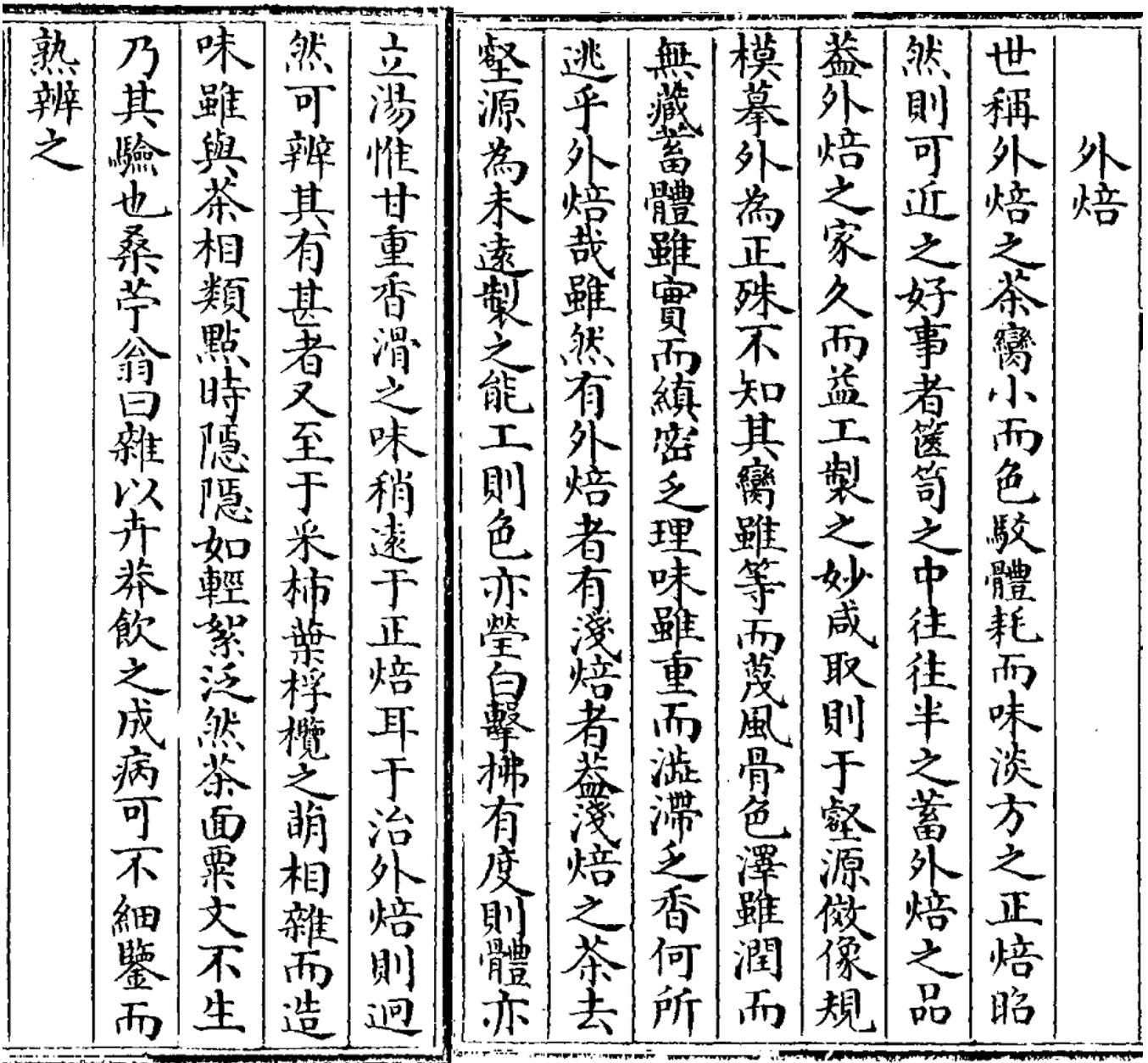
世称外焙之茶,脔小而色驳,体耗而味淡。方正之焙,昭然则可。
The so-called “private roast” is made from leaves that are smaller and slender, often mottled in color. The tea cakes lack compactness, and the flavor is light and bland. By contrast, the superiority of the official roast is immediately apparent.
近之好事者,筴笥之中,往往半之,蓄外焙之品。盖外焙之家,久而益工,制之妙,咸取则于壑源,效像规模摹外为正。殊不知其脔虽等而蔑风骨,色泽虽润而无藏蓄,体虽实而缜密乏理,味虽重而涩滞乏香,何所逃乎外焙哉?
In recent times, certain people have taken to filling half of their bamboo tea chests with private roast tea. Those who operate the private roasts have, over time, grown increasingly skilled. They have imitated the mold of the official Heyuan roast, so that their tea cakes appear the same in size and shape. These people hardly ever realize that although the privately roasted tea cakes may match the official ones in size, display a lustrous color, weigh solidly in the hand, and carry a strong taste, they lack its character, depth, ordered texture, aroma, leaving behind astringency and dullness. How could these possibly escape the fate of being known as private roast?
虽然,有外焙者,有浅焙者。盖浅焙之茶,去壑源为未远,制之能工,则色亦莹白。击拂有度,则体亦立汤,惟甘重香滑之味,稍远于正焙耳。于治外焙,则迥然可辨。
Besides the private roasts, there are light roasts. Light roasts do not depart far from Heyuan tea. When skillfully made, it too can be translucent and white. If whisked with proper measure, the foam will rise and hold on the surface. It falls only slightly short of the official roast in sweetness, body, aroma, and smoothness, unlike the private roast, which can be readily distinguished.
其有甚者,又至于采柿叶桴榄之萌,相杂而造。时虽与茶相类,点时隐隐如轻絮,泛然茶面,粟文不生,乃其验也。桑苎翁曰:“杂以卉莽,饮之成病。”可不细鉴而熟辨之。
桑苎翁曾经说过:“茶中掺入草木析叶子,人喝了是要生病的。”这一点,喝茶的人怎能不明鉴别,细分辨呢。
What’s even worse are those who mix tender persimmon and olive leaves into tea. These may resemble tea at first glance. However, when whisked, a faint, light fluff drifts across the surface, and the fine millet-like foam never forms. This is the telltale sign. Lu Yu once said :” When mixed with plants and weeds, drinking it can bring illness.” How could one fail to examine the tea one drinks carefully and distinguish good from bad?
©2026 Studentoftea.com | All Rights Reserved