
Tea may appear simple, but every cup is the result of a carefully balanced cocktail of molecules. From bitterness and sweetness to aroma, color, and even the bubbles and foam that sometimes form on the surface, the sensory experience of tea is shaped by a wide range of compounds that originate in the leaf and evolve through processing. In this article, I take a look inside the tea leaf, introducing the major classes of molecules that define how tea tastes, smells, and looks, and showing how chemistry connects growing conditions, processing choices, and what ultimately ends up in the cup.
Methylxanthines
Caffeine
Theobromine and Theophylline
Amino Acids
L-theanine
Glutamic acid
Alanine, Glycine, Serine, Threonine
Aspartic Acid
Polyphenols
Flavan-3-ols, theaflavins and thearubigins
Flavonols
Phenolic acids
Hydrolysable tannins
Volatile aroma compounds
Terpenoids
Benzenoid and phenylpropanoid volatiles
Green Leaf Volatiles (GLVs)
Pigments
Chlorophylls
Carotenoids
Saponins
Methylxanthines

Methylxanthines are a small family of nitrogen-containing alkaloids built on a shared xanthine backbone (see structure above). In tea, this group includes caffeine, theobromine, and theophylline. All three act as stimulants because their xanthine structure closely resembles that of the adenosine molecule. This similarity allows them to bind to and block adenosine receptors in our brains. Their subtle structural differences lead to differences in potency, and all three compounds contribute to tea’s characteristic bitterness.
Caffeine

Caffeine, the most widely consumed psychoactive substance globally, is a bitter-tasting molecule naturally synthesized by the tea plant.
Contrary to the common belief that black tea contains less caffeine than green, caffeine levels do not strictly follow tea type. As discussed in my article on the evolution of major tea types, all teas come from the same plant, Camellia sinensis. What sets them apart is how the leaves are processed. Because caffeine is a heat-stable compound, the various heating steps used in tea making, including steaming, pan-firing, or roasting, do not destroy this molecule, and therefore do not fundamentally change its content in the tea leaves.
Tea brewing is an infusion process that extracts caffeine from the tea leaf into water. The natural level of caffeine varies by the cultivar, leaf age, position on the shoot, and the leaf-to-stem ratio of the harvested material. In addition, the degree of leaf breakage during processing (for example, tea bags versus loose leaf) and brewing conditions such as water temperature and steep time, all determine how much caffeine ultimately ends up in your cup.
Caffeine is highly water-soluble and diffuses rapidly; most of it is released into the brew within the first two to three minutes of steeping. Most Camellia sinensis tea leaves contain about 10 – 40 mg of caffeine per gram of dry leaf. A typical cup of tea prepared with 3 grams of dry leaves can deliver up to 30 – 120 mg of caffeine. In traditional Chinese brewing styles, tea is often steeped for 15, 30, or 45 seconds per infusion, producing lighter cups while allowing the same leaves to be re-steeped a few times. This way, caffeine is released gradually across the successive brews.
While caffeine helps dispel drowsiness and improve cognitive function, its half-life in healthy adults averages about 3 – 7 hours. Even moderate tea consumption later in the day can therefore interfere with sleep quality, which is why tea is generally best enjoyed earlier in the day.
Theobromine and Theophylline

Alongside caffeine, tea contains theobromine and theophylline, both present in much smaller amounts than caffeine and having less effect on the central nervous system.
Both compounds relax airway muscle (bronchial smooth muscle) and have long been recognized for their bronchodilating effects. Theophylline in particular has been used clinically in the treatment of respiratory diseases such as asthma, although at doses far higher than those encountered in tea. From a sensory perspective, theobromine contributes a softer, more rounded bitterness, while theophylline, present only in trace amounts, has little direct impact on flavor. Together, they play a secondary role, subtly shaping tea’s bitterness and physiological profile without defining it.
Amino Acids
All known life depends on amino acids, and the tea plant Camellia sinensis is no different. In tea, these small molecules play an outsized role in shaping sweetness, umami, and overall mouthfeel.
L-theanine

L-theanine is an amino acid that won’t be part of any proteins but gives tea part of its smooth, umami character. It is a distinctive compound found almost exclusively in Camellia sinensis, with only trace amounts detected in a few mushroom species.
L-theanine is made in the roots of the tea plants and then transported upward through the xylem (plant’s plumbing system) to young shoots and buds. Besides the cultivar and leaf maturity, light exposure strongly influences the abundance of this chemical. Cultivation in shaded conditions significantly increases L-theanine levels in the leaves.
Unlike caffeine, L-theanine changes in response to different steps of tea preparation. The initial enzyme inactivation through steaming or pan-firing at 100-120 °C has little effect on this compound. However, roasting at over 150 °C can markedly reduce L-theanine through Maillard reactions. Amino acids and sugars react to form melanoidin, the brown molecule that gives tea its nutty or caramel notes. During the production of some teas such as oolong, leaves undergo withering and rolling, which exposes internal tissues and leads to leaching and partial breakdown of L-theanine. As a result, you might find 10-30 mg of L-theanine in 5 g of dry green tea leaves, but very little in the same amount of aged Pu’er.
Several small randomized trials have reported that L-theanine can promote relaxation and reduce stress without causing drowsiness. When taken together with caffeine, it appears to further enhance attention and reaction time. While supplement makers like to advertise L-theanine’s ability to support the immune function and reducing inflammation, evidence from well-designed double-blind, randomized trials remains limited and inconclusive.
Glutamic acid

Glutamic acid is another free amino acid in tea that contributes to umami, though in a more direct and sharper way than L-theanine. Yes, this is the same glutamate that gives the flavor enhancer, MSG, its umami taste! While L-theanine provides a smooth, lingering savoriness, glutamic acid adds a straightforward savory note that can be perceived as brothy or soup-like at higher concentrations.
Young leaves tend to contain more glutamic acid, and shaded cultivation can modestly increase its levels by favoring nitrogen-rich metabolites. In tea processing, glutamic acid is relatively stable during steaming or pan firing, but extended withering, oxidation, and roasting can reduce its presence as it participates in browning reactions or is lost through leaching.
In most teas, glutamic acid does not stand out on its own. Instead, it works alongside L-theanine and other amino acids to deepen umami and soften bitterness, contributing to the savory backbone that is especially noticeable in high quality green teas and lightly oxidized oolongs.
Alanine, Glycine, Serine, Threonine
Tea also contains several free amino acids that contribute subtle sweetness and smoothness. The most relevant are alanine, serine, glycine, and threonine. Rather than tasting sweet on their own, these amino acids soften bitterness and astringency, giving tea a rounder and more balanced mouthfeel.
Alanine is the most important of this group and provides a mild, clean sweetness, especially in high-quality green teas and lightly oxidized oolongs. Serine and threonine contribute gentle sweetness and smoothness, while glycine plays a minor supporting role due to its low abundance. Their levels are highest in young leaves and shaded teas and tend to decline with heavier processing and roasting as they are lost or transformed during tea-making.
Aspartic Acid

Aspartic acid is the primary amino acid in tea associated with sourness. Compared with glutamic acid, it is less savory and more directly acidic. In brewed tea, it can add a faint sharpness, even though its concentration is usually low. (For the chemistry geeks, this is because the side-chain carboxyl group of glutamic acid has a higher pKa than that of aspartic acid. As a result, aspartic acid donates protons more readily at the mildly acidic pH of tea, typically around pH 5 to 6.)
In most teas, aspartic acid does not stand out on its own. Its contribution is subtle, adding a slight edge or brightness rather than overt sourness. This effect is more noticeable in later harvests and older leaves, where the balance of amino acids shifts away from sweetness and umami.
Aspartic acid is relatively stable during green tea processing steps such as steaming or pan firing. During prolonged withering, oxidation, and roasting, its sensory impact tends to fade as other taste active compounds become more prominent. As a result, aspartic acid plays a minor but balancing role, fine tuning acidity rather than defining the flavor profile of tea.
Polyphenols

Polyphenols really sound like a chemist’s word, but they are actually a large group of natural molecules that plants make to protect themselves against insects, microbes, and UV light. The term phenol refers to a chemical structure where a hydroxyl (-OH) group is attached to an aromatic benzenoid ring (see example above with various -OHs around three hexagons). For us tea drinkers, these same compounds give much of tea’s taste, mouthfeel as well as color.
Flavan-3-ols, theaflavins and thearubigins

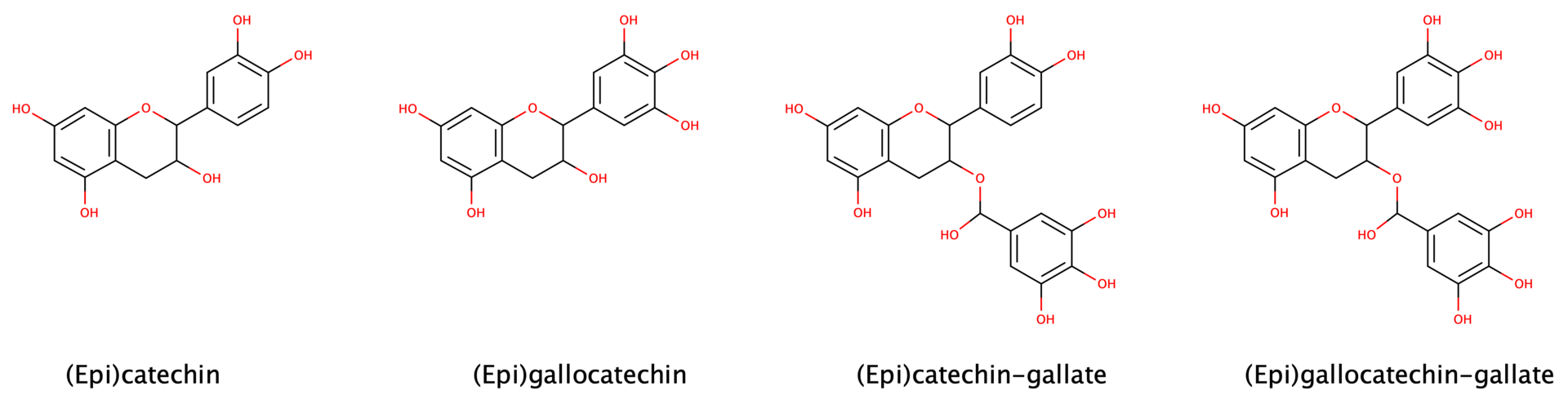
Under the umbrella of polyphenols, flavan-3-ols share a three-ring backbone (see above). That same structure forms the backbone of tea chemistry.
The four major flavan-3-ols are epicatechin (EC), epigallocatechin (EGC), epicatechin gallate (ECG), and epigallocatechin gallate (EGCG). Together, they account for around 10% of the dry weight of tea leaves. Among them, EGCG and ECG are found in particularly high abundance in tea and are often used as chemical markers to authenticate tea extracts. Their abundance in tea varies with cultivar, leaf maturity, light exposure as well as season, reflecting how the plant balances growth and defense under different conditions.
Flavan-3-ols are the source of much of tea’s bitterness and astringency. These molecules bind to proteins in saliva, tightening our mouth’s tissues and creating the dry sensation that lingers on the tongue. As early as 659 CE, the Tang court pharmacopeia Xin Xiu Ben Cao recorded that tea picked in autumn is more bitter, an observation that aligns neatly with what we know about the seasonal chemistry of tea! These same polyphenols also help reduce the perception of greasiness after a meal. Fatty foods coat the tongue and dull taste receptors, and polyphenols can interact with that oily film, breaking up the sensation and making the mouth feel cleaner.
Speaking of season, the color of tea owes much to what happens to flavan-3-ols after harvest. In living tea leaves, these molecules are colorless. After the leaves are plucked from the tree and especially when the leaves are rolled and bruised, an enzyme called polyphenol oxidase (PPO) comes into contact with these flavan-3-ols and oxygen. Much like how a banana bruises and turns brown, the oxidized flavan-3-ols form theaflavins, which give tea liquor its bright golden-orange hue.
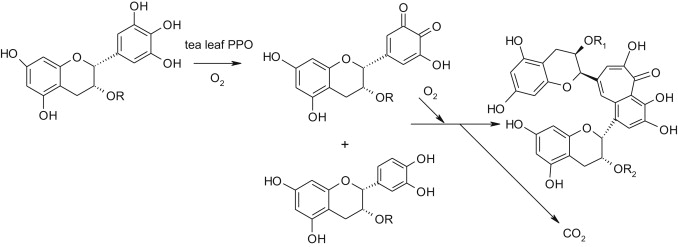
As oxidation continues, these theaflavins polymerize into thearubigins, deepening the color toward reddish brown and softening the astringency. Because thearubigins are heterogeneous polymers rather than a single defined compound, their exact molecular structure remains undetermined despite decades of research.
In contrast, green tea processing begins with a step called shaqing 杀青, which literally means “arresting the green”. This step involves briefly heating the freshly picked leaves, either by steaming (traditional method used before the 1300s in China) or pan firing (the modern approach) to inactivate polyphenol oxidase. By halting the enzyme’s activity, shaqing prevents the oxidation of flavan-3-ols, preserving their colorless state and allowing the leaves natural green color to shine through. As a result, green teas also taste brisker and more astringent than oxidized teas.
Flavonols

These compounds should not be confused with the flavan-3-ols we just discussed, even though their structures are similar and their names sound alike. Some of the major flavonols in tea are quercetin, kaempferol, and myricetin. Tea is highlighted here because these compounds are also prevalent in fruits and vegetables.
These compounds are produced directly in the tea leaves as part of their defense system against UV light. As a result, their levels are strongly influenced by sunlight exposure. Buds and young leaves grown under full sun tend to accumulate more flavonols than those on shaded plants.
Interestingly, most flavonols in tea are stored as glycosides, meaning a sugar unit is attached to the flavonol backbone. Attaching a sugar makes flavonols much easier to dissolve in water than their original, unsugared forms, while also protecting them from premature oxidation. The sugar attachment softens the intrinsic bitterness of the parent flavonols. Still, during brewing these ‘sweetened’ flavonols dissolve more slowly than flavan-3-ols, and therefore their impact on the overall flavor profile is modest and easily overshadowed by the stronger astringency of catechins.
Flavonols have been studied widely for their potential health benefits. As antioxidants, many studies point to their ability to modulate inflammation and protect cells from oxidative stress, therefore having a positive effect on diseases including cardiovascular disease, rheumatoid arthritis, various cancers, and neurodegenerative disorders. It’s worth noting that while these compounds are generally considered safe to consume, high-quality clinical trials capable of demonstrating clear and consistent benefits remain limited.
Phenolic acids

Phenolic acids are much smaller than other polyphenols. In tea, the most common phenolic acids are gallic acid, chlorogenic acid, caffeic acid, and p-coumaric acid.
These molecules are produced in the leaves as part of the plant’s general stress response. Their levels reflect a combination of genetics, leaf age, and environmental factors such as sunlight and temperature. Gallic acid in particular plays a central role in tea chemistry because it forms the gallate group seen in many catechins, including EGCG and ECG. During processing, some oxidation of gallated catechins can release free gallic acid, which is why black teas often contain higher amounts of it.
Compared with other polyphenols, phenolic acids contribute less to bitterness and astringency, and add only a faint tart or sharp edge. This is not the clear sourness you would experience with citric acid in a lemon, but rather a light tightening effect on the palate. While these acids have a mild flavor themselves, their more important sensory roles are indirect. They influence color development as well as taste through their interaction with oxidized flavan-3-ols (see section above).
Phenolic acids are abundant in many fruits, grains, and vegetables, so tea is only one dietary source among many. They too are widely studied for their antioxidant and anti-inflammatory properties (I am sensing a theme here), although they occur in tea at significantly lower levels compared with the flavonols.
Hydrolysable tannins
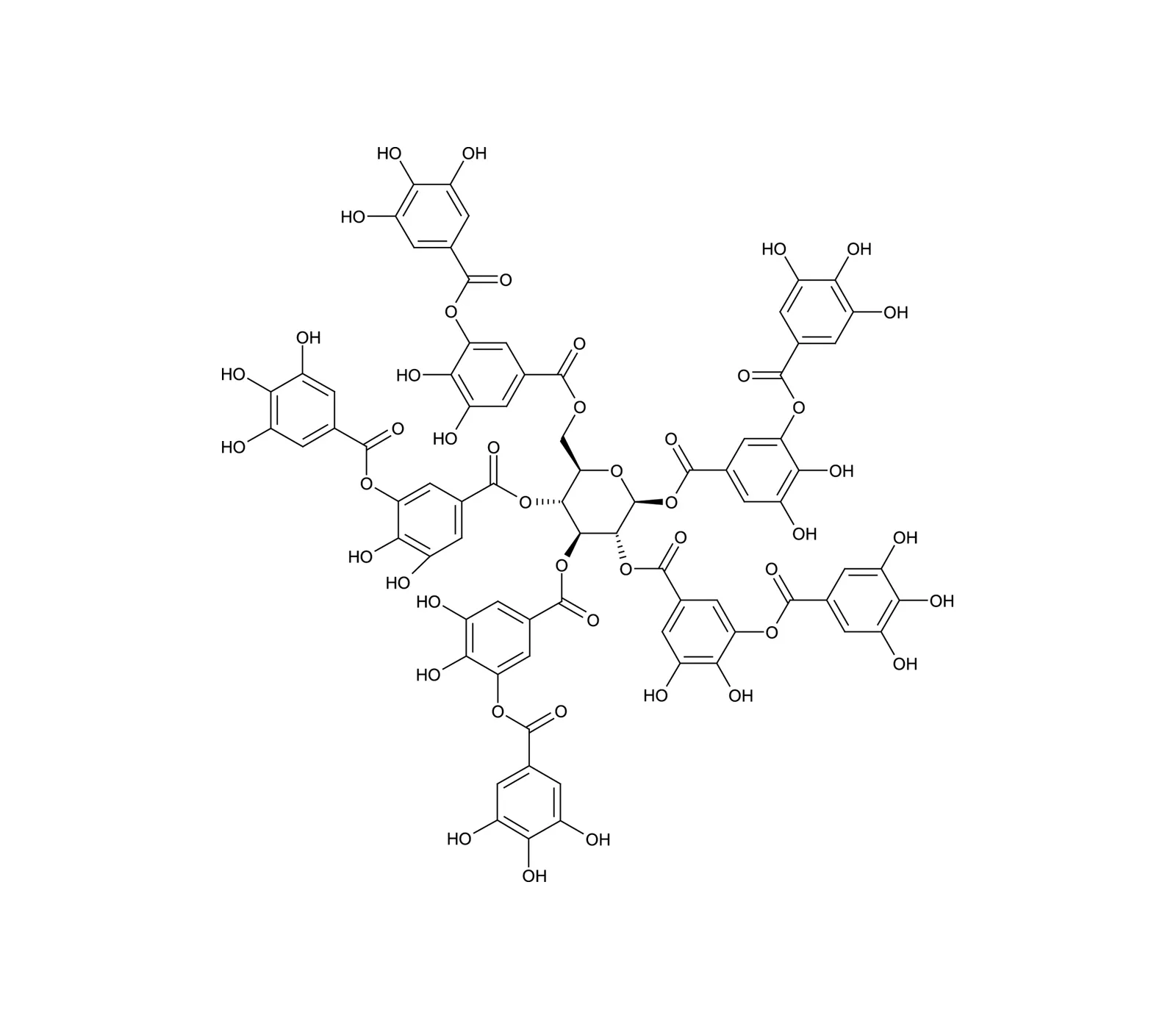
Hydrolysable tannins are another group of tea polyphenols, although they occur at much lower levels than all categories discussed above. They are larger molecules built from a central sugar, usually glucose, that is connected to (esterified with) several phenolic acids. When exposed to heat, acid, base, or certain enzymes, these ester bonds can break apart. This susceptibility to breakage is why they are called hydrolyzable.
Two main families are found in tea. Gallotannins are formed when multiple gallic acid units attach to a glucose core. Ellagitannins arise when some of these gallic acid units couple to form larger structures before binding to glucose. When these tannins break down, they release gallic acid or ellagic acid, both of which can be found in small amounts in brewed tea.
Hydrolysable tannins contribute only lightly to taste, adding a gentle drying sensation that is far weaker than the astringency caused by flavan-3-ols. Their chemical significance is greater than their sensory impact. Gallotannins supply the gallic acid needed to form gallated catechins such as ECG and EGCG. During tea processing, oxidation and heat can also break down these tannins, subtly altering the balance of phenolic acids in the leaf.
Hydrolysable tannins are well known from fruits such as pomegranate and berries, where they can influence both taste and texture. Tea contains them too, but at levels too low to define the flavour profile on their own. They are nevertheless part of the broader network of phenolic molecules that shape tea chemistry, from the gallate groups on catechins to the slow release of gallic acid during oxidation and aging.
Volatile aroma compounds
While the molecules discussed above shape much of tea’s taste, mouthfeel, and color, they contribute very little to its aroma. The scents we associate with different teas come from an entirely different group of chemicals known as volatile aroma compounds. These molecules are present in only trace amounts, yet they evaporate and get picked up by our noses readily.
Even though these molecules do not meaningfully affect the nutritional or health profile of tea, they shape much of our sensory experience when we drink tea. They are responsible for the floral, fruity, grassy, or roasted notes that rise with the steam and play a key role in how we perceive the character of each tea.
Terpenoids

Terpenoids are a major family of aroma molecules in tea and are responsible for many of the floral, citrus-like, and fruity notes in both oolong and black teas. Among them, three compounds appear most consistently. Linalool provides orchid, lily, and citrus notes and is especially prominent in high quality oolongs and many black teas. Geraniol contributes sweet, rose like floral notes and and plays a strong role in the perfume of many lightly oxidized oolongs. Nerol and citronellol add softer green citrus, lemony or slightly minty accents.
Besides cultivar, leaf age and sunlight exposure, the process of tea making also impacts the abundance of these terpenoids, as expected.
Withering is a central step in the making of oolong and black teas, where leaves are intentionally rested to encourage biochemical changes that increase the amount of linalool and geraniol. When the leaves are rolled or lightly bruised, as is typical in oolong processing and during the early stages of black tea manufacture, the disruption of cell structure allows additional terpenoids to be released and formed, strengthening both floral and citrus like notes. Light oxidation in oolong and black tea further modifies these compounds and forms linalool oxides that add complexity to the aroma. In teas that undergo roasting or high heat finishing, some of the brightest floral terpenoids decline as they shift into warmer, sweeter aromatic products, which gently softens the high floral character.
Benzenoid and phenylpropanoid volatiles

Benzenoid and phenylpropanoid volatiles form another important group of tea aroma molecules. Many of them trace back to the amino acid phenylalanine and share a benzene ring in their structure. Phenethyl alcohol is one of the most characteristic members, contributing sweet, honey like, rose floral notes that appear in many oolongs and black teas. Benzyl alcohol adds a softer floral sweetness, while benzaldehyde gives a hint of almond or cherry pit. Methyl salicylate, which some readers may recognize as the smell of wintergreen, can appear as a cool, minty or medicinal top note, especially in certain high mountain oolongs and some aged teas.
Green Leaf Volatiles (GLVs)
Green leaf volatiles are a group of aroma compounds responsible for the fresh, grassy, leafy notes commonly associated with green teas and lightly processed teas. The most representative members include hexanal, trans-2-hexenal, cis-3-hexen-1-ol, and cis-3-hexenyl acetate. Together, they create aromas reminiscent of freshly cut grass, green apple skin, crushed leaves, or cucumber.
Young leaves tend to produce more green leaf volatiles and thus have more pronounced green notes, while older leaves often have a more muted profile. Environmental factors such as temperature and water availability can also affect membrane composition and, in turn, the potential for these aromas to form.
Tea processing plays a decisive role in shaping green leaf volatiles. In green tea manufacture, leaves are intentionally heated early through shaqing 杀青 to inactivate enzymes, preserving a portion of the fresh green aroma before extensive oxidation can occur. Minimal rolling or gentle shaping helps retain these notes. In contrast, during oolong and black tea production, withering and prolonged oxidation allow green leaf volatiles to dissipate or transform into other aroma compounds, reducing grassy character. Heavy rolling and bruising initially generate green leaf volatiles, but continued processing quickly shifts the aroma away from fresh green notes. Roasting or high heat finishing further suppresses these compounds, replacing them with warmer, toasted aromas.
Pigments
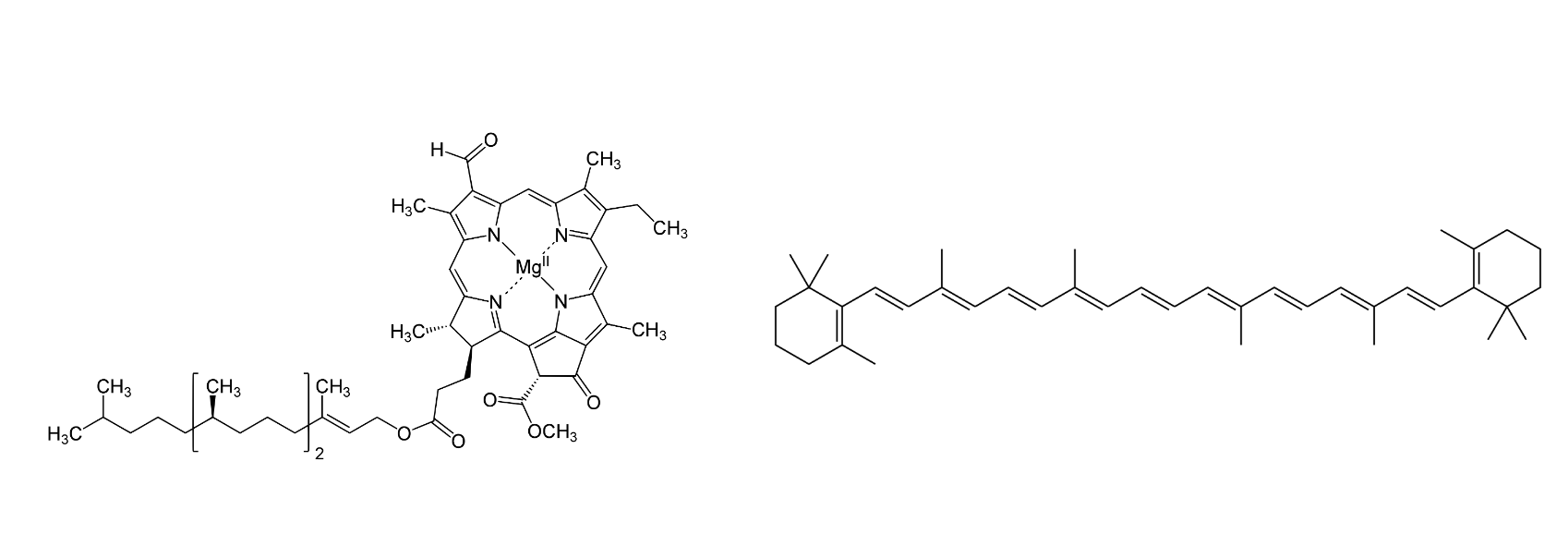
While pigment molecules do not shape taste, they play an important role in the sensory experience by defining the color of the tea leaves and the liquor, which in turn influences how aroma and flavor are perceived.
In tea, the two most important pigment families are chlorophylls and carotenoids.
Chlorophylls
Chlorophylls give fresh tea leaves their green color and are most abundant in green teas and lightly processed oolongs. These molecules absorb light strongly in the red and blue regions of the visible spectrum, reflecting green wavelengths back to our eyes. During green tea processing, early heating through shaqing 杀青 helps preserve green color by inactivating polyphenol oxidase (PPO), which oxidizes polyphenols and causes browning, preventing brown pigments from masking chlorophyll. Chlorophyll itself is not protected by enzyme inactivation alone, and its stability still depends on careful control of heat. In more heavily processed teas, extended heating and processing allow chlorophyll to gradually degrade, dulling the bright green color and contributing olive or brown tones in the leaf.
Because chlorophyll is not water-soluble, it remains largely in the leaf rather than dissolving into the brew, influencing the color of the leaves far more than the color of the liquor, except in powdered teas such as matcha where the leaf itself is consumed.
Carotenoids
Carotenoids are a second major class of pigments in tea leaves and are responsible for yellow to orange hues. Unlike chlorophylls, carotenoids absorb light mainly in the blue region of the visible spectrum, which allows yellow and orange wavelengths to dominate. In fresh tea leaves, carotenoids are present alongside chlorophyll and contribute subtle warm undertones to leaf color, although their visual impact is often masked by the much higher abundance of chlorophylls.
During tea processing, carotenoids are more chemically fragile than chlorophylls and readily degrade during withering, oxidation, and aging. This breakdown does not strongly affect leaf color on its own, but it plays an important indirect role in aroma formation. As carotenoids decompose, they generate smaller volatile molecules that contribute floral, fruity, and honey-like notes, particularly in oolong and black teas. Like chlorophylls, carotenoids are not water-soluble and remain largely in the leaf, meaning their primary contribution to brewed tea is indirect, linking leaf color and processing history to aromatic potential rather than directly influencing the color of the liquor.
Saponins
Saponins (Latin for soap) are the bubble-making molecules in tea. These molecules act a bit like natural soap, allowing air to be trapped and stabilized when tea is poured, shaken, or whisked.
Their effect becomes most obvious when tea is agitated, and especially in matcha, where the entire leaf is suspended in water and whisked. The fine, persistent foam on a well made bowl of matcha is supported in part by saponins, along with fine leaf particles and proteins.
Saponins have little impact on aroma and only a minor influence on taste, sometimes adding a faint bitterness at higher concentrations. Their contribution is mainly physical and visual, adding a tactile element to the drinking experience and reminding us that tea is perceived through more than just taste and smell.
In Chinese food culture, an ideal dish or drink is often described as 色香味俱全, meaning that it should appeal to the eyes, the nose, and the taste buds. Tea follows the same principle. Its pigments define color, volatile compounds shape aroma, and non-volatile molecules build taste and mouthfeel. Only when all of these elements come together does tea feel whole. What may appear to be a simple cup is, in fact, a carefully balanced expression of chemistry that satisfies all three senses at once.
©2025 Studentoftea.com | All Rights Reserved