
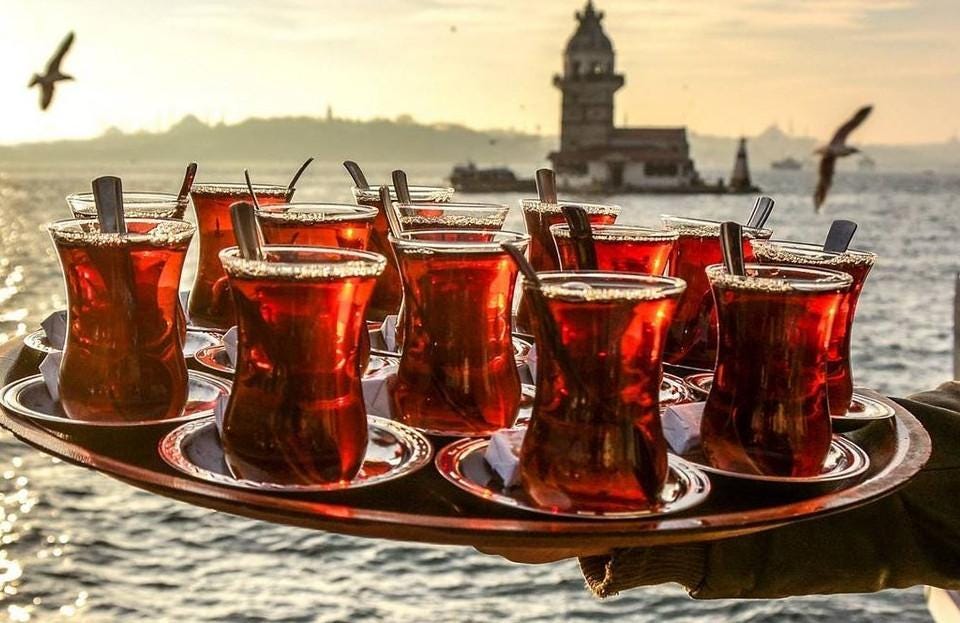
Across Türkiye, tea flows quietly through everyday life. It arrives in small tulip-shaped glasses at bazaars, on the ferries, and neighborhood cafés, poured again and again as conversations continue and work carries on. Following tea through these everyday settings offers a way of exploring the country guided by the rhythms of daily life.
This everyday presence makes Turkey’s relationship with tea feel timeless, even though it is anything but.
Turkey today drinks more tea (Çay) per person than any other country in the world, roughly three kilograms of dry tea per capita each year. The ubiquity of tea today masks how recent this habit is. Before the modern era, tea had little presence in the region. In Byzantine Anatolia, wine and herbal drinks dominated daily life, and under the Ottoman Empire, coffee became the defining social beverage.
The shift began after World War I. The collapse of the Ottoman Empire and the disruption of global trade made coffee imports expensive and unreliable, pushing the young Turkish state to seek a domestic alternative.
By the early twentieth century, camellia sinensis from China had already been established under the Russian Empire in the Caucasus, the mountainous region between the Black Sea and the Caspian Sea, particularly in Georgia. Turkey later imported seeds and seedlings from this region. In the 1920s, tea farming was formally promoted by the state, and within a few decades, a crop previously unknown to Ottoman agriculture became the everyday drink of modern Turkey.
Almost all of Turkey’s tea is grown along a narrow stretch of the eastern Black Sea coast around Rize, the only area of the country suitable for tea cultivation, where heavy rainfall, acidic soils, and mild winters support gardens on steep hillsides. Nearly all of this tea is fully oxidized black tea. Across the country, it is brewed using the çaydanlık, a double-pot system that produces a strong concentrate, later diluted to taste in the glass. Tea is served almost exclusively in small, tulip-shaped ince belli glasses, their clear walls revealing the bright reddish amber color expected of good tea.
Ideas for Istanbul
Straddling Europe and Asia, Istanbul is a city defined by movement. Trade routes, empires, and migrations have passed through it for centuries, leaving a dense urban fabric active day and night. Within this constant motion, neighborhoods take on distinct rhythms. One of my favorites is Sultanahmet, where monumental history sits directly alongside everyday life.
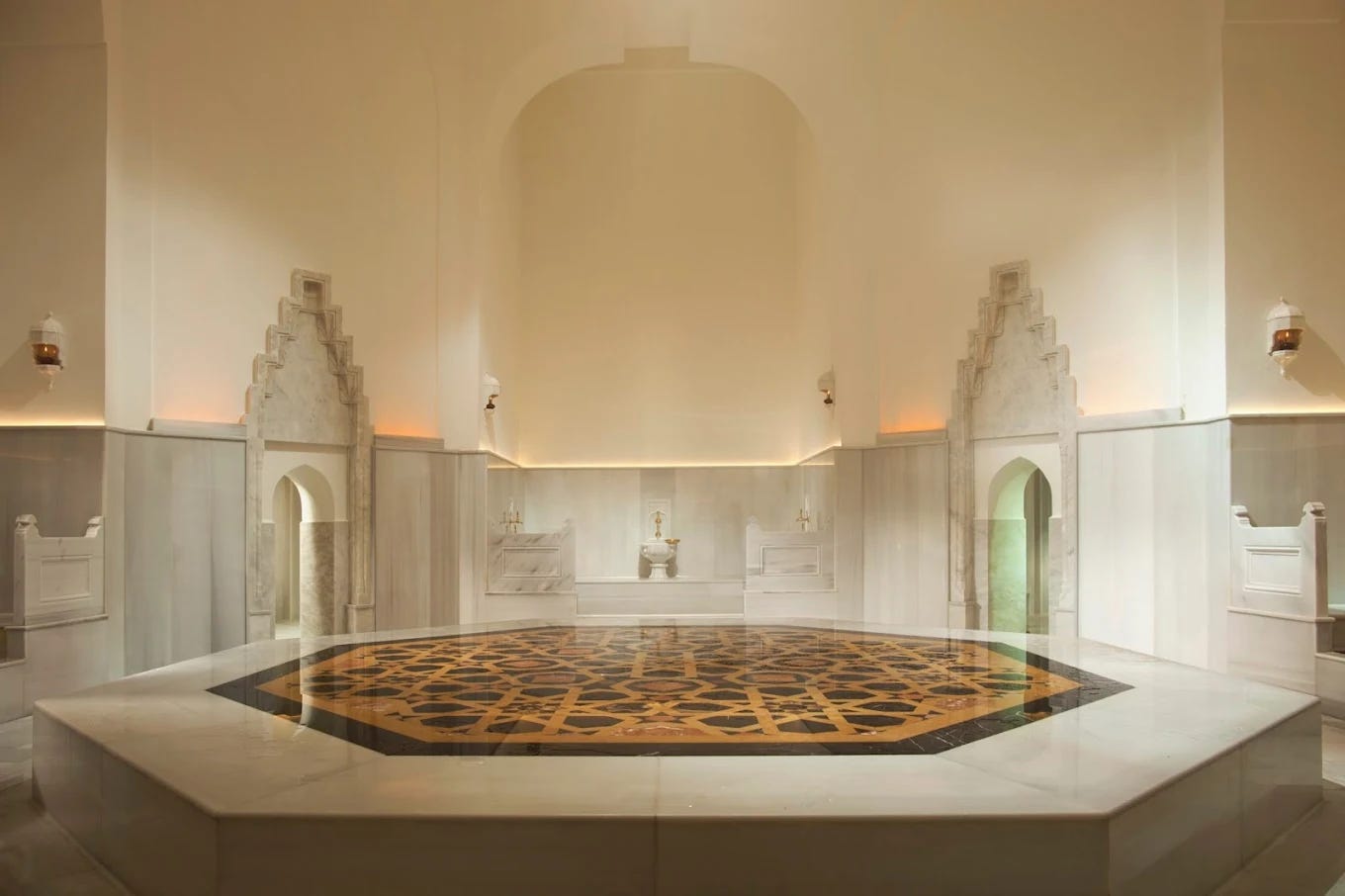
A natural way to begin the day here is with a visit to a hamam, the traditional Turkish bath. At places like Hürrem Sultan Hamamı, heat comes from warmed marble slabs rather than hot air, circulated from beneath the building using methods that date back to 1556. Located between the Blue Mosque and Hagia Sophia, the bath occupies one of the city’s most historically dense sites. After warming, scrubbing, bubble washing, and rinsing beneath a high domed ceiling, hot tea and şerbet are served, easing the transition back into the movement of the city.
Depending on where you stay, breakfast may already be part of the morning rhythm. At the Four Seasons Hotel Istanbul at Sultanahmet, the spread leaned into everyday Turkish staples. Breads, cheeses, olives, and fresh vegetables are joined by warm dishes like menemen, softly scrambled eggs with tomatoes and peppers, and sucuk, a garlicky, spiced beef sausage often served alongside eggs. Of course, tea is poured continuously as a quiet constant.
For those interested in history, the Topkapı Palace Harem and the Istanbul Archaeology Museums are both well worth the time and sit comfortably within a walking route. Afterward, the day may naturally turns toward something sweet. One dependable stop is the historic Hafız Mustafa 1864, which has several polished locations across the city and makes it easy to sample classic confectionary without seeking them out individually. The selection ranges from Turkish delight and syrup-soaked pastries to dishes like künefe, and tavuk göğsü, a milk pudding made with finely shredded chicken breast (!). If salep appears on the menu, it is worth trying. Thick, hot, and lightly floral, it is widely sold by street vendors in colder months and often enjoyed alongside tea while moving between stops.
The draw to the Grand Bazaar, for me, has always been people watching and window shopping. Narrow corridors, tightly packed shops, and voices echoing through vaulted passages reflect a long-standing commercial tradition shaped by trade, proximity, and exchange. Within this older structure, tea has found a natural place. Small tulip-shaped glasses sit beside cash registers and display cases, and metal trays circulate steadily through the corridors. These are carried by çaycı, professional tea servers working for nearby tea kitchens or cafés. Shopkeepers place informal, ongoing orders, and tea arrives throughout the day without disrupting work.
After spending time in Istanbul’s denser spaces, I find myself seeking quieter quarters from time to time. Beneath the streets of Sultanahmet, the city’s cisterns offer that pause. The Basilica Cistern is the most well known, with its forest of columns and softly lit walkways. The ancient water storage reveal the Byzantine infrastructure that kept the city functioning long before modern plumbing. If the atmosphere of these underground spaces resonates with you, the restaurant Aheste offers a similar sensibility not too far away. Set in a vaulted space once used for water storage, it carries the same subdued, enclosed feeling, echoing the quiet beneath Istanbul’s streets.
Ideas for Kapadokya (Cappadocia)
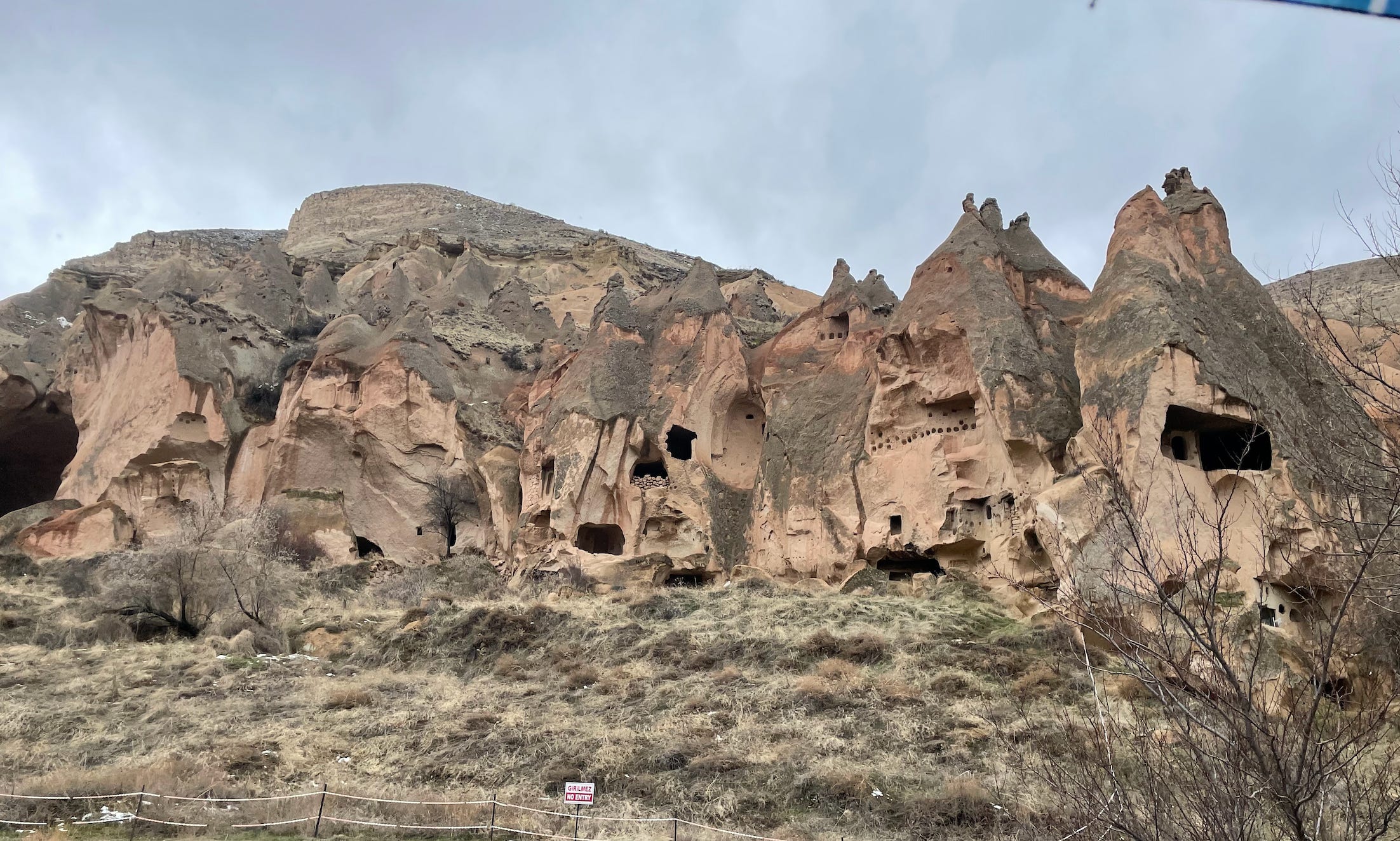
If you have a few days to spare, it is worth venturing towards Central Anatolia, particularly the region of Cappadocia. Here, human activity has long been etched into the landscape, with homes, churches, and public spaces carved directly into the volcanic rock and adapted across generations.
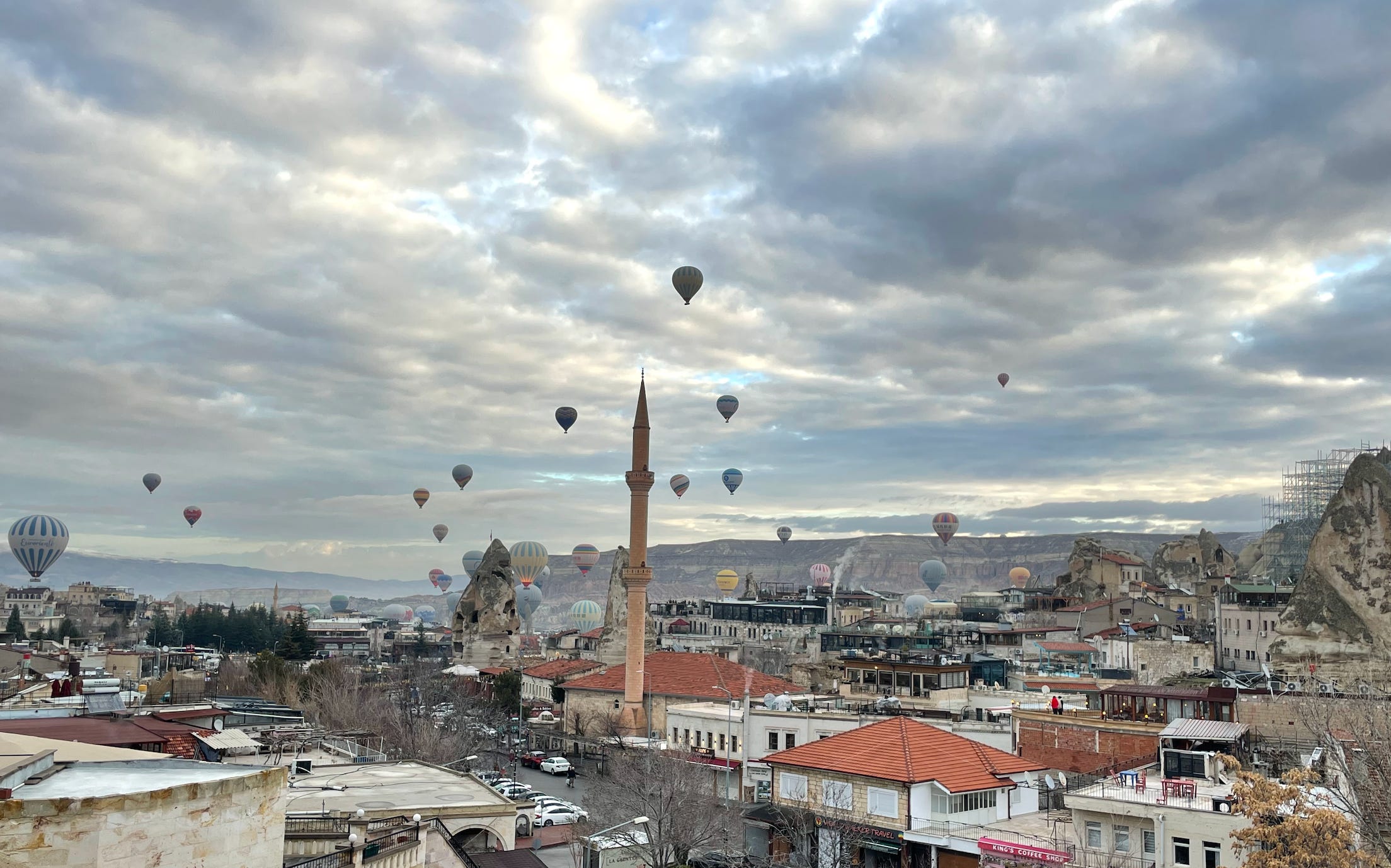
I enjoyed staying in this town called Göreme, which sits centrally among many of the region’s major sites. It was easy to find a taxi for the day and move between valleys, museums, and viewpoints without rushing. For a full sense of place, staying in a cave hotel adds another layer to the experience. ooms with windows and higher vantage points are especially rewarding, offering wide views across the plateau and, on clear mornings, hot air balloons rising over a striking landscape below. If you do want to go on a hot air balloon ride, book in advance. In winter, flights are weather dependent, so allowing multiple mornings improves the chances of a successful takeoff.
After a meze-style Turkish breakfast and, of course, several cups of tea and coffee, you are ready to start the day. One natural starting point is the Göreme Open Air Museum, where rock-cut churches and frescoes introduce the region’s monastic past. From there, a visit to Kaymaklı Underground City reveals how entire communities once lived beneath the surface. The earliest phases of the underground city date to at least the first millennium BCE, and the complex is believed to extend across as many as eighteen levels, later expanded to shelter Christian communities during periods of persecution. Today, four levels have been excavated and are accessible to visitors. Some tunnels were carved narrow enough for a single person to pass and require bending at points. During peak hours, the confined spaces can be challenging for visitors sensitive to enclosed environments.
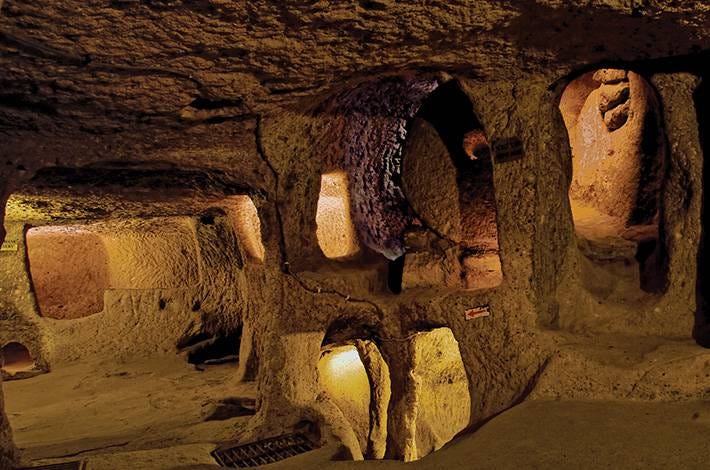
After emerging from the underground, I needed a short pause before continuing. A few steps away is Akın Usta Çorba ve Kebap Salonu, where locals stop in for freshly made pide or lahmacun, simple and quick. Tea is served on the house, an easy reset before heading back out.
Heading back towards Göreme, you can stop by the Uçhisar Castle, the highest point of Cappadocia. Carved directly into the highest point of the region, Uçhisar Castle functioned for centuries as a strategic fortress and shelter, overlooking the valleys of Cappadocia. You can hike all the way to the top!
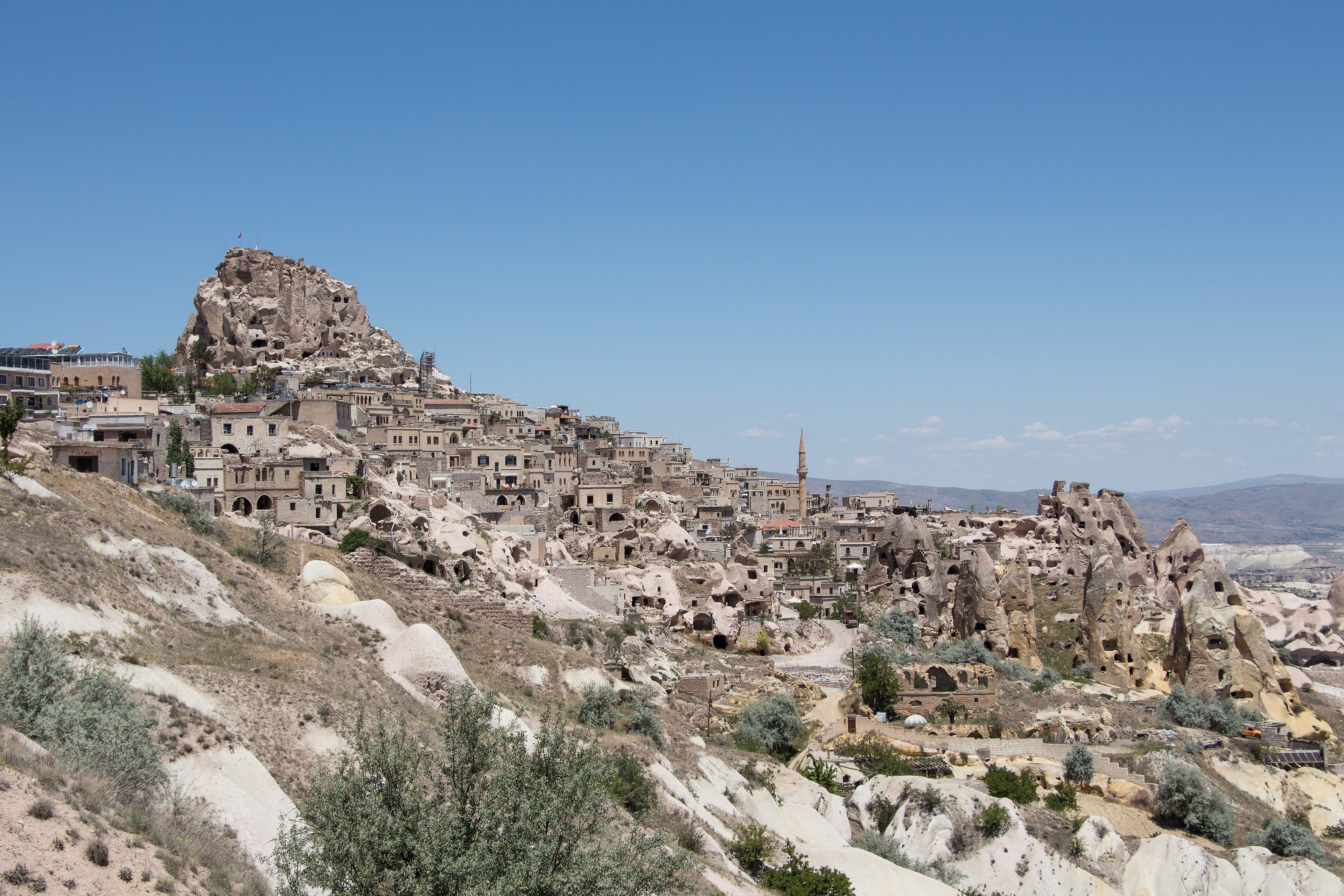
After a full day of moving through stone and history, dinner on higher ground feels fitting. Happena Restaurant serves regional Anatolian dishes in a quiet hilltop setting, with wide views across the valleys as the light fades.
My second day in Cappadocia unfold more slowly. The Zelve Open Air Museum feels more expansive and less structured, with abandoned dwellings scattered across a wide valley. For another castle experience, drive up to Ortahisar Panorama. The cafe offers another perspective on how closely daily life here has always been tied to the rock itself.
In Cappadocia, tea appears again in familiar glasses, served in hotel courtyards and small cafés, unchanged by the landscape around it. Against the vastness of Central Anatolia, that small continuity becomes especially noticeable, grounding the experience in a rhythm carried from city to stone and back again.
For tea lovers, Turkey offers a different kind of experience. These itineraries have no plantations to visit and no formal tastings to seek out. Instead, tea appears again and again, brewed the same way, served in the same small glasses, woven quietly into daily life. You encounter it on ferries, in markets, after meals, between long walks through history, and often late into the night.
That repetition is part of the beauty of traveling here. Turkey reveals extraordinary layers of human history and a dense blending of cultures, from Byzantine infrastructure to Ottoman streets and Anatolian landscapes shaped over centuries. Tea does not stand apart from any of it. It moves alongside daily life, steady and unremarkable, offering a simple continuity as you move from place to place.
©2026 Studentoftea.com | All Rights Reserved